
TL;DR
Donating old computers is smarter than recycling them — recyclers have a documented history of sending e-waste straight to landfills, where it generates roughly 70% of all toxic waste despite making up just 2% of landfill mass. When you donate to an organization like Human-I-T, your old device gets refurbished and placed in the hands of a family that needs it, while your data is securely destroyed to HIPAA, GLBA, and FACTA standards. Skip the recycling bin and fill out a donation form instead.
Table of Contents
- Introduction
- Is Recycling Old Computers Actually Effective?
- How Does Donating a Computer Help Your Community?
- What Happens to My Data When I Donate a Computer?
- FAQ
Introduction
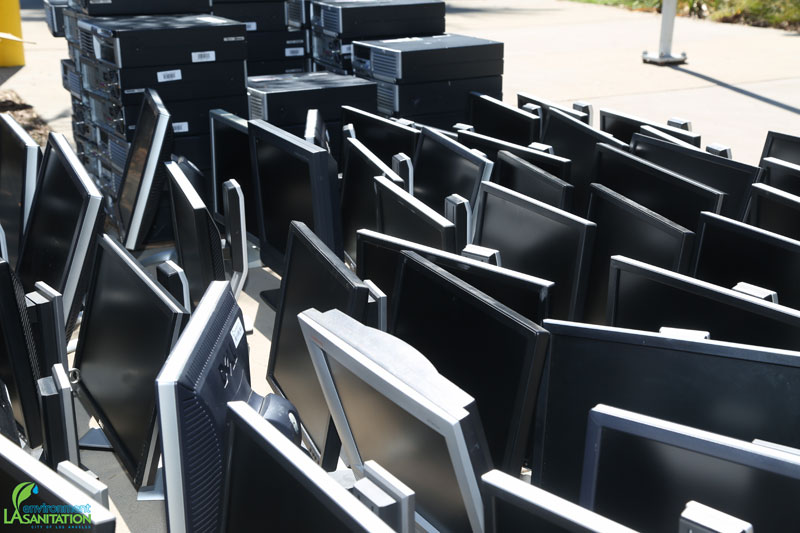
In 2025, the world generates approximately 62 million tonnes of electronic waste annually — the weight of roughly 1.55 million heavy trucks. And global e-waste production has grown five times faster than formal recycling rates since 2010, according to the UN Environment Programme. So when you stumble across a couple of old computers gathering dust in your closet, the question isn’t just "what do I do with these?" It’s "what’s the least harmful option?"
Most people assume recycling is the responsible choice. It isn’t — at least not on its own. Recycling has become an insufficient method of disposing of electronic waste. Given the scale of the crisis, reuse is now the prerequisite for protecting our planet.
Below, we break down why donating old computers beats recycling on environmental impact, community benefit, and data security — and why it’s the smartest, most sustainable move you can make.
Is Recycling Old Computers Actually Effective?
No — and the data is damning. According to a 2016 investigation by Vice Media, nearly 40% of e-waste recyclers recycled zero pounds of e-waste over a two-year period. Not a reduced amount. Absolutely nothing.
Instead of actually processing the materials, vendors overwhelmingly shipped e-waste to landfills in places like China, Pakistan, and Ghana. And this problem hasn’t gone away — e-waste recycling fraud remains a growing concern in 2025, with fraudulent recyclers continuing to exploit individuals and businesses who believe they’re making the responsible choice.
Once e-waste hits a landfill, it mostly just sits there and poisons everything around it. Although e-waste constitutes only 2% of the physical mass of landfills, its component materials produce roughly 70% of all toxic waste in those landfills, according to global e-waste tracking data. These heavy metals and harmful chemicals leach into the ground, contaminating soil and groundwater for miles.
The alternative? Donate it. Donating old computers doesn’t just reduce landfill waste and shield the environment from hazardous contamination — it extends the lifespan of devices that still have years of productive use left. Refurbishment over disposal. A circular model over a throwaway culture.
How Does Donating a Computer Help Your Community?
A donated computer becomes a direct pipeline to opportunity for someone who didn’t have one. When working families receive a refurbished device, they use it to pursue education, find and train for new jobs, connect with loved ones, and access essential services like telehealth.
This isn’t abstract. Take Charles Montegue, an Air Force veteran and resident of Detroit. He connected with Human-I-T during a distribution held with Southwest Solutions.
"This [laptop] will help me video chat with my doctor, and also with my sons in England and Japan," Charles said. "It’ll also let me see my grandkids clowning around. Right now, I’m trying to do it all over the phone, and it’s just not the same. [It] is a big life changer."
That’s what a single refurbished laptop does. It doesn’t just support families in your community — it collapses the distance between a veteran and his grandchildren, between a patient and their doctor. By repurposing assets like computers instead of discarding them, we discover the true potential we have to enrich people’s lives.
What Happens to My Data When I Donate a Computer?
Your data is comprehensively wiped before your device ever reaches its next owner. Our professionally trained technicians keep data security top-of-mind at every stage of the process.
Human-I-T’s data-destruction process is compliant with the regulations of HIPAA, GLBA, FACTA, FISMA, PIPEDA, and SOX. These aren’t suggestions — they’re legally binding standards that ensure all of your data is thoroughly sanitized and prevented from being accessed by anyone with ill intent.
In the rare event that not all data can be software-destroyed, we responsibly dispose of the physical assets through an R2-certified organization. No shortcuts. No loose ends.
You shouldn’t have to choose between doing something good for the planet and protecting your personal information. With Human-I-T, you get peace of mind that your donated computer will be handled properly — from data destruction to refurbishment to delivery.
FAQ
What should I do with old computers I no longer use?
Donate them to an organization that refurbishes and redistributes devices to families who need them. Recycling sounds responsible, but a significant portion of "recycled" e-waste ends up in landfills anyway. Donation extends the device’s lifespan and puts it to work in someone’s hands.
Is donating a computer better for the environment than recycling it?
Yes. Refurbishing a computer for reuse avoids the energy-intensive process of raw materials extraction and manufacturing. It also keeps hazardous materials — lead, mercury, cadmium — out of landfills where they contaminate soil and groundwater. Reuse is the highest-impact option in the circular economy.
How do I make sure my personal data is safe when I donate?
Work with a certified organization. Human-I-T’s data sanitization process complies with HIPAA, GLBA, FACTA, FISMA, PIPEDA, and SOX. Any device that can’t be fully wiped is physically destroyed through an R2-certified process. Learn more about our data destruction services.
Can I donate computers that are old or slow?
Yes. Devices that feel sluggish to you can often be refurbished and configured for productive use by Human-I-T’s technicians. Don’t assume your old hardware is worthless — it could be a life changer for a veteran, a student, or a working family. Fill out the technology donation form today and take a step toward closing the digital divide while championing responsible e-waste management.
How much e-waste does the world produce?
In 2025, the world generates approximately 62 million tonnes of electronic waste annually, and e-waste production has grown five times faster than formal recycling rates since 2010. Donating functional devices is one of the most direct ways to slow this crisis.