
TL;DR
Onsite hard drive shredding is the most reliable way to ensure sensitive data never leaves your facility — and never falls into the wrong hands. With GDPR fines reaching up to 4% of annual global turnover and frameworks like HIPAA, GLBA, and FISMA carrying their own penalties, the cost of improper disposal dwarfs the investment in certified destruction. Partner with a NAID AAA-certified ITAD provider that offers onsite shredding, comprehensive documentation, and a chain of custody you can verify at every step.
Table of Contents
- Why does basic data deletion fail?
- What makes onsite shredding more secure than offsite methods?
- What are the three levels of data sanitization?
- Which advanced destruction methods actually work?
- How do you build a data destruction policy that holds up?
- What does proper documentation look like?
- What happens when data destruction goes wrong?
- How do you choose the right ITAD partner?
- Why isn’t one destruction method enough?
- FAQ
Introduction
Formatting a hard drive doesn’t delete your data. It deletes the address tables a computer uses to find data — the information itself stays on the disk, waiting for anyone with recovery software to extract it. Even drilling holes through a drive leaves recoverable data on undamaged sections. These aren’t edge cases. They’re the everyday risks organizations take when they treat IT Asset Disposition (ITAD) as an afterthought instead of a security imperative.
Think of ITAD as your technology’s retirement plan. Just as financial planning protects your future, ITAD safeguards your organization by establishing clear protocols for handling outdated equipment and sensitive data. This process extends far beyond unplugging old servers or wiping hard drives — it demands meticulous attention to environmental regulations, security requirements, and proper documentation at every step.
For facilities handling highly confidential information — federal defense entities, banking institutions, forensic labs — the stakes are particularly acute, especially when internet restrictions limit digital sanitization options. Onsite shredding eliminates the chain-of-custody gaps that make offsite methods a liability.
Why Does Basic Data Deletion Fail?
Basic deletion methods create a dangerous illusion of security. Data is a resource so valuable that cybercriminals actively seek improperly disposed technology to extract sensitive information. Formatting merely removes the address tables a computer uses to locate and read data — it doesn’t actually destroy the information stored on the disk.
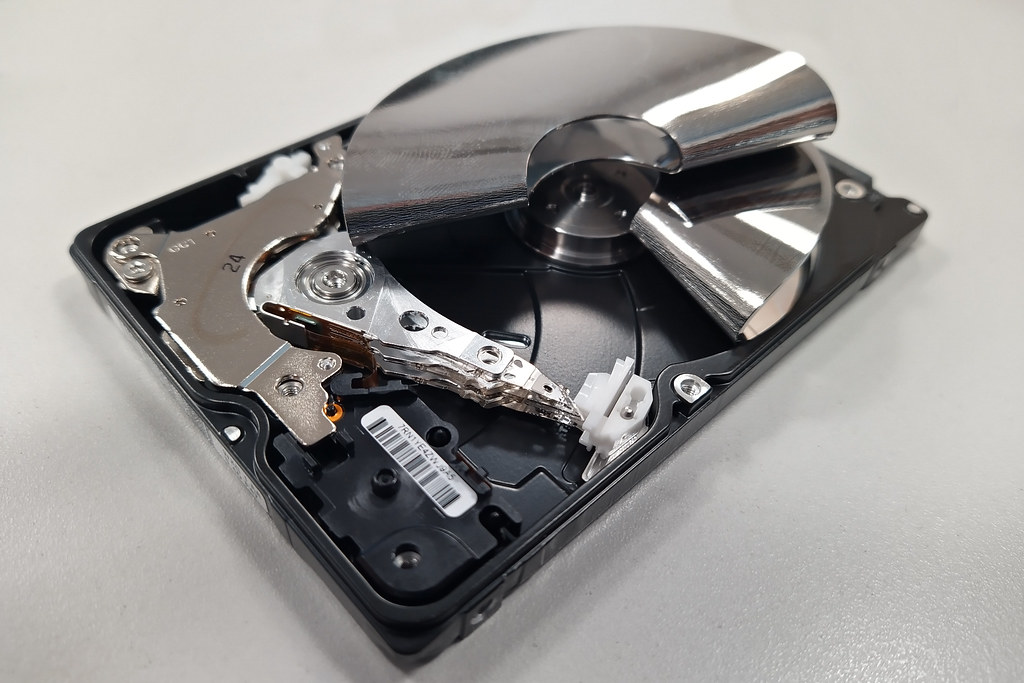
Even physically damaging drives through drilling or punching holes fails to guarantee data destruction. Thieves can still use specialized software to recover data from undamaged sections of the platter. For any organization handling customer records, financial data, or employee information, "good enough" deletion is a breach waiting to happen.
What Makes Onsite Shredding More Secure Than Offsite Methods?
Onsite shredding keeps every sensitive device under your direct supervision from start to finish — no transport, no third-party warehouses, no gaps in the chain of custody. Organizations increasingly choose this approach as their primary defense against data breaches because it transforms a company’s premises into a secure destruction zone.
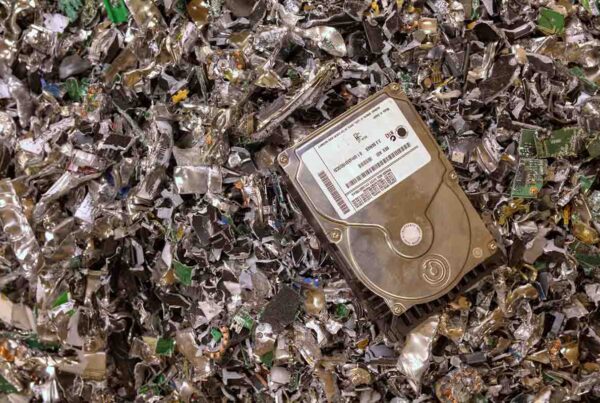
Professional onsite data destruction combines precision equipment with rigorous protocols. Industrial shredders reduce hard drives to fragments smaller than a fingernail, rendering data physically impossible to recover. Advanced security measures — including multi-angle video surveillance — document every moment of the destruction process, creating an unbreakable chain of evidence for your records.
This level of control and verification matters in today’s heightened security landscape, where a single data breach can devastate an organization’s reputation and bottom line.
What Are the Three Levels of Data Sanitization?
Data sanitization breaks into three progressively stronger tiers: clearing, purging, and destruction. Each serves specific security needs while satisfying different regulatory requirements.
Clearing resets devices to factory settings. It’s suitable for low-risk data but insufficient for sensitive information. Purging elevates security by making data unrecoverable even in sophisticated laboratory environments. Destruction — the highest level — combines physical and digital methods to eliminate any possibility of data recovery.
The most sophisticated data destruction protocols recognize that true security extends beyond the moment of destruction. It requires a comprehensive system of verification that stands up to the strictest scrutiny — which is why the strongest approaches layer multiple methods together.
Which Advanced Destruction Methods Actually Work?
The most secure approaches combine multiple methods — for instance, cryptographic erasure followed by onsite shredding provides redundant layers of protection. No single technique covers every threat.
Cryptographic erasure destroys the original decryption key, rendering data permanently inaccessible even if the storage medium remains intact. Software-based overwriting performs multiple passes using random patterns, following NIST SP 800-88 Rev. 2 guidelines — the updated gold standard for media sanitization, published by NIST in September 2025.
Some organizations turn to high-temperature incineration, particularly for solid-state drives that resist traditional destruction methods. Others employ crushing devices. However, these methods, while dramatic, often fall short of complete data destruction — a partially damaged drive may still harbor recoverable data in its intact sections.
How Do You Build a Data Destruction Policy That Holds Up?
A bulletproof data destruction policy demands participation from every corner of your organization — not just IT.
Creating a Department-Wide Security Framework
Marketing teams handle customer data. HR safeguards employee information. Finance protects sensitive transactions. Each department plays a crucial role in the data lifecycle, and effective policies unite these diverse stakeholders under clear, actionable guidelines that evolve with your organization’s growth.
Empowering Your Security Frontline
Your employees represent both your greatest security asset and your most vulnerable point of exposure. Equip your team through comprehensive training programs that demystify destruction procedures. Regular workshops should cover practical scenarios — helping staff recognize sensitive data across various formats and understand proper handling procedures. Document every training session, procedure, and decision. A paper trail proves invaluable during audits and helps identify areas for improvement.
What Does Proper Documentation Look Like?
Thorough documentation transforms data destruction from an assumption into a verifiable fact. Professional ITAD providers like Human-I-T generate serial-specific certificates that detail exactly when and how they destroyed each device.
These certificates include essential information: unique transaction numbers, collection dates, and destruction methods used. Companies should retain these certificates for at least two years as part of their security audit trail — a vital defense against potential legal challenges or regulatory investigations.
What Happens When Data Destruction Goes Wrong?
The financial consequences are devastating — and they extend far beyond the breach itself. Under GDPR regulations, organizations face fines up to 4% of their annual global turnover or €20 million, whichever is greater. According to CMS Law’s GDPR Enforcement Tracker Report, a total of 2,245 fines had been issued as of March 2025 — and enforcement is accelerating.
Companies must simultaneously comply with multiple regulatory frameworks including HIPAA, GLBA, FACTA, and FISMA — each with its own strict penalties for improper data handling. You can learn more about what those mean here.
The financial impact extends beyond fines. Organizations using third-party maintenance could save 30–60% on support costs compared to OEM contracts, according to 2025 industry analyses, yet many continue following costly cycles of reactive spending due to poor disposal practices.
How Do You Choose the Right ITAD Partner?
Look beyond basic certifications. While R2, NAID AAA, and ISO certifications form a crucial baseline, dig deeper into operational practices. The best providers maintain highly trained, security-vetted staff with clear identification protocols. They offer secure, tamper-proof containers for device storage and maintain detailed records of every asset they handle.
Leading providers back their services with comprehensive insurance coverage and can produce references from organizations in your industry. Demand comprehensive documentation that tracks every device from collection through destruction. Most importantly, establish regular review cycles to evaluate and update your destruction procedures as compliance landscapes shift.
Why Isn’t One Destruction Method Enough?
Modern data security demands layered defenses. Smart organizations combine onsite shredding with complementary techniques like cryptographic erasure or degaussing. This multi-faceted approach requires regular policy updates and continuous staff training to stay ahead of evolving threats — particularly as standards like NIST SP 800-88 Rev. 2 introduce updated sanitization requirements for emerging media types.
Your data’s security begins with choosing the right ITAD partner. Look for providers who match industry certifications with proven experience in your sector.
Ready to Strengthen Your Data Destruction Protocols?
Contact us today to learn how our certified onsite shredding services can protect your organization’s sensitive information while maintaining full regulatory compliance. No gaps. No guesswork. Just verified destruction from start to finish.
Get in touch with Human-I-T’s ITAD team →
FAQ
What is onsite hard drive shredding?
Onsite hard drive shredding is a data destruction method where certified technicians bring industrial shredding equipment directly to your facility. Drives are reduced to fragments smaller than a fingernail under your supervision, with multi-angle video documenting the entire process. No sensitive devices ever leave your premises.
How is onsite shredding different from data wiping?
Data wiping uses software to overwrite information, which works well for lower-risk data on functioning drives. Onsite shredding physically destroys the storage medium, making recovery impossible regardless of the drive’s condition. The most secure protocols combine both — cryptographic erasure or software overwriting followed by physical shredding.
What certifications should an ITAD provider have?
At minimum, look for R2, NAID AAA, and ISO certifications. These establish a baseline for environmental compliance, data security procedures, and operational standards. Beyond certifications, verify that the provider offers serial-specific destruction certificates, maintains tamper-proof containers, and employs security-vetted technicians.
What regulations require secure data destruction?
Multiple frameworks mandate proper data disposal, including GDPR (fines up to 4% of global turnover), HIPAA, GLBA, FACTA, and FISMA. Each carries its own penalties for improper data handling. A qualified ITAD partner helps you maintain compliance across all applicable frameworks simultaneously.
Can Human-I-T handle onsite data destruction for my organization?
Yes. Human-I-T provides certified onsite shredding services with full chain-of-custody documentation, serial-specific certificates of destruction, and compliance support across major regulatory frameworks. Every device we process also supports our mission to close the digital divide — because responsible ITAD and digital equity go hand in hand.