

TL;DR
Detroit has 98.4% broadband availability — yet only 73% of residents actually use the internet. That 25-point gap proves the digital divide in Detroit isn’t about cables and towers; it’s about poverty, device access, and decades of systemic disinvestment. Human-I-T helped move Detroit from 40% digitally included to 70% by addressing every barrier — affordable devices, low-cost internet, digital literacy training, and ongoing tech support — not just infrastructure.
Table of Contents
- What’s Really Causing the Digital Divide in Detroit?
- Why Did Human-I-T Choose Detroit?
- How Did Detroit Go from 40% to 70% Digital Inclusion?
- What Are the Four Pillars That Address Root Causes?
- Can This Model Scale Beyond Detroit?
- FAQ
Introduction
Detroit has 98.4% broadband availability, but only 73% of people actually use the internet. That’s a 25-point gap — and it has nothing to do with infrastructure. New research from data scientist Hari Narayanan confirms what Human-I-T knew back in 2020: the digital divide in Detroit is driven by poverty, historical redlining, and barriers that fiber optic lines can’t fix.
Most companies focus on building faster networks. But fancy internet means nothing if families can’t afford computers. Or if they don’t know how to stay safe online. Narayanan’s data reveals a 21-point gap between Detroit’s best- and worst-connected neighborhoods — a gap rooted in decades of unfair treatment, not missing cell towers.
Real digital inclusion in Detroit means helping real people overcome real barriers. And those barriers go way deeper than technology.
What’s Really Causing the Digital Divide in Detroit?
Poverty and systemic disinvestment — not missing infrastructure. Narayanan’s research reveals two different Detroits: one cluster with 80% internet adoption, another stuck at just 59%. Both have the same broadband infrastructure. The difference lies in income levels, poverty rates, and the lasting effects of digital redlining.
Families earning between $20,000 and $25,000 have only 40% internet access compared to 78% for those making $50,000 to $75,000. Device access creates another hurdle — only 86.4% of people with disabilities use computing devices versus 95% without disabilities. Low-income neighborhoods face barriers that go far beyond monthly internet bills.
The research confirms a hard truth: having access to internet doesn’t guarantee that anyone is connected to it.
Why Did Human-I-T Choose Detroit?
Because in 2020, Detroit was America’s least connected major city — at just 40% digital inclusion — and the problem wasn’t infrastructure. It was systemic barriers. Barriers that kept good people from getting online despite having the technology right outside their doors. Literally.
While other organizations focused on building more towers and laying more cable, Human-I-T recognized that historical disinvestment, affordability challenges, and trust issues were the real culprits. These socioeconomic factors demanded a completely different approach — one that put community needs first and technology second.
How Did Detroit Go from 40% to 70% Digital Inclusion?
Partnerships. Between 2019 and 2023, Detroit went from 40% digitally included to 70%, transforming from America’s least connected major city into a digital inclusion success story. Human-I-T played a key role, joining forces with organizations that understood the same truth: real change requires working together, not working around each other.
Building an Ecosystem, Not Just Programs
The Rocket Community Fund provided crucial support, helping us open Detroit’s first warehouse in 2020. Their corporate e-waste donations — 10 to 20 pallets every quarter — continue to fuel our device refurbishment programs. In July 2025, Rocket Community Fund committed an additional $850,000 — alongside $200,000 from Microsoft’s Airband Initiative — to launch a free internet pilot serving 450 families in Detroit public housing, further expanding the ecosystem.
Connect 313 coordinates citywide efforts that make individual programs stronger. Through this collaboration, tech hubs expanded from 5 to 22 locations across Detroit. And the City of Detroit’s Office of Digital Equity & Inclusion ensures our work aligns with broader community goals — backed by $12.8 million in ARPA funds directed toward internet access and technology initiatives, plus $919 million in federal BEAD funding headed to Michigan to serve 87% of the state with fiber.
Why Being "Of the Community" Matters
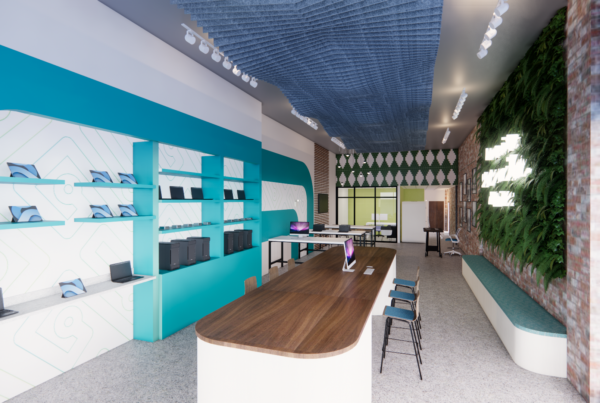
Our 7 Mile Digital Empowerment Center represents something unprecedented: America’s first digital equity retail location. It sits in the heart of the community we serve — accessible by public transportation, open six days a week.
External programs often fail because they impose solutions from outside. Human-I-T embedded ourselves directly in Detroit’s culture and community. Staff members live in Detroit neighborhoods. They understand local challenges because they face — or have faced — them personally. This creates trust that ZIP code data can’t capture. But families feel it the moment they walk through our doors.
What Are the Four Pillars That Address Root Causes?
Detroit’s transformation is built on our four-pillar model — designed to tackle root causes, not symptoms. Many organizations treat digital divide symptoms. Not us. Human-I-T tackles the disease itself.
Low-Cost Devices That Actually Work
Device access remains a massive roadblock in Detroit’s lowest-adoption neighborhoods. Families can’t get online without reliable computers and tablets, and traveling to libraries to use shared machines isn’t always feasible — and it’s certainly inconvenient.
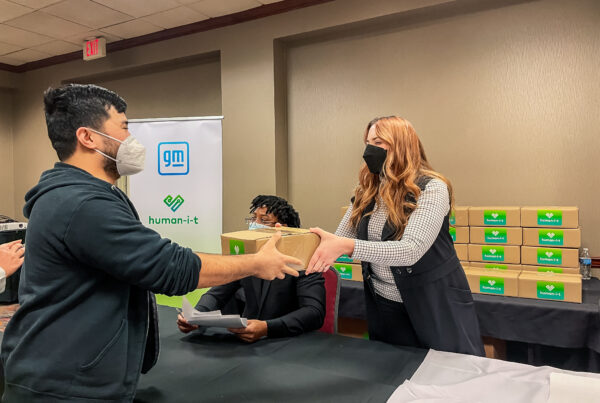
Our sustainable refurbishment model transforms corporate and individual e-waste into opportunity. Fresh laptops or desktops can cost upwards of $700+. We offer name-brand devices like HP, Dell, and Apple starting as low as $139. Our tech is made even more accessible through payment plans and income-qualified discounts. Every device gets thoroughly tested and comes with warranties — because high-quality technology shouldn’t be a luxury item.
Affordable Internet Access
Affordability is the top barrier in Detroit’s struggling ZIP codes. Monthly internet bills eat up huge chunks of tight budgets, contributing heavily to the digital divide. Our Gold Membership program slashes internet costs through partnerships with major providers.
We negotiate directly with carriers to secure discounts that individual families can’t get alone. Low-cost plans start at $15 per month for qualified households. Free installation eliminates setup barriers. Some families get internet for the first time in their lives through these partnerships.
Digital Literacy Training for Today’s World
Having a computer means nothing without knowing how to use it safely. Skills gaps create real barriers — adults who can’t navigate job applications online, parents unable to help kids with digital homework, families who avoid banking websites because they don’t understand online safety.
Our free digital training through Cisco tackles these everyday challenges head-on. Classes teach practical skills like creating secure passwords, recognizing scam emails, and safely accessing government benefits online. We show parents how to set up parental controls and help job seekers master the online applications that employers expect.
Training happens in neighborhoods where people live and work — not downtown locations that require long bus rides. Instructors speak the community’s languages and understand local challenges. Our newest program teaches AI skills because the next digital divide is already forming. These courses prepare people for jobs that didn’t exist five years ago, ensuring families stay ahead of technological changes instead of falling further behind.
Ongoing Tech Support That Builds Trust
Technology breaks. People get confused. Without reliable help, many families give up entirely. Our bilingual tech support operates 24/7 with real humans who understand community needs.
Spanish-speaking technicians serve Detroit’s Latino communities. Support doesn’t end after device pickup — it continues for as long as people need help. These four pillars work together because Detroit’s digital challenges don’t exist in isolation. Transforming a city requires comprehensive solutions that address multiple barriers simultaneously.
Can This Model Scale Beyond Detroit?
Yes — and the dual-mission design is what makes it sustainable. The e-waste crisis and the digital divide often seem like separate challenges. One’s environmental. One is social justice. Human-I-T proves they’re connected solutions.
Corporate technology becomes obsolete every few years, creating mountains of waste. Meanwhile, families struggle without affordable devices. Our model transforms this problem into opportunity. Unlike programs dependent on grants that disappear, Human-I-T operates sustainably. Corporate social responsibility partnerships provide steady e-waste streams that fund our four-pillar approach. Companies get secure data destruction and environmental compliance. Communities get digital access.
This framework scales to any city facing similar challenges. Detroit proves the model works. Other communities can adapt it locally while maintaining core principles. Narayanan’s research confirms that infrastructure alone never solves digital equity — but comprehensive, community-based approaches do.
Ready to be part of real change? Whether you need affordable devices and internet, want to bring this proven model to your community, or have old technology to transform into opportunity — Human-I-T makes it simple to create lasting impact.
FAQ
Why does Detroit have a digital divide if broadband is widely available?
Because 98.4% broadband availability doesn’t translate to actual adoption. Research shows a 21-point gap between Detroit’s best- and worst-connected neighborhoods — driven by poverty, income inequality, and the lasting effects of redlining. Infrastructure exists. Affordability and access to devices do not.
How did Detroit go from 40% to 70% digital inclusion?
Through a coalition-based, community-first approach. Human-I-T, the Rocket Community Fund, Connect 313, and the City of Detroit’s Office of Digital Equity & Inclusion worked together — expanding tech hubs from 5 to 22, distributing refurbished devices, and making internet affordable. No single organization did it alone.
What is Human-I-T’s four-pillar model for digital equity?
It’s a comprehensive approach that addresses every barrier keeping families offline: low-cost refurbished devices, affordable internet starting at $15/month, free digital literacy and AI skills training, and 24/7 bilingual tech support. Each pillar reinforces the others — because giving someone a laptop without internet, training, or support doesn’t close the divide.
How can I get an affordable computer or internet in Detroit?
Visit Human-I-T’s Digital Empowerment Center on 7 Mile or shop online at store.human-i-t.org. Name-brand laptops start as low as $139 with payment plans and income-qualified discounts available. Check your eligibility for our Gold Membership to access low-cost internet plans and free installation.
How can my company help close the digital divide in Detroit?
Donate your corporate e-waste to Human-I-T. Your retired laptops, desktops, and tablets get securely wiped and refurbished into affordable devices for Detroit families. You get certified data destruction and environmental compliance. The community gets digital access. Two problems, one solution.