

TL;DR
Donate your old electronics instead of recycling them. In 2022, the world generated 62 million tonnes of e-waste, and e-waste production has grown five times faster than formal recycling rates since 2010. Donating functional devices extends their lifespan, keeps toxic materials out of landfills, and helps bridge the digital divide for families who lack access to technology. Fill out Human-I-T’s donation form to get started.
Table of Contents
- Should You Recycle Your Old Technology—or Donate It?
- What Actually Happens to Electronics When You Recycle Them?
- Is Recycling Technology Better Than Throwing It Away?
- How Do You Know If Your Device Is Donation-Ready?
- How Should You Prepare Your Old Computer for Donation?
- What’s the Easiest Way to Donate Old Computers?
- FAQ
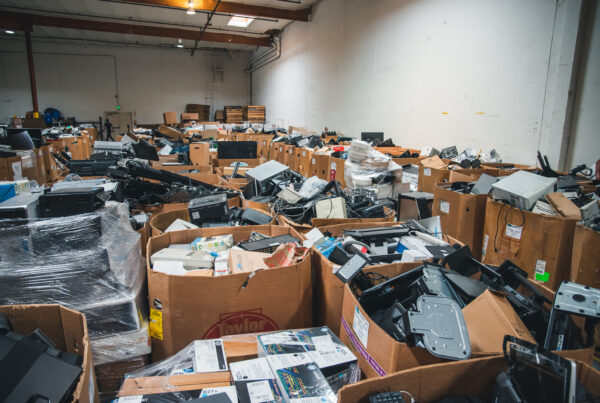
According to the Global E-waste Monitor 2024, the world generated 62 million tonnes of e-waste in 2022—averaging 7.8 kg per person. That number is projected to hit 82 million tonnes by 2030. And according to UNEP, global e-waste production has grown five times faster than formal recycling rates since 2010.
That old laptop gathering dust in your closet or the outdated smartphone tucked away in your drawer? It’s part of this crisis. But throwing it in a recycling bin isn’t the environmental victory most people assume it is.
Computer donation and repurposing offers a more powerful solution—one that addresses both environmental sustainability and social equity. When you donate used technology instead of discarding it, you keep toxic materials out of landfills, drinking water, and soil. You also help bridge the digital divide that prevents millions of working families from accessing essential online resources for education, employment, and healthcare.
Should You Recycle Your Old Technology—or Donate It?
Donate it. Recycling sounds responsible, but the reality is far more complicated—and far less effective than most people think.
In 2022, only about 22.3% of e-waste reached proper recycling facilities, according to the Global E-waste Monitor. The remaining 77.7% ended up in landfills or was processed through informal, unsafe channels. E-waste recycling faces critical structural problems: lack of standardized policies, inadequate specialized handling for toxic materials, and complicated disassembly requirements. Most facilities can’t manage any of this efficiently.
Donation, by contrast, extends a device’s useful life. That’s the single most environmentally beneficial action you can take with functioning electronics—keeping them in circulation rather than shredding them for raw materials.
What Actually Happens to Electronics When You Recycle Them?
Much of what gets "recycled" is exported to countries with minimal environmental regulations—where it poisons communities instead of protecting them.
According to investigations by the Basel Action Network, companies like Total Reclaim—once a trusted recycler—falsified documents to illegally export 8 million pounds of mercury-containing monitors to Hong Kong over seven years. This isn’t an isolated case. Even with certification programs, the economics of recycling often drive companies to prioritize profit over proper processing, leading to environmental contamination and human health hazards abroad.
These aren’t oversights. They’re the predictable result of a system where recycling economics incentivize cutting corners over doing the right thing.
Is Recycling Technology Better Than Throwing It Away?
Yes—but that’s a low bar. Both options waste the substantial resources already invested in manufacturing these devices.
The most effective choice is extending a device’s useful life through computer donation. This matters especially when over 100 million Americans lack adequate access to technology for education, employment, healthcare, and essential services. As the Benton Foundation reported in 2025, no meaningful progress is being made on closing the digital divide—making donated devices even more critical.
By donating functional devices instead of recycling them, you prevent environmental harm and create positive social impact by providing vital digital access to working families, single parents, and students who need it most.
How Do You Know If Your Device Is Donation-Ready?
The age of your device is the primary determining factor. Computers and laptops less than five years old are strong candidates for donation and refurbishment. Devices within this timeframe typically still have the processing power to run current software applications that recipients need for education, job searching, and accessing essential services.
Beyond age, functionality matters. Consider these criteria:
- Does it turn on and operate properly?
- Does the screen display work (for devices with screens)?
- Can it run current operating systems (Windows 11, recent macOS, Chrome OS)? Note: Windows 10 reaches end of support on October 14, 2025—devices running only Windows 10 may have limited donation value going forward.
- Does it have sufficient memory and processing power for basic tasks?
- Does the battery hold a reasonable charge (for portable devices)?
- Is it free of major physical damage or hardware failures?
If your device doesn’t meet these criteria, it may still be worth donating to an organization like Human-I-T that handles both refurbishment and responsible recycling. Not every device gets a second life—but every device deserves responsible processing.
How Should You Prepare Your Old Computer for Donation?
Proper preparation protects your data and maximizes your donation’s usefulness. Start with security, then focus on completeness.
Securing Your Data
Back up any important files to an external drive or cloud storage. Then thoroughly wipe your device using specialized software designed for complete data removal—standard deletion methods often leave recoverable information behind.
For Windows devices, tools like Blancco, DBAN, or Active@ KillDisk can perform military-grade data wiping. Mac users should utilize the built-in Disk Utility with secure erase options. Smartphone donors should perform a factory reset after backing up data and removing any SIM or SD cards.
Even if you can’t fully wipe your device—don’t let that stop you from donating. Reputable donation organizations implement additional protection measures. Most certified donation centers use industry-standard data destruction processes that follow government-approved methods to completely remove personal information. Devices that can’t be sanitized undergo physical destruction, with components responsibly recycled.
Maximizing Donation Value
Why keep drawers full of random chargers, cables, and peripherals you’ll never use again? Including all components ensures your device can be put to immediate use without requiring additional purchases.
Send along power supplies and adapters, keyboards, mice, speakers or headphones, installation media, licenses, certificates of authenticity, original documentation, and all cables, dongles, and connection adapters. A desktop without a power cord or a laptop missing its charger creates unnecessary barriers for recipients.
Final Preparation Steps
Account management: Sign out of all accounts (email, cloud services, app stores). Deactivate your device from services like Find My iPhone/Android. Remove the device from two-factor authentication systems.
Physical preparation: Clean the device’s exterior. Check for personal items in CD/DVD drives or card slots. Remove any stickers with personal or company information.
Packaging: Package carefully to prevent damage during transit. Include any relevant paperwork—donation forms, tax receipts. Label boxes clearly if donating multiple items.
What’s the Easiest Way to Donate Old Computers?
Fill out Human-I-T’s technology donation form and we handle the rest.
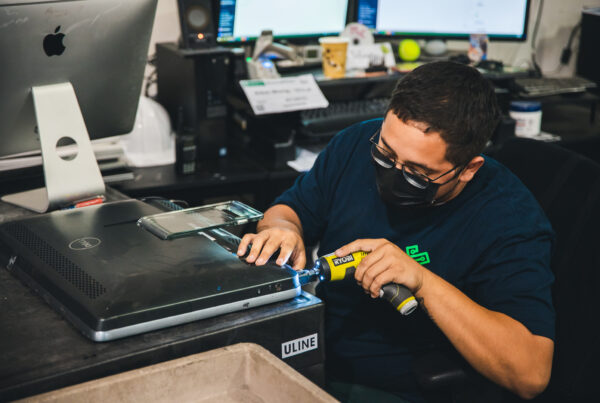
Responsible electronics disposal isn’t just good for the planet—it’s transformative for people. At Human-I-T, we’ve witnessed countless success stories from the 434,000+ devices we’ve distributed and the 110,000+ households we’ve connected to the internet. The environmental impact alone—over 15.1 million pounds of e-waste diverted from landfills—represents a significant victory for our planet.
We accept virtually all technology for processing: desktop computers, laptops, tablets, smartphones, printers, networking equipment, servers, peripherals, and even cables and charging accessories. Our NAID AAA Certified facility ensures proper handling of all items, whether they’re destined for refurbishment or recycling.
Each donation creates positive change that extends far beyond the initial act. Don’t recycle—donate.
Fill out the donation form today and give your old technology a second life.
FAQ
Can I donate a computer that doesn’t turn on?
Yes. Organizations like Human-I-T accept non-functional devices for responsible recycling. While these devices may not get a second life, donating them ensures toxic materials like lead, mercury, and cadmium are handled safely—not dumped in a landfill. Our NAID AAA Certified facility processes both refurbishable and recyclable items.
Is my data safe when I donate an old computer?
Reputable donation organizations use industry-standard data destruction processes that follow government-approved methods. At Human-I-T, every donated device goes through certified data sanitization. Devices that can’t be fully wiped undergo physical destruction. You should still attempt to back up and wipe your data before donating, but even if you can’t, your information is protected.
Do I get a tax deduction for donating electronics?
Yes. Donating electronics to a registered nonprofit like Human-I-T qualifies as a tax-deductible charitable contribution. You’ll receive documentation for your records. The deduction amount depends on the fair market value of the donated items—consult a tax professional for specifics.
What types of electronics does Human-I-T accept?
We accept desktops, laptops, tablets, smartphones, printers, networking equipment, servers, peripherals, cables, and charging accessories. Whether your device is five months old or five years old, functional or broken, fill out our donation form and we’ll process it responsibly—either through refurbishment for families in need or through certified recycling.
How does donating electronics help close the digital divide?
Over 100 million Americans lack adequate access to technology for education, employment, and healthcare. When you donate a functional device, Human-I-T’s technicians refurbish it and distribute it to income-qualified families, students, and working-class communities at low cost. We’ve distributed over 434,000 devices and connected more than 110,000 households to the internet—each one representing a real family gaining access to opportunities that require being online.