
TL;DR
The biggest lever for data center sustainability isn’t solar panels or better cooling — it’s IT Asset Disposition (ITAD), which extends hardware life and slashes embodied carbon. Manufacturing new equipment generates 24% of a data center’s total emissions before it processes a single byte, yet only 28% of operators even track what happens to their decommissioned hardware. A strategic ITAD program delivers immediate carbon reductions, keeps toxic e-waste out of landfills, and — as Microsoft proved by hitting a 90.9% reuse and recycling rate in 2024 — turns sustainability into a competitive advantage.
Table of Contents
- Why Won’t Solar Panels and Better Cooling Save Data Centers?
- What Makes Next-Gen Computing Demands So Dangerous for Sustainability?
- How Long Do Data Center Servers Actually Last?
- How Are Industry Leaders Solving the Problem Through ITAD?
- What Are the Compound Environmental Benefits of ITAD Refurbishment?
- How Can Your Data Center Start a Strategic ITAD Program?
- FAQ
Why Won’t Solar Panels and Better Cooling Save Data Centers?
Because they ignore the biggest source of waste: perfectly functional hardware heading to landfills while manufacturers push unnecessary refresh cycles.
Every data center sustainability report touts the same solutions — more renewables, smarter power management, better cooling systems. Meanwhile, according to Gartner, worldwide data center electricity consumption will hit 448 terawatt hours (TWh) in 2025 and nearly double to 980 TWh by 2030 — approaching the total electricity consumption of an entire industrialized nation like Japan. Data centers already account for 4% of total U.S. electricity use as of 2024, with demand expected to more than double by decade’s end.
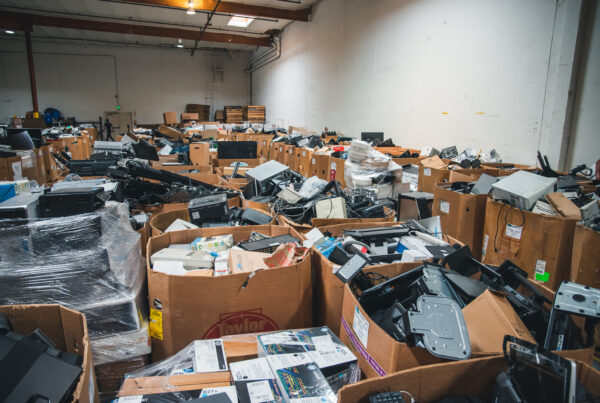
Yet a mere 28% of operators track what happens to their hardware after it leaves the server room, while only 25% measure their e-waste impact. We’re building wind farms while perfectly good servers head to landfills.
These facilities pump out 1% of global energy-related emissions — and a tsunami of next-generation AI workloads is about to make everything worse. Our current solutions won’t save us.
What Makes Next-Gen Computing Demands So Dangerous for Sustainability?
AI and high-performance computing don’t just demand power — they devour it at densities that legacy infrastructure can’t handle, triggering a cascade of new hardware manufacturing and its massive embedded carbon costs.
Facilities built in the 80s and 90s already buckle under current density requirements. The coming wave of AI workloads threatens to overwhelm even our most robust data centers. Worse, prime real estate for new construction has virtually disappeared in established tech hubs, leaving operators scrambling.
Here’s the dirty secret: manufacturing new servers and equipment generates 24% of a data center’s total emissions before processing a single byte of data. Yet we keep building more. Global e-waste production has grown five times faster than formal recycling rates since 2010, reaching 62 million metric tonnes in 2022 — and the documented global collection and recycling rate sits at just 22.3% and is projected to drop to 20% by 2030.
Think that’s sustainable? Traditional solutions won’t save us from this perfect storm of resource constraints, manufacturing emissions, and waste. The true cost of our "upgrade everything" mentality is about to come due.
How Long Do Data Center Servers Actually Last?
Far longer than manufacturers want you to believe. Server and storage systems maintain failure rates below 0.5% even after 10–15 years of operation. High-value components like GPUs and networking equipment often retain significant operational value well beyond standard lifecycles.
Service Express’s study of over 500,000 devices proves that critical server and storage equipment maintains reliable performance for more than a decade. Their data shows no significant increase in failure rates even during periods of high utilization. Storage equipment shows particularly impressive longevity, with failure rates hovering between 0.1–0.2% even after five years of continuous operation.
Yet data centers continue dumping millions into unnecessary 3–5 year refresh cycles. These upgrades aren’t driven by performance degradation — they’re dictated by warranty expiration dates and marketing pressure from manufacturers eager to sell the next generation.
The gulf between actual hardware reliability and industry refresh practices has created a sustainability crisis that no amount of solar panels can fix. But forward-thinking industry leaders have already proven there’s a better way.
How Are Industry Leaders Solving the Problem Through ITAD?
By maximizing existing assets through IT Asset Disposition — and the results speak for themselves. Microsoft achieved a 90.9% reuse and recycling rate for servers and components in 2024, exceeding its 2025 target of 90% a full year ahead of schedule. Oracle leads the charge with an unprecedented 99.6% reuse and recycling rate, while HPE transforms three million units annually through their groundbreaking reuse program.
Now contrast that with the rest of the industry. A mere 28% of data center operators even bother tracking what happens to their old equipment. Even more damning — 26% of companies don’t recycle their IT assets at all. They just… throw them away.
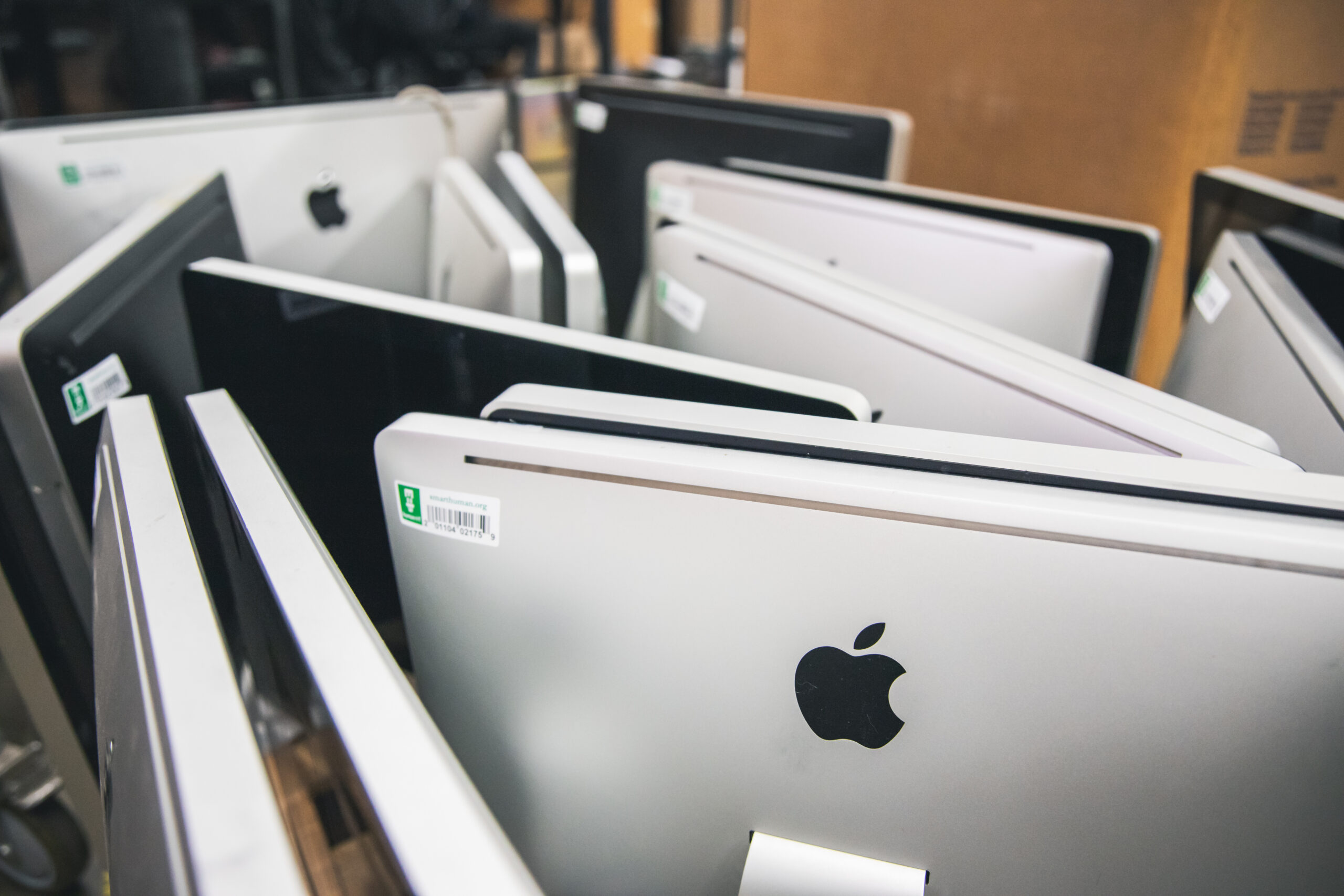
Refurbishment via ITAD preserves embodied carbon while driving down operational costs. It keeps e-waste out of landfills and toxins out of our soil, water, and air. Strategic equipment lifecycle management slashes both electricity and water consumption, transforming sustainability from a cost center into a profit driver. AWS demonstrated this brilliantly, banking a billion dollars simply by extending their server lifespan one additional year. One year.
These numbers tell an undeniable story: your most powerful sustainability tool already sits in your server racks, waiting to be optimized through strategic ITAD management.
What Are the Compound Environmental Benefits of ITAD Refurbishment?
Every refurbished unit triggers a domino effect throughout the global supply chain — benefits that ripple far beyond your data center walls.
ITAD refurbishment prevents new mining operations for critical materials, eliminates transportation emissions from global shipping, and reduces manufacturing energy usage across multiple continents. Component-level refurbishment multiplies these benefits further. Modern ITAD programs target specific parts for replacement while preserving the rest of the system, delivering improved efficiency without disrupting entire supply chains.
While traditional sustainability measures like solar installations take years to show results, ITAD programs deliver immediate carbon reductions that compound with each preserved component. It’s a circular model that addresses the crisis at its root — not just at the power meter.
How Can Your Data Center Start a Strategic ITAD Program?
The path to genuine data center sustainability starts with a strategic ITAD program that maximizes every server, every component, and every byte of computing power in your facility. No more wasteful refresh cycles. No more premature equipment disposal. No more unnecessary manufacturing emissions.
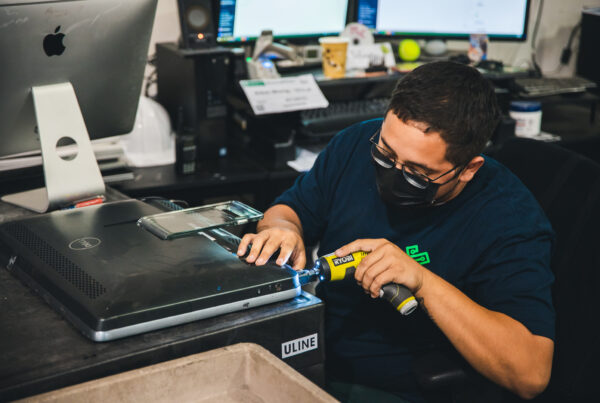
Human-I-T’s comprehensive data center equipment disposal solutions redefine equipment lifecycle management. Our certified processes protect both your data and the planet, transforming end-of-life equipment into new opportunities for working families and underserved communities. We handle everything from secure pickup to data sanitization, from refurbishment to redeployment — ensuring your hardware delivers maximum value throughout its entire lifespan.
Contact us today to discover how our data center equipment disposal experts can help your data center achieve its sustainability goals while boosting your bottom line.
FAQ
How much of a data center’s carbon footprint comes from manufacturing new equipment?
Manufacturing new servers and equipment generates approximately 24% of a data center’s total emissions — before the hardware processes a single byte of data. That embodied carbon is completely avoidable when equipment is refurbished and reused through a strategic ITAD program.
Do data center servers really last longer than the typical 3–5 year refresh cycle?
Yes. Studies of over 500,000 devices show that enterprise servers and storage systems maintain failure rates below 0.5% even after 10–15 years of operation. Storage equipment performs particularly well, with failure rates of just 0.1–0.2% after five years of continuous use. Most refresh cycles are driven by warranty expiration and manufacturer marketing — not actual performance degradation.
What is ITAD and how does it improve data center sustainability?
IT Asset Disposition (ITAD) is the process of responsibly managing end-of-life data center equipment through refurbishment, reuse, and — only when necessary — recycling. ITAD preserves embodied carbon, keeps hazardous e-waste out of landfills, and reduces the need for new manufacturing. AWS saved a billion dollars by extending server lifespans just one year through this approach.
How does Human-I-T handle data center equipment disposal?
Human-I-T provides comprehensive, certified ITAD services — from secure pickup and data sanitization to refurbishment and redeployment. Equipment that still has operational life gets a second chance, often reaching working families and underserved communities who need it. Contact our team to learn how your decommissioned hardware can drive both sustainability and digital equity.
What percentage of data centers actually track their e-waste?
Only 28% of data center operators track what happens to their decommissioned hardware, and 26% don’t recycle their IT assets at all. That’s a massive sustainability blind spot — and it’s one that a strategic ITAD partnership can eliminate immediately.