
TL;DR
E-waste recycling alone cannot solve the e-waste crisis because the problems start long before a device reaches a recycling center — they begin at the design phase. The world now generates 62 million metric tonnes of e-waste annually, according to the Global E-waste Monitor 2024, with projections reaching 82 million tonnes by 2030, yet recycling infrastructure and policy remain woefully inadequate. The most effective action individuals can take is donating working electronics for refurbishment rather than recycling, extending device lifespans and bridging the digital divide simultaneously.
Table of Contents
- How big is the e-waste crisis right now?
- Why does e-waste keep growing so fast?
- What makes e-waste recycling so difficult?
- How do electronics manufacturers contribute to the problem?
- What is the human cost of our electronics addiction?
- Why do current regulations fail to address e-waste?
- What would actually solve the e-waste crisis?
- Join the Movement: Donate, Don’t Recycle, Technology with Human-I-T
- FAQ
Introduction
We find ourselves surrounded by electronics. Smartphones, laptops, tablets — these devices enhance our lives. But they come with a hidden cost. According to the United Nations Environment Programme, humanity now produces 62 million tonnes of electronic waste every year — enough to fill 1.5 million transport trucks. That figure is projected to hit 82 million tonnes by 2030. And the world’s recycling infrastructure? It’s not even close to keeping pace.
E-waste recycling, while a critical component of managing this waste, falls short of being a comprehensive solution. The inadequacy stems from deep-rooted structural issues within the recycling industry and inherent flaws in the design and manufacturing of electronics themselves. Companies design products to fail. Governments lack the regulatory frameworks to hold them accountable. And recyclers are left trying to disassemble devices that were never meant to be taken apart.
To truly mitigate the e-waste crisis, a multifaceted approach that includes redesigning electronics for easier recycling, implementing stricter regulations, and fostering global cooperation around e-waste refurbishment is essential. Recycling is one piece of the puzzle — but it was never meant to carry the whole picture.
How Big Is the E-Waste Crisis Right Now?
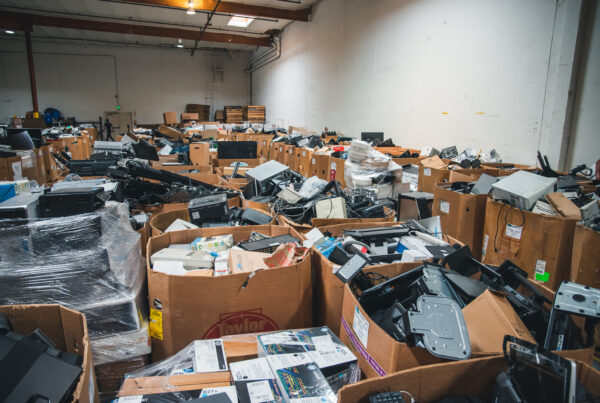
The crisis is massive and accelerating. E-waste encompasses electronic equipment that has either reached the end of its functional life or is no longer desired by its owner — everything from obsolete smartphones to outdated refrigerators, each harboring a mix of valuable resources and hazardous materials. The complexity and diversity of e-waste make it a unique challenge in waste management, necessitating innovative approaches to recycling and disposal.
The trajectory of e-waste growth is alarming. According to the Global E-waste Monitor 2024, annual generation has already reached 62 million metric tonnes, with projections indicating a surge to 82 million tonnes by 2030. The sheer volume of e-waste generated annually is a testament to the unsustainable consumption patterns that have come to define our relationship with technology. This immense volume of discarded electronics represents both a loss of valuable resources and a significant environmental hazard.
Why Does E-Waste Keep Growing So Fast?
Two forces drive the surge: an insatiable appetite for new electronics and devices designed to become obsolete.
The global obsession with electronics
The demand for the latest technology continues to fuel the cycle of consumption and disposal. With over 1.2 billion smartphones shipped annually — and global shipments rising 2% year-over-year in 2025, according to Reuters — the relentless pursuit of the newest gadgets has profound implications for waste generation, pushing the limits of our planet’s capacity to absorb the consequences.
Short device life-cycles
Compounding the issue is the trend toward increasingly shorter device life-cycles. The average consumer now replaces their smartphone every 2.5 years, a cycle driven by swift advancements in technology and the fact that many products are engineered to become outdated fast. This disposability culture — this throwaway culture — not only exacerbates the volume of e-waste but also reflects a broader societal shift away from sustainability and towards convenience and novelty.
Addressing this issue requires a multifaceted strategy. Beyond the immediate environmental impacts, the growth of e-waste speaks to deeper issues of consumption, waste, and sustainability that challenge us to rethink our relationship with technology.
What Makes E-Waste Recycling So Difficult?
Recycling electronics is plagued by four systemic failures: inconsistent policy, hazardous materials, inefficient processes, and broken economics. None of these are accidents. They’re the predictable result of an industry that never designed its products with end-of-life in mind.
No standardized recycling policies exist
The absence of universally accepted recycling policies significantly hinders the effectiveness of e-waste management efforts. Without a global consensus on the safest and most effective ways to recycle and manage e-waste, practices vary widely, leading to inefficiencies and increased environmental risks. This disparity not only complicates the recycling process but also undermines efforts to establish a cohesive, effective approach to e-waste management.
Hazardous materials demand specialized handling
E-waste is not just cumbersome. It’s dangerous. The presence of hazardous materials like mercury and lead necessitates specialized handling to prevent environmental contamination and safeguard human health. However, the expertise and equipment required for such tasks are not universally available, creating a significant barrier to safe e-waste recycling. This gap in capabilities underscores the need for investment in training and technology to equip recyclers with the tools they need to handle e-waste safely.
Recycling processes were never designed for efficiency
Recycling electronics is a resource-intensive endeavor, demanding vast amounts of water, chemicals, and energy. The complexity of modern electronics, with their many components and materials, makes recycling a daunting task. Most businesses and recycling facilities are ill-equipped to dismantle and process e-waste efficiently, leading to a situation where the potential for resource recovery is vastly underutilized. This inefficiency not only wastes valuable materials but also contributes to the growing volume of e-waste.
The economics of proper recycling are broken
The cost of adopting innovative recycling methodologies often outweighs the financial return, particularly when scalability and compatibility with existing processes are considered. This economic imbalance discourages investment in advanced recycling technologies, perpetuating reliance on outdated, less effective methods. The struggle to reconcile economic viability with environmental responsibility remains a significant hurdle for the recycling industry.
Overcoming these challenges requires a concerted effort from all stakeholders. Innovations in recycling technology, coupled with robust policy frameworks and global cooperation, are essential to advancing the e-waste recycling agenda.
How Do Electronics Manufacturers Contribute to the Problem?
Manufacturers make the critical decisions — material selection and product design — that determine whether a device can ever be recycled effectively. And most still don’t prioritize recyclability.
Material selection shapes recyclability
The choice of materials used in electronics has a profound impact on their recyclability. Researchers like Madhavi Srinivasan from Singapore’s Nanyang Technological University emphasize that selecting recyclable and less hazardous materials is crucial. This not only facilitates easier recycling but also reduces the environmental footprint of discarded electronics.
Modular design enables longer lifespans
The design phase holds the key to extending the life of electronic products. As noted by Mazher Mohammed, a senior lecturer in digital fabrication, designing products for easier disassembly can significantly enhance their recyclability. This approach not only aids in the recycling process but also supports the repair and reuse of electronics — reducing the need for new resources.
Some manufacturers are leading the way
Not every manufacturer is ignoring the problem. Panasonic’s Toughbook series stands as a testament to the potential for longevity in electronics. Engineered to last nearly a decade, these durable devices challenge the throwaway culture that pervades the tech industry, illustrating the feasibility of creating long-lasting, high-performance electronics.
Panasonic further demonstrates its commitment to sustainability through the Revive program. This initiative ensures that Toughbooks, at the end of their useful life, are either refurbished for continued use or responsibly recycled, setting a benchmark for corporate responsibility in the electronics sector.
But the industry at large hasn’t caught up
Despite these advancements, the industry at large still grapples with the challenge of designing electronics with the end in mind. The sentiment echoed by Jim Puckett, founder of the Basel Action Network, underscores a critical oversight: many electronics are not designed with recyclability as a priority. This oversight not only complicates recycling efforts but also contributes to the growing e-waste dilemma.
While some manufacturers are making strides towards sustainability, a broader industry-wide shift is essential. The little-heard-about impacts on humans create an ethical imperative for manufacturers to prioritize recyclability and sustainability in their designs.
What Is the Human Cost of Our Electronics Addiction?
The human cost is staggering — and it falls hardest on some of the world’s most vulnerable people.
The Democratic Republic of the Congo (DRC) sits atop the world’s largest reserves of cobalt, a critical component that powers the global electronics industry. Accounting for more than 60% of the world’s supply, the DRC’s cobalt is integral to the manufacture of batteries that energize everything from smartphones to electric vehicles. This vast natural wealth, however, casts a long shadow over the nation.
Among the 255,000 Congolese citizens mining cobalt, at least 40,000 are children. These young miners, some as young as seven, face perilous conditions daily, deprived of education and exposed to extreme risks, all for meager earnings. Reports from organizations including Save the Children and a 2025 University of Nottingham Rights Lab study continue to document the extent of forced labor and exploitation in these mines. When we mention numbers, remember: these are real humans. Not statistics.
The dangers extend beyond exploitation. Annually, up to 2,000 individuals lose their lives in mining accidents — victims of hazardous conditions that define artisanal cobalt extraction. Miners navigate treacherous tunnels without adequate safety measures, facing the constant threat of collapse, toxic exposure, and long-term health repercussions. These conditions highlight the urgent need for reform in how cobalt is sourced.
Why Do Current Regulations Fail to Address E-Waste?
Existing regulations fail because they lack enforcement mechanisms, contain exploitable loopholes, and — in the case of the United States — barely exist at all.
The Basel Convention’s shortcomings
The Basel Convention, established to regulate the international movement of hazardous wastes including e-waste, faces critical shortcomings that undermine its effectiveness. A pivotal amendment aimed at completely banning affluent countries from exporting e-waste to developing nations has yet to be put into full effect. This gap in enforcement allows the continued transfer of hazardous electronic waste under the guise of recycling, often to countries ill-equipped to handle it safely, exacerbating environmental degradation and health risks in vulnerable communities.
The Total Reclaim scandal exposed the system’s weakness
The Basel Action Network’s (BAN) e-Stewards certification, designed to promote responsible e-waste recycling, uncovered egregious violations by Total Reclaim. This company, once a trusted recycler, falsified documents to illegally export 8 million pounds of mercury-containing monitors to Hong Kong over seven years, blatantly disregarding environmental and health safety standards.
The Total Reclaim scandal highlights a broader issue within voluntary certification programs: their susceptibility to manipulation. Recyclers, driven by the volatile rare metals market, may opt for non-compliant practices to cut costs, exploiting the trust placed in these certifications. This vulnerability shows the need for more stringent oversight and enforcement mechanisms.
The United States has no comprehensive federal e-waste law
In the United States, the absence of comprehensive federal e-waste regulations presents a glaring loophole in the global fight against e-waste. Despite being a signatory to the Basel Convention over three decades ago, the U.S. allows for the legal export of nearly all forms of e-waste. This regulatory vacuum not only contributes to the global e-waste problem but also sidesteps the country’s responsibility to manage its electronic waste sustainably, placing the burden on less developed countries.
What Would Actually Solve the E-Waste Crisis?
A real solution requires attacking the problem from both ends: upstream changes in how electronics are designed and manufactured, and downstream enforcement of how they’re disposed of and recycled.
Design electronics for recycling from the start
The cornerstone of reducing e-waste lies in the initial design phase. As Jim Puckett points out, the ideal scenario is one where electronics are constructed to be easily dismantled and recycled. This approach not only simplifies the recycling process but also maximizes the recovery of valuable materials, reducing the need for new resources and minimizing environmental impact. Designing for recyclability from the outset is a critical step towards a more sustainable electronics industry.
Hold manufacturers accountable through Extended Producer Responsibility
The concept of Extended Producer Responsibility (EPR) policies marks a pivotal shift towards holding manufacturers accountable for the lifecycle of their products. These policies encourage companies to design products with their end-of-life in mind, fostering innovations that lead to more recyclable and less harmful electronics. By integrating disposal and recycling costs into the product lifecycle, EPR policies incentivize manufacturers to rethink product design, materials selection, and recycling processes — aligning economic interests with environmental sustainability.
Close the export loophole with stricter regulations
The absence of stringent U.S. regulations that specifically prohibit the export of e-waste to developing countries creates a loophole that undermines global e-waste management efforts. Assistant U.S. Attorney Seth Wilkinson’s observation highlights a critical gap in the legal framework that allows e-waste to be shipped overseas, where it often ends up in informal recycling sectors, causing environmental degradation and health hazards. Closing this loophole through stricter regulations and enforcement is essential to ensuring responsible e-waste management.
Demand ethical sourcing of raw materials like cobalt
The extraction of cobalt in the DRC emphasizes the urgent need for ethical sourcing practices. The link between cobalt mining and human rights abuses — including child labor and hazardous working conditions — as well as environmental damage, calls for a reevaluation of supply chain practices. By prioritizing ethical sourcing, manufacturers can mitigate the adverse social and environmental impacts associated with raw material extraction, contributing to a more sustainable and equitable electronics industry.
Manufacturers, policymakers, and consumers must work together to drive systemic change. Through innovation, responsibility, and ethical practices, we can pave the way for a circular economy that conserves resources and respects human rights.
Join the Movement: Donate, Don’t Recycle, Technology with Human-I-T
In the face of the e-waste crisis, taking action is more crucial than ever. Human-I-T offers a pathway for individuals and organizations alike to make a tangible impact. By donating your used technology, you’re not disposing of electronics — you’re contributing to a larger vision of digital inclusion and environmental sustainability.
Our mission revolves around transforming unwanted or obsolete electronics into valuable educational and occupational tools for working families and underserved communities. This approach not only bridges the digital divide but also champions responsible e-waste disposal. Each donation plays a pivotal role in extending the lifecycle of technology, diverting e-waste from landfills, and turning potential waste into opportunities for growth and learning.
Fill out the technology donation form today and take a step towards closing the digital divide while championing the cause of responsible e-waste management. Together, we can create a future where technology uplifts everyone, leaving no one behind.
FAQ
How much e-waste does the world produce each year?
According to the United Nations Environment Programme, the world generates 62 million tonnes of e-waste annually — enough to fill 1.5 million transport trucks. That figure is projected to reach 82 million tonnes by 2030, driven by short device life-cycles and planned obsolescence.
Why isn’t recycling enough to solve the e-waste problem?
Recycling addresses only the tail end of the problem. Most electronics aren’t designed for disassembly, recycling infrastructure varies wildly across countries, and the economics of proper recycling discourage investment in better methods. The real solutions start upstream — in how devices are designed, manufactured, and regulated.
What’s the difference between recycling and donating electronics?
Recycling breaks down devices for raw materials, a process that is resource-intensive and often inefficient. Donating working or repairable electronics to organizations like Human-I-T extends device lifespans, diverts e-waste from landfills, and provides technology to families who need it — addressing both the environmental and digital equity crises simultaneously.
How can I responsibly dispose of old electronics?
The most impactful option is donating devices that still work or can be refurbished. Human-I-T accepts donations of laptops, desktops, smartphones, and other electronics, refurbishes them, and distributes them to income-qualified families. Fill out the technology donation form to get started — it’s the most responsible alternative to recycling.
What role does planned obsolescence play in e-waste?
Planned obsolescence is a primary driver of the e-waste crisis. Manufacturers deliberately design devices with short lifespans, pushing consumers to replace smartphones every 2.5 years on average. This throwaway culture generates enormous waste while extracting maximum profit. Demanding longer-lasting, repairable devices — and supporting Right to Repair legislation — is essential to breaking the cycle.