
TL;DR
When the Affordable Connectivity Program (ACP) exhausted its $14.2 billion in funding in mid-2024, 23 million American households lost their internet subsidy overnight. A February 2025 analysis from the Brattle Group conservatively estimates that the ACP’s end has already caused 5 million broadband disconnects — disproportionately hitting Black, Latino, disabled, and military households. If you need affordable internet now, Human-I-T offers unlimited 4G LTE hotspot service for just $14.99 per month — no hidden fees, no credit checks.
Table of Contents
- What happened when the ACP ended?
- Who is hit hardest by the ACP’s end?
- What are real families experiencing without the ACP?
- What affordable internet options still exist for low-income families?
- FAQ
In May 2024, the Affordable Connectivity Program ran out of money — and 23 million American households lost $30–75 in monthly internet subsidies overnight. The federal government’s $14.2 billion broadband lifeline simply stopped. No replacement. No transition plan.
The fallout has been worse than projected. According to a February 2025 analysis by the Brattle Group, the ACP’s discontinuation has conservatively resulted in 5 million broadband disconnects, with the majority occurring among wireless internet subscribers. That’s 5 million households — students, seniors, working families — shoved back to the wrong side of the digital divide.
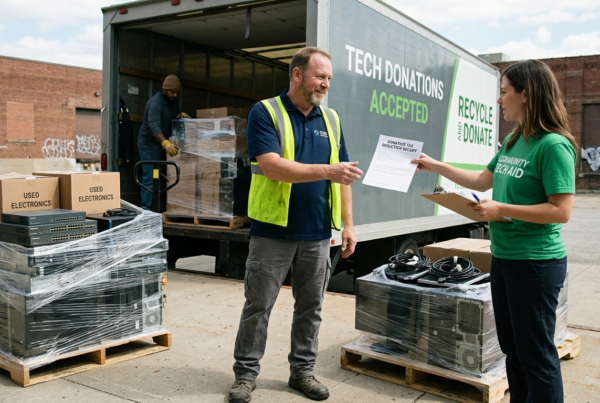
At Human-I-T, we’ve witnessed firsthand how this collapse ripples through communities. Every day, we help individuals and families navigate the complex landscape of digital inclusion through low-cost devices, internet access, digital literacy training, and technical support. The ACP’s end has threatened the very foundation of digital equity that transforms discarded devices into opportunities for underserved communities.
What Happened When the ACP Ended?
The ACP’s disappearance punched a hole in one in every six American household budgets. According to the Benton Institute, 68% of ACP recipients had inconsistent internet connectivity — or none at all — before the program existed. The ACP didn’t just lower bills. It got people online for the first time.
Students completed homework assignments without hunting for public WiFi. Seniors scheduled telehealth appointments from home. Parents applied for jobs and managed household finances online. These weren’t luxuries. They were the baseline requirements of participating in modern American life.
Then it ended — and the disconnections began. According to the Benton Institute, 13% of former ACP recipients reported canceling their internet service outright. The Brattle Group’s more comprehensive 2025 analysis puts the actual number of broadband disconnects at an estimated 5 million households. Major ISPs felt the impact too: in Q1 2025 alone, Comcast lost 199,000 internet customers while Spectrum shed 60,000 — part of a broader hemorrhage that’s put both providers on track to lose over 1 million subscribers in 2025.
Another 8.3 million households face difficult decisions about downgrading to slower, cheaper plans — trading reliable connectivity for something barely functional.
Who Is Hit Hardest by the ACP’s End?
The communities already facing the steepest barriers to digital inclusion. This isn’t accidental — it’s structural.
Black and Latino families each represented 25% of all ACP recipients, according to Prism Reports. The ACP’s end doesn’t just widen the digital divide — it deepens digital redlining in communities already priced out of reliable connectivity.
Americans with disabilities enrolled in the ACP at significantly higher rates — 36% compared to 22% for all other respondents, according to the Benton Institute. Many relied on those connections for specialized healthcare services, remote assistance technologies, and the independence that comes with being digitally connected. Losing the ACP doesn’t just mean losing internet. It means losing autonomy.
Military families emerged as one of the ACP’s largest beneficiary groups. CNET reports that nearly half of all ACP subscribers came from military households — families already dealing with deployments, relocations, and the instability that comes with service.
Low-income households face the most stark consequences. One-third of families earning less than $20,000 annually relied on these subsidies. The Benton Institute reports that 18% of low-income households earning under $20,000 plan to completely disconnect their service. These aren’t people choosing between Netflix tiers. They’re choosing between internet access and groceries.
Rural residents confront unique challenges as internet infrastructure costs drive up monthly bills. In these communities, the ACP reduced providers’ break-even costs by 25%, according to Pew Charitable Trusts, making service viable in less populated areas. Without the subsidy, the economics of rural broadband collapse — not because the infrastructure doesn’t exist, but because the business model does not support affordability.
Seniors, many of whom discovered vital digital connections during the pandemic, now risk isolation. Beyond healthcare access, many older Americans depended on internet service to file taxes, stay informed, and maintain family connections.
Students are particularly hard hit. They lose access to homework resources and research tools. Parents struggle to monitor academic progress. The impact on education reaches across generations, creating compounding barriers to long-term academic success.
These aren’t separate crises. They’re the same crisis — a system that treats internet access as a profit center instead of the essential utility it is.
What Are Real Families Experiencing Without the ACP?
Impossible choices between connectivity and survival.
As bills surged $30–75 higher each month, families scrambled. For Kathleen Wain, a grandmother raising two teenagers in North Carolina, the program’s end forces painful trade-offs between groceries, travel, and keeping her high school senior connected for AP courses.
"I consider the internet like my best friend," shares Phyllis Jackson, a retired administrative assistant who now cuts back on electricity and groceries to maintain her connection.
Wisconsin caregiver Serena Salisbury embodies the impossible math: "I’ve had to go to cheaper household items, cheaper detergents. And my electric bill — I had to find a different way of paying just to keep my internet."
These aren’t isolated anecdotes. They represent millions of Americans forced to choose between digital participation and daily necessities. Corporate ISPs designed pricing structures that extract maximum profit from the most vulnerable customers — and without the ACP’s buffer, there’s nothing standing between predatory pricing and working families.
What Affordable Internet Options Still Exist for Low-Income Families?
No single program replaces the ACP’s broad impact — but accessing a combination of available resources can help maintain vital digital connections.
Human-I-T offers internet for low-income families at just $14.99 per month through the Franklin T10 mobile hotspot — unlimited 4G LTE, no hidden fees, no credit checks. Everyone who qualified for the ACP automatically qualifies for this offer.
But true digital inclusion requires more than a monthly bill. That’s why Human-I-T’s approach is comprehensive:
Low-cost devices — new and refurbished computers and tablets within reach of families in need. Each device undergoes professional testing and updating to ensure reliable performance.
Free digital literacy training — through our Cisco-powered program, experienced instructors guide participants through essential skills like email management, online safety, and productivity software.
Free bilingual technical support — so users can confidently navigate common challenges without paying for help or getting stuck.
The federal Lifeline program still provides up to $9.25 per month off internet or phone bills for qualifying low-income households. Some ISPs also maintain their own low-income plans — though the fine print on those plans deserves scrutiny.
The ACP proved that when you remove cost barriers, people get connected and stay connected. The program is gone, but the need — and the solutions — remain.
Get one-on-one help finding affordable internet in your area. Human-I-T’s team can walk you through every option available based on your location and eligibility. Check your eligibility today — no gimmicks, no gatekeeping, just real access for real families.
FAQ
Is the Affordable Connectivity Program coming back?
As of mid-2025, Congress has not reauthorized or replaced the ACP despite bipartisan proposals. The program officially exhausted its $14.2 billion in funding in 2024, and no successor legislation has been signed into law. The federal Lifeline program ($9.25/month discount) remains active but covers far less.
What is the cheapest internet option for former ACP recipients?
Human-I-T offers unlimited 4G LTE internet through the Franklin T10 hotspot for $14.99 per month — and everyone who qualified for the ACP automatically qualifies. Other options include ISP-specific low-income plans, though many carry hidden fees, equipment charges, or credit check requirements.
How many people lost internet after the ACP ended?
According to a February 2025 Brattle Group analysis, an estimated 5 million households disconnected from broadband after the ACP ended — with millions more downgrading to slower plans or struggling to pay higher bills.
Who qualified for the ACP and still needs help?
Households at or below 200% of the federal poverty level, recipients of SNAP, Medicaid, SSI, WIC, or federal Pell Grants, and military families — among others — all qualified for the ACP. These same populations remain eligible for Human-I-T’s affordable internet, low-cost devices, free digital literacy training, and bilingual tech support. Get connected today.
Does Human-I-T offer more than just internet?
Yes. Human-I-T provides a holistic digital inclusion model: low-cost refurbished laptops and tablets, affordable internet service, free Cisco-powered digital literacy training, and free bilingual technical support. Donate, don’t recycle — donate your old tech so it can get a second life in the hands of a family that needs it.