

TL;DR
North Carolina bans computers, TVs, monitors, printers, and other electronics from landfills and requires manufacturers to register annually, report recycling data, and pay tiered fees ranging from $2,500 to $15,000. As of 2025, the state has added e-Manifest reporting requirements for hazardous e-waste shipments. Businesses that want to stay compliant while maximizing social and environmental impact should partner with a certified ITAD provider like Human-I-T that prioritizes refurbishment over shredding.
Table of Contents
- How big is North Carolina’s e-waste problem?
- What does North Carolina’s Electronics Management Program actually do?
- Which devices are banned from NC landfills?
- What are the registration and reporting requirements for manufacturers and retailers?
- What fees do manufacturers pay under NC e-waste law?
- What can NC businesses do to minimize e-waste right now?
- How does Human-I-T help NC businesses manage e-waste responsibly?
- FAQ
How big is North Carolina’s e-waste problem?
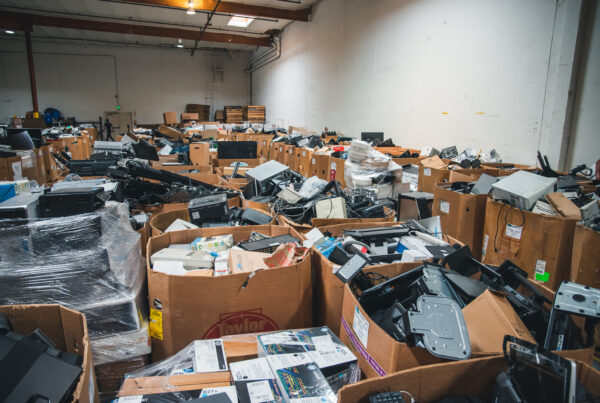
North Carolina generates over 400,000 tons of e-waste annually — a staggering volume of discarded devices that represent both an environmental crisis and a massive missed opportunity for resource recovery.
Every one of those devices contains hazardous materials — lead, mercury, cadmium — that poison soil and groundwater when they end up in landfills. But they also hold valuable resources: precious metals, rare earth elements, and reusable components. By trashing them, we fuel an unsustainable cycle of extraction, production, and disposal while ignoring the working families who could benefit from refurbished technology.
North Carolina recognized this problem early and built one of the more comprehensive state-level e-waste frameworks in the country. That framework balances environmental protection with social responsibility and economic opportunity — but only if businesses actually understand and follow it.
What does North Carolina’s Electronics Management Program actually do?
It creates a shared-responsibility system that holds manufacturers, retailers, and consumers accountable for the full lifecycle of electronic devices. Codified in General Statutes 130A-309.130 through 130A-309.142, the Electronics Management Program is North Carolina’s cornerstone e-waste regulation.
The program’s goals are concrete: divert e-waste from landfills, recover valuable materials through efficient recycling and refurbishment, educate the public on responsible disposal, and stimulate economic growth in the recycling and refurbishment sectors. No longer can unwanted devices simply be tossed in the trash. Every player in the supply chain — from the manufacturer that sold the device to the business that retired it — bears responsibility.
As of 2025, the program has expanded to include e-Manifest reporting requirements for hazardous e-waste shipments, tightening tracking and accountability for how discarded electronics move through the disposal chain.
Which devices are banned from NC landfills?
Since July 1, 2011, North Carolina has enforced a sweeping ban on disposing of most electronic devices in landfills. The ban covers:
- Televisions — from bulky CRTs to flat-screens, all TVs are prohibited
- Computers — desktops and laptops alike
- Monitors — both CRT and flat-panel displays
- Video display units — including tablets and e-readers
- Printers — inkjet, laser, all types
- Scanners — standalone document-digitizing devices
- Scanner-fax machines — combination units included
- Other computer peripherals — external hard drives, networking equipment, and similar items
Keyboards and mice are exempt from the ban, though recycling is still encouraged.
By targeting these specific categories, North Carolina captures the bulk of harmful materials found in e-waste — from lead in CRT screens to valuable rare earth elements in circuit boards. The ban sparked a wave of innovation in e-waste collection and processing across the state, expanding recycling center capabilities and incentivizing manufacturers to design products with end-of-life considerations in mind.
What are the registration and reporting requirements for manufacturers and retailers?
Every manufacturer of covered electronic devices must register their brands annually with the North Carolina Department of Environmental Quality (NCDEQ). That registration isn’t a formality — it requires detailed information about products sold in the state, including device weight and recycling program specifics.
Retailers face their own obligations. They must verify that they only sell brands from compliant manufacturers, creating a ripple effect of accountability throughout the supply chain. If a manufacturer isn’t registered, a retailer selling their products is out of compliance too.
Once registered, manufacturers must submit comprehensive annual reports that include the total weight of covered devices collected and recycled, a breakdown of collection methods used, details of consumer take-back programs, and information on recycling partners and their certification status. Retailers contribute by reporting the brands they’ve sold and confirming compliance with state regulations.
It’s worth noting, however, that there is serious skepticism about how effective or worthwhile e-waste recycling truly is — particularly for businesses concerned about data security or genuine sustainability. Recycling alone doesn’t address the full lifecycle problem. That’s where refurbishment enters the picture.
What fees do manufacturers pay under NC e-waste law?
Manufacturers pay tiered annual fees based on the volume of products sold in the state, ranging from $2,500 to $15,000. The logic is straightforward: those contributing the most to potential e-waste bear a proportional share of the management costs.
Retailers face fees for non-compliance, creating a strong financial incentive to maintain accurate records and partner only with registered manufacturers. These aren’t optional suggestions — they’re enforceable obligations with real consequences.
This fee structure funds the administration and enforcement of North Carolina’s e-waste regulatory framework. As technology evolves and the volume of discarded electronics grows, expect these regulatory requirements to tighten, demanding ongoing vigilance from every stakeholder in the electronics industry.
What can NC businesses do to minimize e-waste right now?
Compliance with regulations is the floor, not the ceiling. North Carolina businesses that want to lead on sustainability should adopt a proactive approach to electronic asset management — one that reduces e-waste at the source.
Practice strategic procurement. Look beyond initial costs. Consider Total Cost of Ownership (TCO), factoring in energy consumption, maintenance needs, and end-of-life disposal costs. Prioritize manufacturers offering modular designs that allow easier repairs and component upgrades. Extended warranties and robust service agreements can significantly extend a device’s useful life, delaying replacement and reducing waste.
Repair first. Before rushing to replace malfunctioning equipment, explore repair options. Establishing relationships with certified repair services — or investing in in-house technical expertise — can dramatically extend the lifespan of electronic assets. This approach not only reduces e-waste but often proves more cost-effective than constant replacements. Some businesses are going further by hosting "repair fairs" for employees’ personal devices, fostering a culture of sustainability beyond the workplace.
Upgrade strategically. Adding RAM, switching to solid-state drives, or updating software can significantly boost performance without generating a single pound of e-waste. IT asset management software helps track and optimize electronic resources so you know exactly when an upgrade makes more sense than a replacement.
Buy pre-owned. The refurbished electronics market offers high-quality equipment at reduced costs while simultaneously reducing e-waste. Many refurbished devices undergo rigorous testing and come with warranties, dispelling concerns about reliability. Some companies are also exploring "Device-as-a-Service" models — leasing regularly maintained equipment instead of purchasing outright, shifting the burden of responsible disposal to the service provider.
How does Human-I-T help NC businesses manage e-waste responsibly?
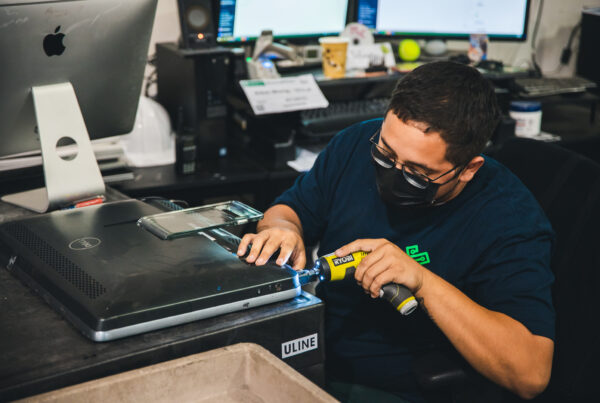
We take a refurbishment-first approach — prioritizing extending the life of electronic devices over immediate recycling, maximizing both environmental benefits and social good. When you donate your e-waste to Human-I-T, you don’t just comply with NC regulations. You help bridge the digital divide for working families who need access to technology.
When you donate over a certain amount of e-waste, you gain access to detailed social and environmental impact reports that quantify your contribution to sustainability and digital equity. These reports provide valuable data for ESG reporting and stakeholder communications — positioning your business as a leader in corporate social responsibility, not just a company that checked a compliance box.
For businesses concerned about data security, we come out on top. Our NAID-certified secure facilities use DoD and HIPAA-compliant NIST 800-88 data destruction processes. A transparent chain of custody and multiple certifications — including NAID AAA, ISO 9001, ISO 14001, and ISO 45001 — provide peace of mind throughout the entire disposal process.
The choice is clear: transform your e-waste challenge into an opportunity for positive impact. Turn a potential compliance headache into a point of pride.
Ready to make a difference? Fill out the technology donation form today and take a step toward closing the digital divide while championing responsible e-waste management in North Carolina.
FAQ
What electronics are banned from North Carolina landfills?
North Carolina’s landfill ban — in effect since July 1, 2011 — covers televisions, computers, monitors, video display units (including tablets), printers, scanners, scanner-fax machines, and other computer peripherals like external hard drives. Keyboards and mice are exempt but recycling is still encouraged.
Do manufacturers have to register to sell electronics in North Carolina?
Yes. Every manufacturer of covered electronic devices must register annually with the NC Department of Environmental Quality. Registration requires detailed product information, including device weight and recycling program details. Retailers must verify they only sell brands from compliant manufacturers.
What happens if my business doesn’t comply with NC e-waste regulations?
Non-compliance exposes businesses to fees and penalties. Retailers face financial consequences for selling products from unregistered manufacturers or failing to maintain accurate records. As of 2025, e-Manifest reporting for hazardous e-waste shipments adds another layer of tracking and accountability.
Can I donate old business electronics instead of recycling them?
Yes — and donating to a certified ITAD provider like Human-I-T is often the better option. We prioritize refurbishment over shredding, giving devices a second life with working families while providing your business with social and environmental impact reports for ESG purposes. Contact us today to learn how our secure ITAD services can help you stay compliant and make a real impact.
How does North Carolina’s e-waste program compare to other states?
North Carolina’s Electronics Management Program — codified in General Statutes 130A-309.130 through 130A-309.142 — is among the more comprehensive state-level frameworks, combining a landfill ban with manufacturer registration, annual reporting requirements, and tiered fees. The 2025 addition of e-Manifest reporting for hazardous shipments further strengthens its enforcement mechanisms.