

TL;DR
Texas requires computer and television manufacturers to offer free recycling programs for consumers, enforced through the Texas Commission on Environmental Quality (TCEQ). Businesses face strict data security obligations under the Texas Identity Theft Enforcement and Protection Act, with fines up to $50,000 per violation for mishandling personal information during disposal. The smartest compliance move? Partner with a certified e-waste organization that prioritizes refurbishment over shredding—turning your discarded devices into tools for digital equity.
Introduction
Texas has e-waste laws on the books. That’s the good news. The bad news? Most businesses and consumers in the Lone Star State have no idea what those laws actually require of them—or what the penalties look like when they get it wrong.
E-waste is the dark side of our digital revolution: obsolete electronics teeming with toxic materials like lead, mercury, and cadmium. These seemingly harmless devices threaten both our environment and our communities when improperly disposed of. And in a state as massive as Texas, the volume of discarded electronics is staggering.
Through programs like the Computer Equipment Recycling Program and the TV Recycling Program, Texas has built a regulatory framework that puts real responsibility on manufacturers, retailers, and consumers alike. But compliance is only the baseline. The real opportunity lies in what happens after a device is collected—whether it gets shredded into raw materials or refurbished and placed in the hands of a family that needs it.
Table of Contents
- What are Texas’s main e-waste laws?
- Who is responsible for e-waste compliance in Texas?
- How should Texas businesses dispose of e-waste?
- What are the data security requirements for e-waste in Texas?
- How do you choose the right e-waste partner in Texas?
- How can Texas businesses turn e-waste into opportunity?
- FAQ
What are Texas’s main e-waste laws?
Texas has three pillars of e-waste regulation: the Computer Equipment Recycling Program, the TV Recycling Program, and a set of supplementary rules covering hazardous electronic components.
The Computer Equipment Recycling Program
In 2007, Texas mandated that computer manufacturers provide free and convenient recycling options for their products. Under this program—administered by the Texas Commission on Environmental Quality (TCEQ)—manufacturers must establish take-back systems so consumers can return old computers, monitors, and peripherals at no cost. The TCEQ requires manufacturers to file annual reports documenting the computer equipment collected each calendar year.
The TV Recycling Program
Texas extended the same framework to televisions in 2011. The TV Recycling Program mirrors the computer program, requiring television manufacturers to offer free recycling services. From bulky CRTs to sleek flat-screens, this program ensures no TV should end up poisoning our landfills.
Additional E-Waste Regulations
Texas’s regulatory reach doesn’t stop at computers and TVs. The Universal Waste Rule classifies certain electronic items as universal waste, streamlining their collection and recycling. Strict guidelines govern the handling of cathode ray tubes (CRTs), ensuring these hazardous components are properly managed. And the Texas Recycling Market Development Board promotes the growth of recycling industries, including those focused on e-waste.
These are meaningful regulations. But who bears the responsibility for making them work?
Who is responsible for e-waste compliance in Texas?
Three groups share the load: manufacturers, retailers, and consumers. Texas designed its system so that responsibility follows the entire lifecycle of an electronic device.
Manufacturers
Electronics manufacturers in Texas must register their brands annually with the TCEQ and establish free, convenient recycling programs for consumers. But some companies have turned these mandates into competitive advantages rather than treating them as mere obligations.
Dell, a Texas-based tech giant, is a case in point. Their Dell Reconnect program—a partnership with Goodwill that remains active as of 2025—offers free computer recycling at over 2,000 locations nationwide. The initiative meets state requirements while creating jobs and supporting local communities.
Organizations like Human-I-T take this approach further. We offer free e-waste collection for businesses, but we go a critical step beyond by refurbishing devices and distributing them to underserved communities—creating a unique blend of environmental stewardship and digital equity.
Retailers
Texas retailers serve as crucial links between manufacturers and consumers. They can only sell products from registered manufacturers, which enforces compliance across the supply chain. Retailers must also provide customers with information about available recycling programs.
Best Buy, for example, goes beyond the basics with a trade-in program that offers gift cards for used electronics. They’ve become a major collection point for e-waste, accepting a wide range of devices for recycling at stores across Texas.
Consumers
Texans have the right to access free recycling programs for covered electronics. The Texas Recycles Computers program allows residents to recycle computers, monitors, and peripherals at no cost.
With rights come responsibilities. Consumers must properly dispose of e-waste through approved channels and remove personal data before recycling devices. The City of Austin’s Resource Recovery program educates residents on these steps, offering guides for data removal and disposal.
How should Texas businesses dispose of e-waste?
Start with a comprehensive plan—not a last-minute scramble when the server room overflows. Here’s how to build one:
- Conduct a thorough inventory. List all electronic assets, from servers to smartphones. Don’t overlook forgotten devices like old printers in storage.
- Set clear, measurable goals. Example: "Reduce e-waste generation by 20% this year" or "Ensure 100% of discarded electronics are recycled or refurbished." Make targets specific, measurable, and time-bound.
- Involve key departments. IT identifies outdated equipment. Finance understands cost implications. Operations streamlines disposal processes.
- Align with business objectives. Ensure your e-waste strategy supports overall company goals. Consider how responsible e-waste management can strengthen your brand’s sustainability reputation.
- Review and update regularly. Set quarterly check-ins to assess progress. Adjust your plan as technology and regulations evolve.
By following these steps, your business transforms e-waste management from a compliance headache into a strategic advantage—positioning you as a leader in corporate responsibility.
What are the data security requirements for e-waste in Texas?
Data security isn’t optional when disposing of electronics in Texas—it’s the law. The Texas Identity Theft Enforcement and Protection Act mandates strict protection of sensitive personal information. Violators face fines of up to $50,000 per violation.
Start by implementing a "wiping" policy for all devices. Use Department of Defense-approved data erasure software to ensure complete removal of sensitive information. For devices containing particularly sensitive data, consider physical destruction of hard drives.
Don’t forget about cloud storage. Even if you’re recycling a device, data stored in associated cloud accounts remains vulnerable. Build a checklist to ensure all cloud accounts are properly closed or transferred before device disposal.
These aren’t optional best practices. These are legal requirements with real financial teeth.
How do you choose the right e-waste partner in Texas?
Certification is the starting point, not the finish line. A certified e-recycler should offer transparency in their processes—detailed reports on where your e-waste ends up, on-site collection to minimize security risks, and full traceability through downstream vendors.
Prioritize partners who emphasize refurbishment over raw material recovery. This approach maximizes the value of your discarded electronics and contributes directly to bridging the digital divide in Texas communities.
Ask hard questions: Can they trace the entire lifecycle of your e-waste? Can they guarantee it won’t end up in landfills or shipped overseas illegally? Do they provide certificates of destruction for data-bearing devices?
Responsible recyclers answer these questions without flinching.
How can Texas businesses turn e-waste into opportunity?
You don’t need to navigate Texas e-waste regulations alone. Human-I-T is a nonprofit social enterprise committed to bridging the digital divide—creating equitable access to opportunity by providing devices, internet access, digital skills training, and tech support to underserved communities.
Human-I-T offers a fundamentally different approach to e-waste management in Texas. We provide convenient collection for businesses with donations over a certain size. Using NIST 800-88 compliant data sanitization methods, we ensure your sensitive information is completely erased at our NAID AAA-certified warehouses. We provide certificates of destruction, giving you documented peace of mind about data security.
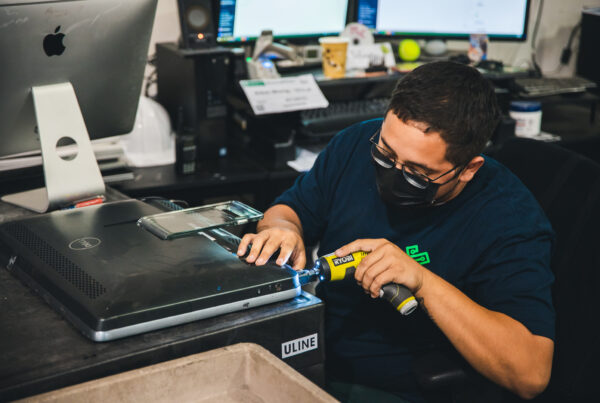
Once a device has its data sanitized, our skilled technicians breathe new life into it—repairing and upgrading it for reuse. These refurbished electronics then find new homes with low-income families, opening doors to educational and economic opportunities that were previously out of reach.
But we don’t stop at hardware. Human-I-T offers free digital literacy programs, empowering recipients with the skills needed to thrive in an increasingly digital world. And our partnerships with internet service providers bring affordable broadband to underserved areas, ensuring newly connected families can fully leverage their devices.
Each discarded laptop or smartphone has the potential to change a life, bridge a gap, or spark a dream. By choosing Human-I-T, Texas businesses become catalysts for digital equity—turning electronic waste into tools for social transformation.
Fill out the technology donation form today and take a step towards closing the digital divide while championing responsible e-waste management.
FAQ
Is it illegal to throw away electronics in Texas?
Texas law doesn’t broadly ban individuals from throwing away all electronics, but the state’s recycling programs require manufacturers to provide free take-back options for computers and televisions. Businesses face stricter obligations around data security and proper disposal. The safest and most responsible approach is always to use an approved recycling or refurbishment program rather than sending electronics to a landfill.
What electronics are covered under Texas e-waste recycling laws?
Texas’s mandatory recycling programs cover computers, monitors, peripherals, and televisions. Additional regulations address cathode ray tubes (CRTs) and items classified as universal waste. For electronics not explicitly covered by state programs, certified e-recyclers like Human-I-T accept a wide range of devices for responsible processing.
How do I protect my data when recycling electronics in Texas?
The Texas Identity Theft Enforcement and Protection Act requires businesses to protect sensitive personal information, with fines up to $50,000 per violation. Use Department of Defense-approved data erasure software, close associated cloud accounts, and work with a NAID AAA-certified partner like Human-I-T that provides certificates of destruction.
Can my business donate old electronics instead of recycling them?
Yes—and it’s often the better option. Organizations like Human-I-T offer free e-waste collection for businesses, securely sanitize data using NIST 800-88 compliant methods, and refurbish devices for distribution to underserved communities. Donating extends the lifespan of electronics, reduces environmental harm, and directly supports digital equity. Contact us today to schedule a pickup.
Where can I recycle e-waste in Texas for free?
Consumers can recycle computers, monitors, and peripherals for free through the Texas Recycles Computers program. The Dell Reconnect partnership with Goodwill accepts electronics at over 2,000 locations nationwide. Best Buy stores across Texas also accept a wide range of devices. For businesses with larger volumes, Human-I-T provides convenient on-site collection.