
TL;DR
Properly packaging your electronic donations means the difference between giving a device a second life and turning it into e-waste. Use pallets with cardboard inserts and shrink wrap for large electronics like monitors and towers, and sturdy Gaylord boxes for mixed or smaller items—always grouping similar-sized devices together and capping height at five feet. Include power cords (labeled), remove USB drives, and cushion every layer.
Introduction
Every year, well-intentioned technology donations arrive at our doors damaged beyond repair—not because the devices were broken, but because they were packed incorrectly. That’s usable technology turned into e-waste for one preventable reason: bad packaging.
We desperately need to minimize the amount of electronics that become e-waste if we want to minimize the harm it does to our planet. And our ever-growing cohort of technology donors proves that individuals and organizations want to help. This guide gives you everything you need to make sure your donation actually reaches the people who need it—not a landfill.
What Are the Dos and Don’ts of Packing Electronics for Donation?
The core rule is simple: pack like items together, cushion everything, and never overstuff. When you donate technology to nonprofits, how you pack it determines whether that device gets refurbished and distributed—or scrapped.
Do
- Send power cords and relevant plugs, labeled to match their devices. This ensures we can test your equipment for usability without purchasing additional accessories ourselves.
- Remove detachable components like USB drives from your devices. This minimizes the risk of something getting jammed or lodged during transit or processing.
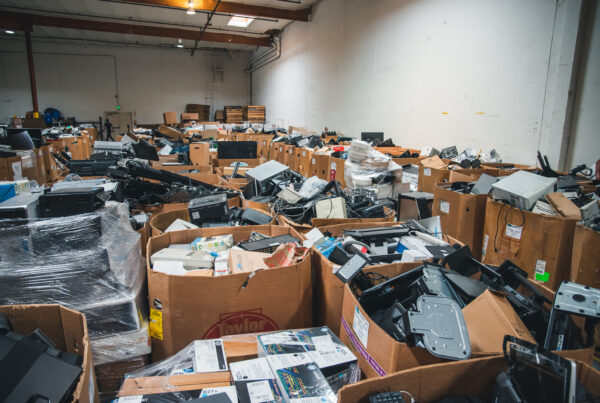
- Be overly cautious about over- or under-packing your boxes. Tightly pack your Gaylords with lightweight packing material so nothing shifts during transit—but don’t pack the box so full that it bulges or overflows.
Don’t
- Pack fragile items in ways that invite damage. Don’t pack monitors with screens facing each other. Don’t leave TVs attached to stands. The last thing we want is for valuable technology to arrive broken.
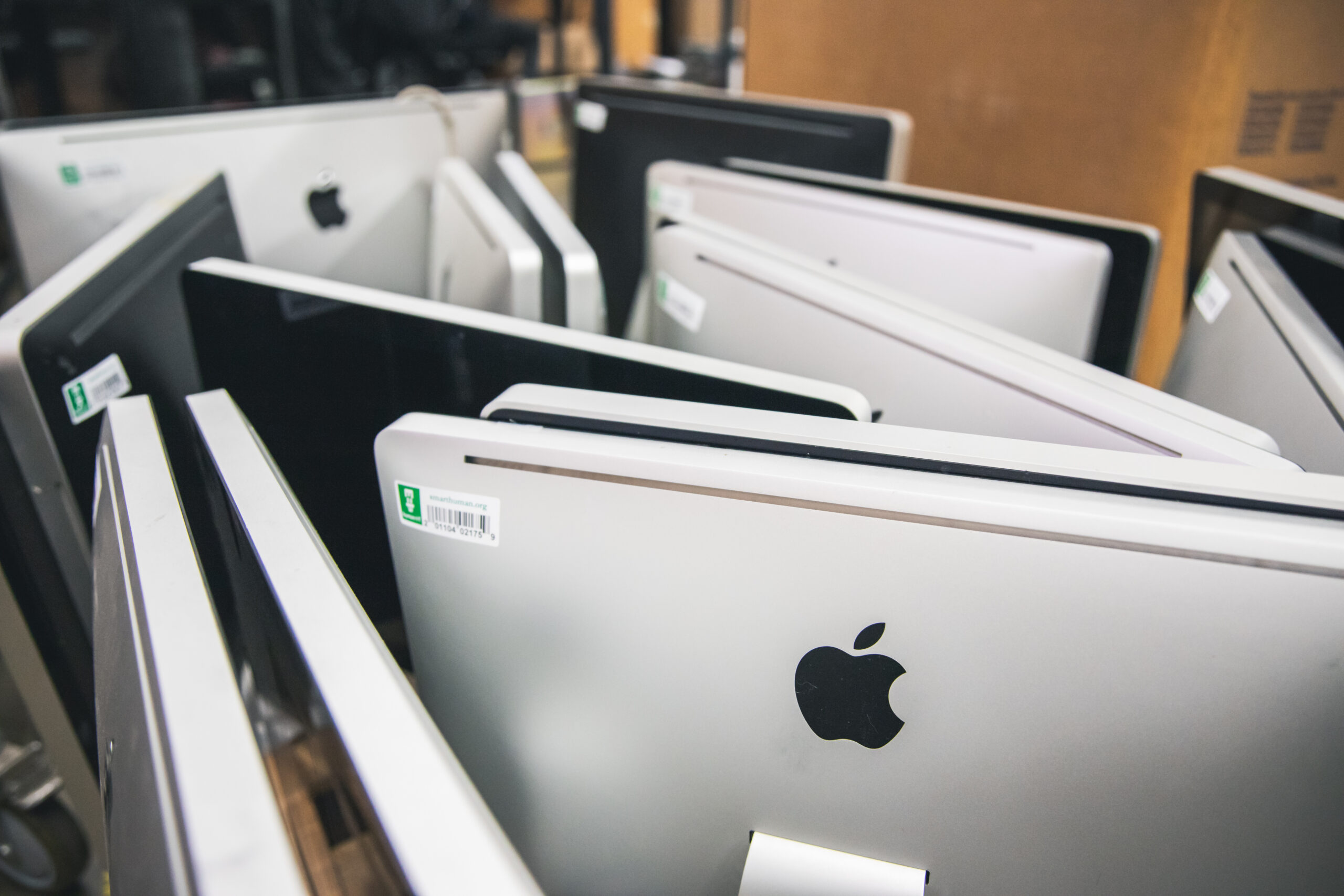
- Mix different sizes of electronics in the same layer of a box. Different-sized items scrape against one another in transit. Keep similarly-sized items together on each layer of your Gaylord.
- Pack different types of electronics on the same pallet. For simplicity, pack all monitors together, all computer towers together, all hard drives together—without overpacking or overstuffing your Gaylord.
How Do You Palletize Large Electronics for Transport?
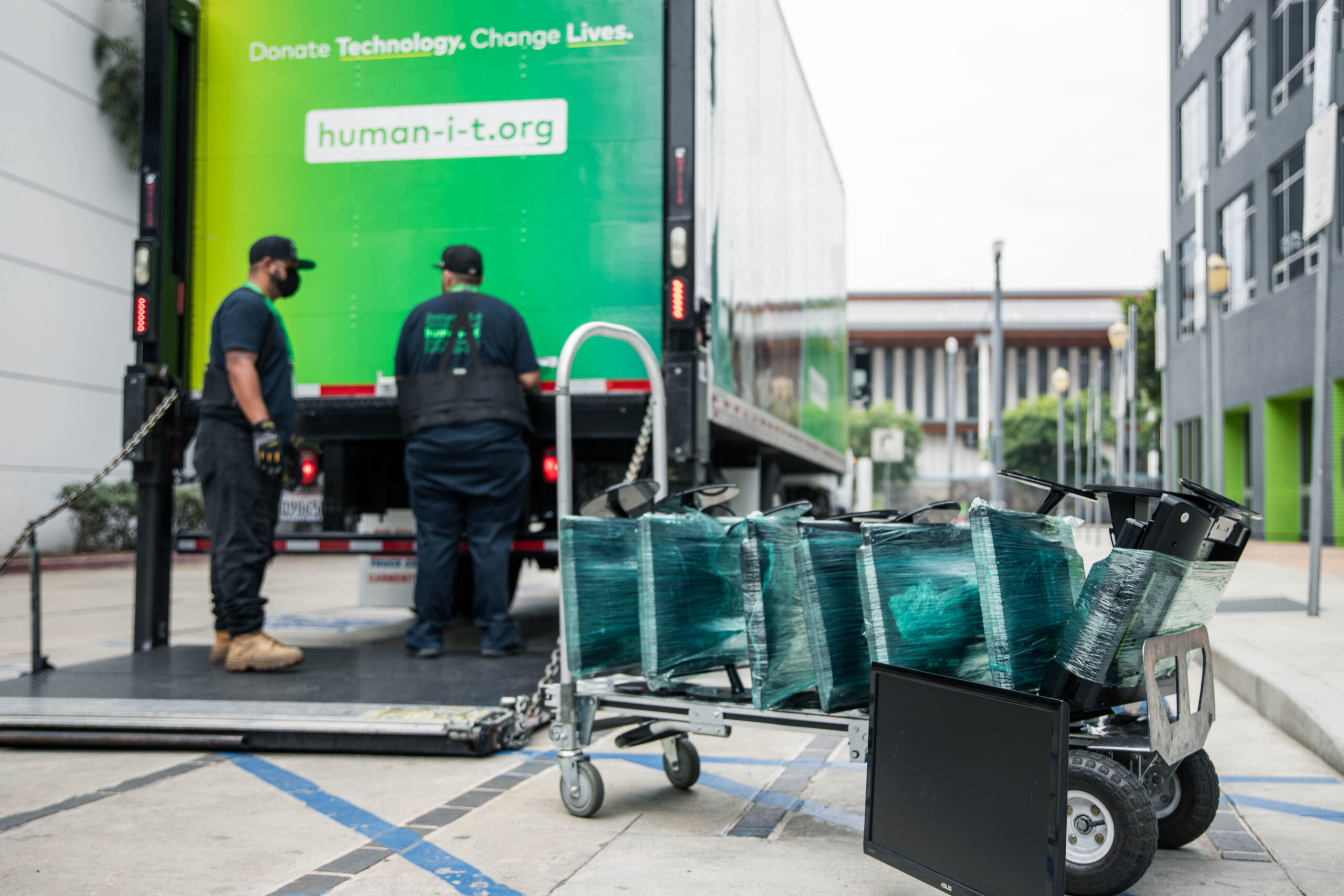
Stack large electronics flat on a pallet with cardboard inserts between each layer, then bind everything with shrink wrap from top to bottom. This method works best for desktop towers, laptops, monitors, and other multi-function devices.
Here’s the step-by-step process:
- Place a cardboard insert on the bottom of the pallet.
- Position each piece of electronic equipment flat on the cardboard insert, following the dos and don’ts above to avoid overstuffing.
- Shrink-wrap this layer and place another cardboard insert on top before starting a new layer.
- Repeat this stacking process up to a height of five feet.
- Once you’ve reached five feet, place cardboard stiffeners on the corners of your pallet to boost vertical stability. These stiffeners should sit at least eight inches atop the pallet.
- Shrink-wrap all combined layers together, starting from the bottom of the pallet.
- Label your pallet with your organization name, the packaging date, the item count and weight, and whether or not special equipment is inside.
If you don’t have enough large electronic equipment to fill a pallet—or if you’re donating smaller electronics—Gaylord boxes are the way to go.
How Do You Package Large and Small Electronics in Gaylord Boxes?
Secure a Gaylord box on a pallet, group like-sized items together inside, cushion each layer, and stop packing when you have six inches of space left at the top. This approach works whether you have overflow large electronics that didn’t fill a pallet or a collection of smaller peripheral devices.
Follow this process:
- Secure a Gaylord box on a pallet.
- Position each piece of electronic equipment inside, keeping like-sized and similar-shaped items together. Small peripheral electronics—chargers, keyboards, mice—should be grouped and labeled as belonging to a specific type of device (e.g., all chargers for one kind of laptop together).
- Encase each layer of donated equipment in secure packing materials like bubble wrap, packing peanuts, or other proper cushioning.
- Place a cardboard insert on top of each finished layer before starting a new one.
- Stop packing the Gaylord once you have six inches of space left at the top. If the box is bulging out, unpack until it sits even on all sides.
- Tape the box shut and clearly mark which side is up on the outside.
- Label your Gaylord with your organization name, packaging date, the number and weight of items inside, and whether or not special equipment is inside.
Why Does Correct Packaging Matter for Digital Equity?
Every device damaged by bad packaging is a device that can’t reach a family that needs it. The sooner we minimize the amount of usable technology that becomes e-waste due to incorrect packaging, the more individuals we can empower with life-changing technology.
Our donors have proven time and again they’re willing to go the extra mile to positively impact our planet and its people. Proper packaging is one of the most concrete ways to make sure that effort translates into real impact—devices refurbished and redistributed to working families navigating a world that increasingly requires digital access for everything from homework to healthcare.
Frequently Asked Questions
What size electronics should go on pallets vs. in Gaylord boxes?
Large electronics—desktop towers, laptops, monitors, and multi-function devices—are best palletized with shrink wrap. If you don’t have enough large items to fill a pallet, or if you’re donating smaller peripherals like keyboards, mice, and chargers, use sturdy Gaylord boxes secured on a pallet.
Do I need to include power cords with my electronics donation?
Yes. Always include power cords and relevant plugs, and label which cord belongs to which device. Without matching cords, our technicians may not be able to test and refurbish your donated equipment—meaning it’s more likely to become e-waste instead of getting a second life.
How full should I pack a Gaylord box?
Leave at least six inches of space at the top. If the box is bulging on any side, remove items until it sits flat and even. Overstuffed Gaylords risk damage to the electronics inside during transit.
What happens to improperly packaged donations?
Devices damaged in transit due to incorrect packaging often can’t be refurbished. That means technology that could have bridged the digital divide for a family instead becomes e-waste. Proper packaging is one of the easiest ways to maximize your donation’s impact.
How do I start the donation process with Human-I-T?
Fill out the technology donation form today and take a step towards closing the digital divide while championing responsible e-waste management. Our team will guide you through pickup logistics and answer any packaging questions.