

TL;DR
Human-I-T partnered with Visa Canada to launch the Digital Empowerment pilot program, distributing over 400 refurbished devices to Canadian newcomers in Toronto — along with digital literacy training and technical support. As of January 2025, 95% of Canadians can access the internet, yet affordability — not infrastructure — remains the biggest barrier keeping low-income and newcomer communities offline. If your organization serves newcomers or underserved communities, contact Human-I-T to explore partnership opportunities.
Introduction
The digital divide is by no means just an American problem. It is a borderless phenomenon that impacts over 3.7 billion people’s ability to access essential public health services, pursue an education, or find jobs on the digital marketplace.
Canada has made remarkable progress — internet penetration climbed to 95% as of January 2025, with the government on track to connect 98% of Canadians by 2026. But coverage doesn’t equal connection. Canada consistently ranks among the five most expensive countries for broadband in the developed world, which means rural communities, low-income families, and newcomers to the country are still being priced out. That’s the gap Human-I-T and Visa Canada set out to close.
What is the Visa Digital Empowerment program with Human-I-T?
It’s a pilot program that puts refurbished devices, digital literacy training, and ongoing tech support directly into the hands of Canadian newcomers in Toronto.
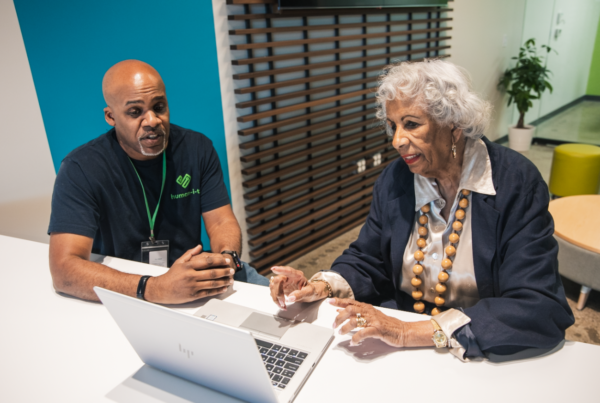
On October 27, 2022, Human-I-T joined Visa in Toronto to kick off the program. Following a fireside chat about digital equity with Visa and Toronto-based community organizations, Human-I-T distributed 50 Chromebooks to newcomers and led a hands-on workshop covering the basics of operating a computer and accessing the internet.
"Human-I-T is thrilled to collaborate with Visa to bring newcomers in Toronto critical digital inclusion support they need to achieve their goals in a new city," said Allie Butkiewicz, Human-I-T’s Senior Vice President of Development. "Through the kick-off event, we were able to provide a hand-up to 50 newcomers by providing them with a personal Chromebook, complete with warranty & technical support, and access to Human-I-T’s digital literacy course and Visa’s financial literacy course."
By the program’s conclusion, over 400 devices will be distributed to nonprofit organizations in Toronto that assist Canadian newcomers — giving them the digital resources to unlock opportunity in their new communities while staying connected to loved ones back home.
Why does digital equity matter for Canadian newcomers?
Because arriving in a new country without reliable access to a computer or the internet means being locked out of the very systems designed to help you settle in — job boards, government services, language resources, housing searches, and communication with family abroad.
Canada’s high internet prices mean the digital divide disproportionately affects exactly the communities that need connection most: rural residents, low-income families, and newcomers from minority communities. Statistics Canada has documented that affordability — not access — is the biggest barrier to getting online for most Canadians. And according to the CRTC’s 2025 Telecommunications Market Report, roughly 11% of Canadians changed their plans in 2024 specifically to make service more affordable.
The Digital Empowerment program tackles this head-on — not with a hotspot or a one-time handout, but with a device, digital literacy education, financial literacy resources from Visa, and Human-I-T’s ongoing warranty and tech support.
How does this partnership advance Human-I-T’s global mission?
It marks Human-I-T’s expansion beyond American borders — proof that creative public-private partnerships can drive digital inclusion at a global scale.
"Digital equity is the gateway to unlocking one’s full potential. Our collaboration with Visa empowers individuals and households to get and stay connected," said Gabe Middelton, CEO and co-founder of Human-I-T. "As one of America’s leading digital inclusion practitioners, Human-I-T is proud to showcase the impact that creative collaboration and innovation can bring to communities left on the wrong side of the digital divide across the globe."
This kind of impact is possible because of a growing consensus from organizations like Visa: digital equity goes hand-in-hand with social equity. When a newcomer receives a Chromebook and learns to navigate online government services or digital job applications, that’s not charity — it’s infrastructure for a new life.
What progress has Canada made on the digital divide?
Significant progress — but the job isn’t done. Through a combination of government funding and public-private partnerships, Canada increased internet penetration from 79% in 2014 to 95% as of January 2025, according to Statista. The Canadian government is now on track to reach 98% by 2026, and almost 90% of Canadians have the option of gigabit internet speeds.
But speed and coverage don’t pay the bill. Canada remains one of the most expensive countries in the developed world for broadband. That’s why programs like the Digital Empowerment pilot — which bypass the affordability barrier entirely by putting devices and training directly into newcomers’ hands — are critical.
FAQs
How many devices did Human-I-T and Visa distribute through the Digital Empowerment program?
The program launched with 50 Chromebooks distributed at the October 2022 kick-off event in Toronto. By the program’s conclusion, over 400 devices will be distributed to nonprofits in Toronto that serve Canadian newcomers.
What do newcomers receive besides a device?
Each Chromebook comes with a warranty, ongoing technical support from Human-I-T, access to Human-I-T’s digital literacy course, and access to Visa’s financial literacy course — a holistic approach to digital inclusion.
Does Canada have affordable internet for newcomers?
Canada consistently ranks among the most expensive countries for broadband in the developed world. While internet penetration has reached 95% as of 2025, affordability — not infrastructure — remains the primary barrier for low-income families and newcomers.
How can my organization partner with Human-I-T on digital equity programs?
Contact Human-I-T directly to explore partnership opportunities. Whether you’re a corporation looking to sponsor digital inclusion or a community organization serving underserved populations, Human-I-T builds programs that put devices, connectivity, and training where they’re needed most.
How can I donate technology to support programs like this?
Fill out Human-I-T’s technology donation form today. Your donated devices get refurbished and placed into the hands of families and newcomers who need them — extending the lifespan of electronics while closing the digital divide.