
TL;DR
Most definitions of e-waste focus on what gets discarded — not whether it should be discarded at all. That gap sends tens of millions of tons of still-functioning devices to landfills every year. According to the Global E-waste Monitor 2024, the world generated 62 million tonnes of e-waste in 2022 alone. Human-I-T uses a three-tier classification system — donation-grade, outlier, and true e-waste — to divert reusable technology back to communities that need it.
Table of Contents
- How do major organizations define e-waste?
- What’s wrong with the current definitions of e-waste?
- How does Human-I-T define e-waste differently?
- Why does rethinking e-waste matter for the environment?
- FAQ
Introduction
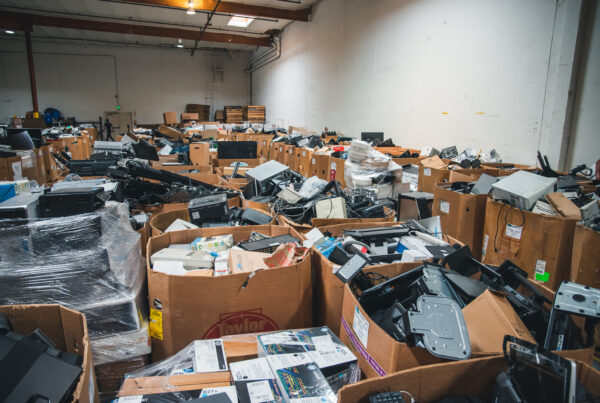
The world generates 62 million tonnes of electronic waste every year — enough to fill 1.5 million transport trucks, according to the UN Environment Programme. That makes e-waste the fastest-growing waste stream on the planet. And yet, we can’t even agree on what the term means.
That’s not a semantic problem. It’s a systemic one. When definitions focus only on what types of objects get thrown away — rather than whether those objects still work — millions of perfectly functional laptops, tablets, and desktops get crushed, shredded, or dumped in landfills. Meanwhile, working families across the country go without the technology they need to apply for jobs, complete schoolwork, or access healthcare.
At Human-I-T, we’ve spent years grappling with this disconnect. The result is a fundamentally different way of classifying old electronics — one that prioritizes reuse over disposal and people over waste streams.
How do major organizations define e-waste?
There is no single, unified definition. The EPA, the European Union, and international bodies like StEP each draw the line differently — and every one of those lines has blind spots.
The EPA’s definition
According to the EPA, e-waste is a specific subset of electronics whose materials can be reused, refurbished, or recycled. The agency lists ten main product types that generate e-waste:
- Large household appliances (A/C units, freezers)
- Small household appliances (microwaves, toasters)
- IT equipment, including monitors
- Consumer electronics (laptops, tablets, smartphones)
- Lamps and luminary devices
- Toys
- Tools
- Medical devices
- Monitoring and control instruments
- Automatic dispensers
That list is broad — but it’s far from exhaustive. It doesn’t capture the full scope of what ends up in the waste stream.
The European Union’s definition
The EU uses the term WEEE — Waste from Electrical and Electronic Equipment — in place of "e-waste." Under the WEEE Directive, any equipment dependent on electric currents or electromagnetic fields to function properly qualifies. That’s a wider net than the EPA’s list, but it still leaves room for inconsistency across member states. Notably, the EU is actively revising the WEEE Directive, with updated requirements taking effect in 2025 and a broader revision expected under the Circular Economy Act in 2026.
StEP’s definition
In 2014, StEP (Solving the E-Waste Problem) set out to create a definition that could be universally agreed upon. They landed on this: "E-Waste is a term used to cover items of all types of electrical and electronic equipment (EEE) and its parts that have been discarded by the owner as waste without the intention of re-use."
It remains the simplest and most broadly applicable definition available. But it introduces a critical question: Is something only e-waste when its owner no longer finds it useful?
What’s wrong with the current definitions of e-waste?
They all hinge on the owner’s intent — not the device’s actual functionality. Under the StEP and EU frameworks, an electronic device becomes e-waste the moment its owner decides it’s reached the end of its useful life. Not when the device actually stops working.
That distinction matters enormously. A three-year-old laptop that a corporation replaces during a routine upgrade cycle isn’t broken. It’s inconvenient. A smartphone swapped out for the latest model isn’t non-functional. It’s last year’s model. Planned obsolescence and the disposable mindset drive these decisions — not genuine end-of-life failure.
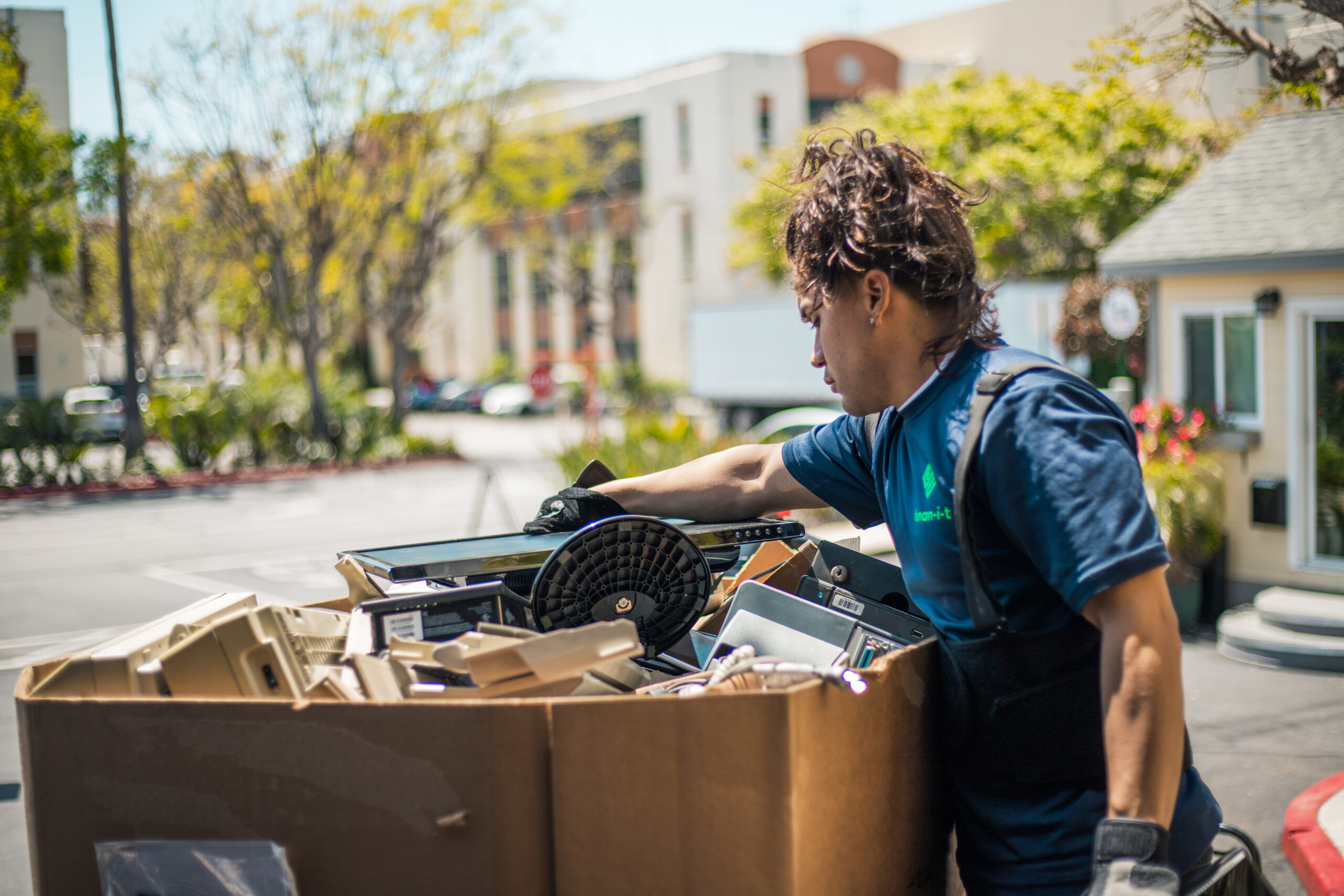
The result? Tens of millions of tons of still-functioning devices get classified as e-waste and disposed of every year. Most are recycled or thrown into landfills, where they leach toxic materials into soil and groundwater and harm human health.
These aren’t oversights. They’re the predictable outcome of definitions that center corporate convenience over environmental and social impact.
How does Human-I-T define e-waste differently?
We use a three-tier classification system that sorts old electronics not by whether someone discarded them, but by whether they can still serve a purpose. The goal: divert every possible device away from landfills and back into the hands of people who need them.
Donation-grade technology
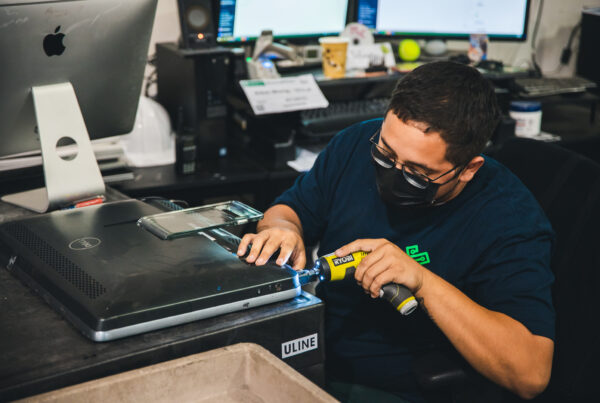
Donation-grade technology retains enough functionality to be refurbished and redistributed to income-qualified families. This category includes laptops, desktops, tablets, and other personal computing devices — the hardware with the highest reuse potential of any discarded electronics. This is the technology we fight hardest to keep out of the waste stream.
Outlier technology
Outlier technology is better suited for commercial or industrial use — multifunction printers, A/V equipment, servers, and specialized components. Rather than recycle it, we resell these items to buyers with specific applications. The proceeds directly fund our digital literacy training courses and free technical support services.
True e-waste
Not every device can be brought back. Technology that can’t be refurbished to full functionality is what we call true e-waste. When we receive it, we ensure it’s safely and sustainably disposed of through a heavily vetted, R2-certified partner. Responsible disposal — not landfill dumping.
Why does rethinking e-waste matter for the environment?
Because recycling alone can’t keep pace with the crisis. Global e-waste generation is growing at roughly 2.6 million tonnes per year, with projections reaching 82 million tonnes by 2030 and a staggering 120 million tonnes by 2050, according to the Global E-waste Monitor. At that trajectory, focusing exclusively on what happens after a device is thrown away guarantees we’ll always be playing catch-up.
Reuse changes the equation. Every refurbished laptop that reaches a working family is one fewer device leaching lead, mercury, and cadmium into the environment — and one more household with a bridge across the digital divide. That’s not just an environmental win. It’s digital equity in action.
As long as our definitions treat a discarded-but-functional laptop the same as a genuinely broken circuit board, we’ll keep burying opportunity in landfills.
FAQ
What are the main types of e-waste?
E-waste spans everything from large household appliances (refrigerators, A/C units) to consumer electronics (laptops, smartphones, tablets), IT equipment, medical devices, lamps, tools, and more. The EPA identifies ten broad product categories, but the scope is even wider under international frameworks like the EU’s WEEE Directive.
Is a working device still considered e-waste?
Under most current definitions, yes — if its owner discards it. That’s precisely the problem. A functional laptop tossed during a corporate upgrade cycle gets classified the same as a shattered monitor. Human-I-T’s three-tier system distinguishes between devices that can be refurbished, resold, or must be responsibly disposed of.
How much e-waste does the world produce each year?
According to the Global E-waste Monitor 2024, the world generated 62 million tonnes of e-waste in 2022, averaging 7.8 kg per person. That figure is climbing by roughly 2.6 million tonnes annually and is projected to reach 120 million tonnes by 2050.
How can I make sure my old electronics don’t end up in a landfill?
Donate them. Rather than dropping devices at a generic recycling center, fill out Human-I-T’s technology donation form to ensure your old laptops, desktops, and tablets are refurbished and redistributed to families who need them — or responsibly disposed of if they can’t be saved.
What does Human-I-T do with donated technology?
We sort every device into one of three categories: donation-grade (refurbished and given to income-qualified families), outlier (resold to fund digital inclusion programs), or true e-waste (disposed of through R2-certified partners). The result is less waste, more access, and a circular model that treats technology as a resource — not trash. Contact us today to learn more about donating your organization’s old electronics.