
TL;DR
Scott Kelly, a Senior Director at Avanade and lifelong technology enthusiast, restored and donated one of Steve Jobs’ original NeXT computers to Human-I-T — a machine whose operating system became the foundation for Mac OS X. The NeXT computer, built in 1988, featured groundbreaking 32-bit processing, built-in ethernet, and advanced audio and video capabilities that were years ahead of their time. Every technology donation — whether a piece of computing history or a modern laptop — helps close the digital divide.
Introduction
32 years before Scott Kelly shipped a battered NeXTStation to Human-I-T, Steve Jobs was forced out of the company he built. What Jobs created next — literally, NeXT Inc. — became the DNA of every Apple computer sold today.
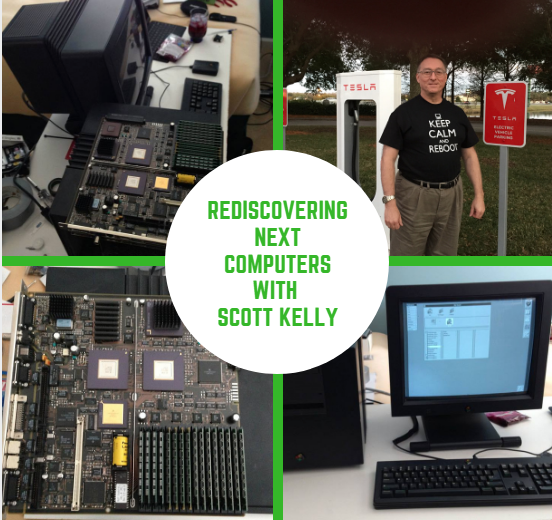
Scott Kelly, an engineer and technology enthusiast from Atlanta, witnessed the birth of the modern computer era with NeXT machines firsthand. After years of searching, he tracked down an original model on eBay, painstakingly restored it, and then donated it to Human-I-T. His story is a reminder that the devices we use — and the ones we pass along — carry more weight than we think. Personal computers were in use for nearly a decade by 1985, but the inventive NeXT operating system facilitated the modern Mac OS X still utilized in Apple computers today.
Who Is Scott Kelly and Why Did He Donate a NeXT Computer?
Scott Kelly is a Senior Director at Avanade, the world’s leading integrator of Microsoft technologies. He has led deployments of "90,000 Microsoft Windows 10" software licenses at a time for clients and businesses on a global scale and has overseen the deployment of more than 350,000 end-user devices overall.
Before his corporate career, Scott studied Electrical Engineering at Georgia Tech, then served in the U.S. Navy "in the Atlantic and Mediterranean in a Lockheed P3 Orion," clocking over 1,700 hours of flight time. After his squadron time, he attended the Naval Postgraduate School for his Masters in Electrical Engineering.
Growing up in the late 1970s and early ’80s, Scott says he has "always been fascinated with computers," especially in 1975 when "Ed Roberts launched the Altair 8800 into the world." "That’s when I first really discovered the magic [of computers] and was just captivated, absolutely captivated with this thing," he says. Scott states that "the 1980’s were the best years of being a geek," because that’s "when the then now future was really invented."
The 1980s witnessed the development of the ethernet, the Macintosh, early versions of Windows OS, IBM machines, Compaq Computers, and others that dived into the nascent industry of personal computers.
What Made NeXT Computers So Revolutionary?
NeXT machines packed capabilities that wouldn’t become standard for years — 32-bit processing, built-in ethernet, and groundbreaking audio and video processing — all in 1988, when most desktop computers couldn’t come close.
Just before Scott attended the Naval Postgraduate School, Steve Jobs released the Lisa, one of the most advanced personal computers at the time. It was the "first commercial computer with a graphical user interface (GUI)," which separated the Lisa from Apple’s previous models. Even though the Lisa marked a turning point in personal computers, the high price tag and low sales made it difficult for Apple to continue production. By 1985, John Sculley (former CEO of Apple) and the board of directors discontinued the Lisa, and Jobs was forced out of the company he had founded.
Jobs’ next step was assembling a team of former Apple engineers to start NeXT Computers. Several of these engineers previously worked on the Macintosh and the Lisa and agreed to help Jobs develop the NeXT Cube and NeXTstation. According to lowendmac.com, these machines were developed beginning in January of 1986.
"One of the earliest decisions was to have NeXTstep (the name Jobs had chosen for NeXT’s operating system) run on a microkernel. This meant that the operating system would be split into several different ‘servers’ that ran independently of each other. This had two advantages: 1) if one server crashed, it could be restarted without restarting the entire operating system. 2) It meant that very little software dealt directly with the hardware, making the operating system very easy to move to different platforms."
With the NeXTStep operating system, the machine used "the PostScript language for all input and output. All includes displaying information on the monitor, reading and writing files from a disk, the expected task of printing files on a printer, and even includes transmitting them by a modem."
"It wasn’t like a Mac and it certainly wasn’t like a Windows machine; it was different from both," Scott says. "It had the power of a Unix OS behind it in terms of the things you can do."
The operating system attracted large companies and government agencies that wanted a computer packed with versatile programs. "In the late ’80s and early ’90s if you needed the most power on a desktop you had a NeXT Cube."
How Did Scott Kelly First Encounter a NeXT Computer?
Scott first got his hands on a NeXT machine at the Naval Sea Systems Command — just a few years before Apple purchased NeXT Computers for $400 million.
Rear Admiral Jack Donovan, Scott’s commanding officer who ran the advanced combat systems directorate, invited him to try out the machine. Scott says he "liked it a whole lot." He was impressed with the design, saying he "could see the potential in it and the promise in" the NeXT computer.
Despite weak sales, the computer’s software made a lasting impact on Apple’s eventual renaissance in the late ’90s. "You see the DNA of OS X in there, you see how far ahead this thing actually was," Scott says.
How Did Scott Restore a NeXT Computer Decades Later?
In 2011, Scott tracked down one of the original models built by Jobs in 1988 on eBay — after years of searching. "I was always fascinated with it and bound to have one," he says.
When the machine arrived, it was "pretty beat up" and in a "non-working state" with components needing replacement. Both the "magneto optical drive, and the disk were dead." Scott took it upon himself to "breathe life back into this machine." Drawing on years of fixing computers in his spare time, he replaced the failed components, fully restored the NeXTStation, and fired up the operating system — bringing it back to life.
Why Does the NeXT Computer Matter to Apple’s History?
"What he built at NeXT is the foundation for OS X," Scott says. That single line captures the machine’s legacy.
Arriving back at Apple in 1996, Jobs and a cohort of NeXT engineers restructured the company he had founded with Steve Wozniak in 1977. Scott explains that "when Steve Jobs came back to Apple in the ’90s he brought all that NeXT technology with him and basically rebooted, what was then NeXTStep, and it became the first version of OS X."
By 1998, Apple had returned to profitability with a reported profit of $47 million, according to Wired.com. The success was due in part to Jobs’ return and the successful launch of new G3 Macintosh computers.
Despite being a commercial flop at launch, the NeXT computer’s influence runs through every modern Mac. "We didn’t quite appreciate what it could do," Scott says.
What Does This Donation Mean for Digital Equity?
Scott’s donation of the NeXT computer represents an important milestone in computer history that is often overlooked. But beyond its historical significance, it reflects something Human-I-T sees every day: technology carries forward — and when it’s donated instead of discarded, it creates impact far beyond the original owner’s desk.
Computers today represent a unique opportunity to give anyone the power to start their own company and create a positive social impact. For Scott, the NeXT machine represented a turning point that has influenced the way Apple computers are made today. For Human-I-T, every donated device — whether a piece of computing history or a working laptop — is a chance to extend the lifespan of technology and close the digital divide.
Donate technology here and take a step towards responsible e-waste management while helping connect working families to the tools they need. Or learn more about our programs to see how your old devices can get a second life.
Frequently Asked Questions
What was NeXT Computers and why is it significant?
NeXT Inc. was the computer company Steve Jobs founded after being ousted from Apple in 1985. The NeXT Cube and NeXTstation featured a revolutionary operating system — NeXTStep — that ran on a microkernel, included 32-bit processing, built-in ethernet, and advanced audio/video capabilities. Apple purchased NeXT for $400 million, and NeXTStep became the foundation for Mac OS X.
What happened to NeXT computers after Apple acquired the company?
When Jobs returned to Apple in 1996 with a team of NeXT engineers, he brought NeXT technology with him and rebooted NeXTStep into what became the first version of OS X. By 1998, Apple had returned to profitability with a reported $47 million profit, powered in part by Jobs’ leadership and the launch of G3 Macintosh computers built on NeXT’s DNA.
How can I donate old technology instead of throwing it away?
Human-I-T accepts technology donations — from vintage machines to modern laptops and tablets. We refurbish donated devices and distribute them to income-qualified families, diverting e-waste from landfills while helping close the digital divide. Fill out the technology donation form today to give your old devices a second life.
Why does donating technology matter more than recycling it?
Refurbishment extends a device’s lifespan and puts working technology into the hands of families who need it — addressing both environmental waste and digital inequity in one step. Recycling recovers raw materials, but donating recovers opportunity. It’s the difference between scrapping a machine and connecting a family.