

TL;DR: For most people, selling an old laptop isn’t worth it — the data security risks, hidden costs, and legal liabilities outweigh the cash you’d pocket. Standard deletion methods leave recoverable data behind, turning your device into a goldmine for identity thieves. Unless your device is a premium model under two years old, donating to a NAID AAA certified organization like Human-I-T gives you guaranteed data destruction, legal compliance, and a tax deduction — without the risk.
Table of Contents
- What Are the Real Risks of Selling Your Laptop?
- What Data Security Threats Come With Selling a Used Computer?
- Can You Get in Legal Trouble for Selling Old Electronics?
- What Are the Benefits of Donating Your Old Computer Instead?
- What Hidden Costs Eat Into Your Laptop’s Resale Profits?
- When Does Selling Your Computer Actually Make Sense?
- How Do You Decide Whether to Donate or Sell?
- Take Action: The Human-I-T Advantage
- FAQ
Introduction
Is making a quick buck selling your old laptop worth risking your identity and personal data? Most people upgrading their devices immediately think about recouping costs through resale — smart financial thinking on the surface. But that seemingly easy money could become the most expensive mistake you’ll ever make.
While you’re calculating potential profits from your old computer, cybercriminals are calculating something entirely different: the value of your unprotected personal information, financial records, and business data still lurking on that device. According to IT security experts, standard deletion methods often leave recoverable data behind — creating a goldmine for identity thieves who specifically target sold electronics. Healthcare organizations face potential HIPAA violations with penalties now ranging from $145 to over $2.1 million per violation, according to HHS’s 2025 civil monetary penalty adjustments.
The hidden costs, legal risks, and safety concerns lurking beneath every "For Sale" listing might shock you.
What Are the Real Risks of Selling Your Laptop?
The risks fall into three categories — and each one can cost you far more than whatever cash you’d pocket.
Data security vulnerabilities top the list. Popular selling platforms like Facebook Marketplace, eBay, and Craigslist offer zero data destruction verification. They’re marketplaces that wash their hands of responsibility once money changes hands. Factory resets might make you feel secure, but they’re dangerously misleading. Professional data recovery services — and motivated hackers — are great at piecing information back together.
Personal safety concerns come next. Meeting strangers for laptop transactions exposes you to fraud schemes. According to the selling experts at Cashify, these are risks you should avoid through "remote areas" and unknown buyers. Payment scams snowball through malicious links and fake transfer confirmations that drain accounts faster than you earned your laptop’s selling price.
Legal liability rounds it out. Electronics disposal remains illegal in 25 states — affecting roughly 65% of the American population — with fines that can reach significant amounts per incident. Your responsibility doesn’t end at the point of sale. You’ve simply transferred a compliance time bomb to someone who may lack proper disposal knowledge.
What Data Security Threats Come With Selling a Used Computer?
Every file you’ve ever saved leaves traces — and simply deleting files or formatting a hard drive isn’t enough to prevent data recovery.
Your family photos become tools for social engineering. Saved passwords grant access to financial accounts. Browser histories reveal personal routines and security vulnerabilities. Identity thieves actively hunt through sold electronics specifically seeking recoverable personal information.
Worse yet, you maintain zero control over your device’s fate after purchase. No recourse exists if buyers mishandle sensitive components or improperly dispose of the hardware. And once your data is compromised, there’s no undo button.
Can You Get in Legal Trouble for Selling Old Electronics?
Yes — and the legal landscape is getting stricter. Improper electronics disposal violates laws in 25 states, and by the end of 2025, roughly half of the U.S. will have mandated electronics recycling. States including Colorado, Oregon, Illinois, Nevada, New York, Vermont, and Washington have new laws taking effect in 2026 covering electronics, battery EPR, and right-to-repair policies.
Something many individuals and organizations don’t consider? When you sell a device, you’ve legally transferred a compliance problem to someone who may not know or care about proper disposal laws. For organizations handling sensitive data — healthcare, finance, legal — the stakes multiply. HIPAA violation penalties in 2025 now range from $145 per violation up to $2,190,294 per violation, according to HHS’s updated civil monetary penalty schedule. These aren’t oversights. They’re consequences.
Certified donation organizations have developed solutions that eliminate every single one of these risks — while delivering benefits that far exceed quick cash.
What Are the Benefits of Donating Your Old Computer Instead?
Donating to a certified organization eliminates every risk that plagues electronics sales — data theft, legal liability, and personal safety — in one step.
Superior data security. NAID AAA certified organizations use military-grade NIST 800-88 wiping protocols — the same standards used by government agencies to protect classified information. Unlike selling platforms that offer empty promises, certified donation centers provide independent verification certificates that legally prove complete data destruction. At organizations like Human-I-T, background-checked staff operate within secure, regularly audited facilities equipped with advanced security systems. When devices resist standard wiping procedures, physical destruction becomes the failsafe — hard drives get literally pulverized beyond any possibility of data recovery through degaussing, incineration, shredding, and pulverization.
Sure, you don’t make any money from a sale. But you also don’t get your identity stolen. Which is actually better.
Legal compliance guaranteed. R2-certified recycling channels handle devices unsuitable for refurbishment, ensuring compliance with local and international e-waste laws. Documentation trails prove responsible handling from pickup through final disposition — eliminating your legal liability entirely. Plus, it provides legal proof that your donated device is free of all original information.
Zero personal risk. Professional pickup services arrive with GPS-tracked vehicles and comprehensive documentation, replacing dangerous stranger meetings with secure logistics. Multiple drop-off locations eliminate travel risks while maintaining complete chain-of-custody protocols throughout the process.
What Hidden Costs Eat Into Your Laptop’s Resale Profits?
More than you think — and most sellers don’t calculate them until it’s too late.
The selling process devours time through endless listing creation, buyer inquiries, and scheduling meetups that often fall through. Platform transaction fees slice into already diminished returns. Chargeback risks threaten to reverse payments weeks after transactions complete, potentially costing more than your device’s entire value.
Business laptops depreciate at breakneck speed — far faster than consumer electronics — as corporate refresh cycles flood markets with similar models. IT equipment becomes obsolete more rapidly than other sectors due to constant technological advancement. Time invested in listings, communications, and meetups frequently exceeds actual returns, especially for older corporate hardware.
When you add up hours spent, fees paid, and risk absorbed, that $150 profit starts looking a lot more like $30 — with your Social Security number thrown in as a bonus for the buyer.
When Does Selling Your Computer Actually Make Sense?
Selling makes sense in a narrow set of circumstances: when you have a premium device under two years old, immediate cash flow is critical, and you can handle professional-grade data wiping yourself.
Premium laptops in that window can command substantial resale prices that may justify navigating the security risks. Highly reputable platforms with verified buyer programs and robust fraud protection can minimize transaction dangers — though they never eliminate them entirely.
If you do sell, these precautions are non-negotiable:
- Professional data wiping software like DBAN or Active@ KillDisk must replace amateur deletion attempts that leave recoverable fragments.
- Secure payment methods that exclude any links or unknown scanners facilitating fraud.
- Public meeting locations that provide safety buffers against criminal activity.
- Thorough buyer credibility verification through platform reviews and transaction histories.
For everything else — devices over three years old, corporate hardware, anything that touched sensitive data — donation is the clear winner.
How Do You Decide Whether to Donate or Sell?
It comes down to device age, data sensitivity, and what your time is actually worth.
Choose donation when your devices exceed three years old and face steep depreciation curves. Industries handling sensitive information — healthcare, finance, and legal sectors — cannot afford the compliance gambles inherent in selling old computers. Organizations prioritizing environmental stewardship and social responsibility find donation aligns with corporate values while delivering guaranteed legal compliance. Limited resale value makes donation the clear winner for older business equipment.
Consider selling when you have newer devices with proven market demand that justify security investments and time commitments. Access to established platforms with verified buyer networks reduces transaction risks significantly. Professional-grade data wiping capabilities in-house eliminate outsourcing needs, and immediate cash flow requirements override other considerations.
For most people, most of the time, donation wins — and it’s not even close.
Take Action: The Human-I-T Advantage
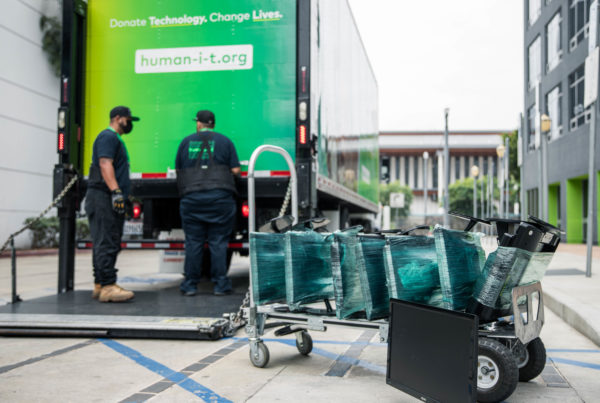
Human-I-T’s NAID AAA and ISO certifications deliver unmatched data destruction standards that exceed industry requirements. Free organizational pickup services eliminate logistics headaches while comprehensive documentation satisfies compliance auditors and tax preparers alike.
Your donation creates verified impact — joining 434,000+ devices already distributed to bridge the digital divide for students, job seekers, and working families accessing essential online services. Every device we refurbish is one more device diverted from landfills and one more family connected to opportunity.
Ready to transform security risks into community opportunities?
Contact Human-I-T today to schedule a free pickup for your old laptops. No gimmicks. No gatekeeping. Just secure data destruction and real impact for real families.
You can also fill out a technology donation form and take a step toward closing the digital divide while championing responsible e-waste management.
FAQ
Is a factory reset enough to protect my data before selling my laptop?
No. Factory resets leave recoverable data behind that professional recovery tools — and motivated hackers — can extract. Only military-grade NIST 800-88 wiping protocols or physical destruction guarantee complete data removal. NAID AAA certified organizations like Human-I-T use both methods depending on the device.
Can I get fined for improperly disposing of electronics?
Yes. Electronics disposal is regulated in 25 states, and more states are adding e-waste laws in 2026. Fines vary by state and can be significant — especially for businesses. When you sell a device without ensuring proper end-of-life handling, you may be transferring legal liability rather than eliminating it.
How much is my old laptop actually worth after hidden selling costs?
Less than you think. Between platform transaction fees, time spent on listings and meetups, depreciation, and chargeback risks, the real profit on most laptops over two years old shrinks dramatically. For business laptops, corporate refresh cycles flood the market and drive prices even lower.
What happens to my device when I donate it to Human-I-T?
Human-I-T’s background-checked technicians wipe your data using NIST 800-88 protocols in secure, audited facilities. Functional devices are refurbished and distributed to income-qualified families, students, and job seekers — extending the device’s lifespan and bridging the digital divide. Devices that can’t be refurbished enter R2-certified recycling channels. You receive documentation proving complete data destruction and responsible handling.
Is donating my laptop tax-deductible?
Yes. Donating electronics to a certified nonprofit like Human-I-T qualifies for a tax deduction. You’ll receive comprehensive documentation for your records. Contact Human-I-T to learn more about the donation process and what devices we accept.