
TL;DR
The best way to manage your company’s e-waste is to donate reusable devices to a certified nonprofit like Human-I-T — you get compliant data sanitization, a tax deduction, and environmental impact in one move. In 2022, the world generated 62 million tonnes of e-waste, yet only 22.3% was properly recycled. Before you send old equipment to a recycler, consider whether those devices could get a second life with a family that needs one.
Table of Contents
- Why does business e-waste matter?
- Should you recycle or donate old devices?
- How do you destroy data the right way?
- Can you get a tax deduction for donated electronics?
- How does e-waste management improve your brand?
- FAQ
Introduction
Whether you’re migrating servers to the cloud or cycling out an aging fleet of laptops, your company is sitting on a decision that matters more than most IT managers realize. That old equipment doesn’t just disappear. It ends up somewhere — and "somewhere" is often a landfill, an incinerator, or a shipping container bound for a developing country’s coastline.
According to the Global E-waste Monitor 2024, the world generated 62 million tonnes of e-waste in 2022 — roughly 7.8 kg per person — and that figure is climbing by about 2.6 million tonnes every year, on track to hit 82 million tonnes by 2030. Only 22.3% of that waste was properly collected and recycled. The rest? Toxic debris contaminating soil and groundwater, dioxins seeping into the atmosphere, and valuable materials buried forever.
Your company’s decommissioned devices don’t have to be part of that statistic. Here are five ways to make sure they aren’t.
Why Does Business E-Waste Matter?
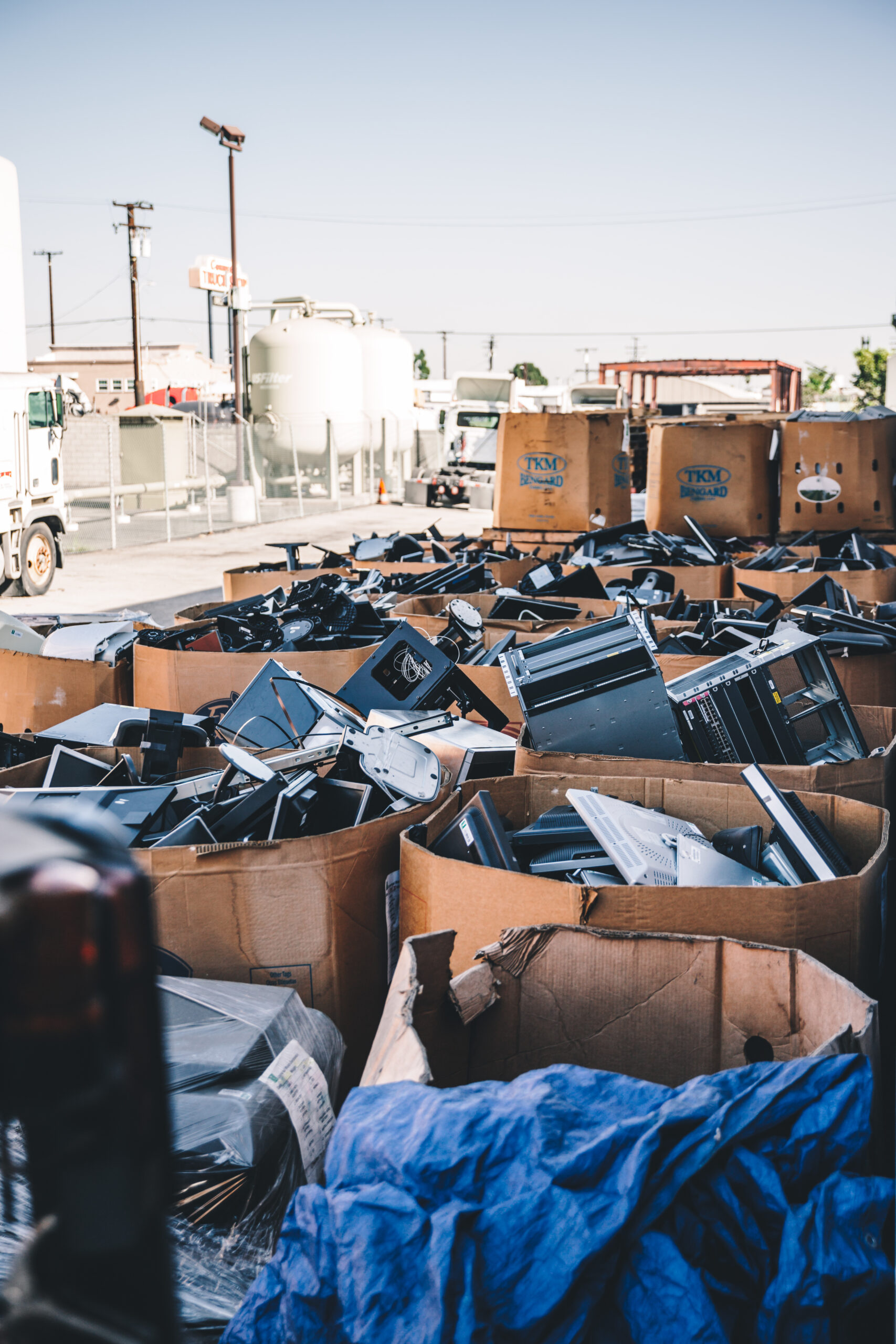
Because improperly handled electronics poison communities and waste recoverable resources on a massive scale. E-waste sent to landfills or incinerated in the open air releases dioxins into the atmosphere while toxic materials — lead, mercury, cadmium — leach into soil and groundwater. In many cases, e-waste is dismantled for resale parts, and the remaining shredded material gets shipped to landfills in developing countries.
This isn’t an abstract environmental concern. It’s a direct consequence of how businesses choose to decommission their technology. Every company upgrading hardware faces the same fork in the road: dispose of devices in a way that compounds the crisis, or handle them in a way that addresses it.
Confirming that your e-waste is disposed of properly and responsibly isn’t just good ethics — it’s a baseline obligation.
Should You Recycle or Donate Old Devices?
Donate first. Recycling should be the last resort, not the default. When you donate working or refurbishable technology, you eliminate the energy spent breaking devices down and the energy spent manufacturing replacements. You cut the waste generated by packaging and shipping brand-new items. And you put a functional device into the hands of a low-income family, a veteran, or a person with a disability who needs it.
That’s the difference between a circular economy and a disposable mindset.
Reuse gives working families access to education, employment opportunities, financial inclusion, and social services — the building blocks of participation in the digital age. A laptop that’s outdated for your office can be a lifeline for a single parent applying for jobs or a student completing homework. Why shred it when you can repurpose it?
How Do You Destroy Data the Right Way?
Use a provider that follows NIST SP 800-88 — the federal standard for media sanitization, updated to Revision 2 in September 2025. Deleting files, erasing drives, or reformatting is not enough. Data remains recoverable unless you use comprehensive wiping methods that clear, purge, or destroy media according to verified specifications.
NIST 800-88r2 provides guidelines that are compliant with data sanitization requirements across health care, financial services, the U.S. military, and other regulated industries. The updated revision also aligns with the newer IEEE 2883-2022 standard, which extends sanitization guidance to modern storage technologies like NVMe and SSDs.
Any provider you work with should not only destroy recoverable data but also re-scan the drive and provide written verification that sanitization was completed. If they can’t produce that documentation, walk away. Your company’s data — and your clients’ — deserves more than a promise.
Can You Get a Tax Deduction for Donated Electronics?
Yes. When you donate unwanted IT assets to a 501(c)(3) nonprofit, you can claim a tax deduction for the fair market value of the donated equipment. That includes laptops, desktops, monitors, servers, networking gear, and peripherals.
For specific guidance on valuation, consult a certified tax professional or reference IRS Publication 561 (Rev. 12-2024), which covers how to determine the value of donated property. The IRS also offers an interactive course on charitable contribution deductions for organizations navigating the process for the first time.
This isn’t a minor perk. For companies decommissioning dozens or hundreds of devices, the deduction adds up — turning a disposal cost into a financial benefit while funding digital inclusion.
How Does E-Waste Management Improve Your Brand?
Consumers increasingly reward companies that demonstrate genuine commitment to social and environmental impact — not greenwashed press releases, but measurable action. When you donate electronics for reuse instead of quietly recycling them, you have a real story to tell: devices diverted from landfills, families connected to opportunity, verified data destruction protecting your clients.
That story resonates with customers, employees, and partners. It generates brand loyalty that no ad campaign can replicate. Companies like Zillow, USC, the LA Lakers, and Red Bull have already made technology donation part of their corporate responsibility strategy.
Be the company that acts, not the one that talks about acting.
What Human-I-T Offers
Human-I-T is a Los Angeles-based nonprofit providing nationwide e-waste and ITAD services. We handle the entire process: free pickups, compliant data sanitization (NIST 800-88r2 and NAID AAA certified), and itemized tax-deductible receipts — all while giving your old devices a second life with families who need them.
Every device you donate directly funds digital equity: affordable technology, low-cost internet, digital training, and tech support for underserved communities.
Fill out the technology donation form today and take a step towards closing the digital divide while championing responsible e-waste management. You’ll receive a response within one business day, and most donations are picked up within two weeks.
Questions? Email donate@human-i-t.org or call 888-268-3921.
FAQ
What qualifies as e-waste for business donations?
Laptops, desktops, monitors, servers, networking equipment, tablets, smartphones, and peripherals all qualify. Even devices that aren’t fully functional may be refurbishable. When in doubt, reach out to Human-I-T — we assess every donation and maximize reuse before responsibly recycling anything that can’t get a second life.
Is donating electronics more environmentally responsible than recycling them?
Yes. Donating for reuse skips the energy-intensive recycling process entirely and eliminates the need to manufacture a replacement device. It also keeps functional technology out of the waste stream. Recycling is a last resort — refurbishment and reuse should come first in any responsible e-waste strategy.
How do I know my company’s data is safe after donating devices?
Work with a provider that uses NIST SP 800-88r2 sanitization methods and provides written verification of data destruction. Human-I-T is NAID AAA certified and follows these federal standards, delivering documentation that meets compliance requirements across health care, finance, and government sectors.
How do I get started with a business technology donation?
Submit a donation request at human-i-t.org/donate-technology. Our team responds within one business day, and we coordinate free pickup — typically within two weeks. You’ll receive an itemized tax-deductible receipt for every asset donated.
How much e-waste does the world produce each year?
According to the Global E-waste Monitor 2024, the world generated 62 million tonnes of e-waste in 2022, and that figure is rising by roughly 2.6 million tonnes annually. At this rate, global e-waste will hit 82 million tonnes by 2030 — making responsible disposal and reuse more urgent every year.