
TL;DR
Traditional recycling can’t keep pace with data center e-waste — only 22.3% of global e-waste is properly collected and recycled, and recycling itself perpetuates the production cycle by turning old equipment into new products destined for eventual disposal. Data center operators should prioritize refurbishment and reuse over recycling to reduce costs, protect the environment, and move toward a genuine circular economy. Contact a certified ITAD provider like Human-I-T that prioritizes giving equipment a second life.
Table of Contents
- How serious is the e-waste problem in data centers?
- What types of equipment do data centers dispose of?
- What is the environmental impact of data centers?
- Why does data center sustainability remain so difficult?
- How does e-waste recycling for data centers actually work?
- What are the biggest problems with recycling as the go-to e-waste solution?
- What should data center operators do instead of relying on recycling alone?
- FAQ
Introduction
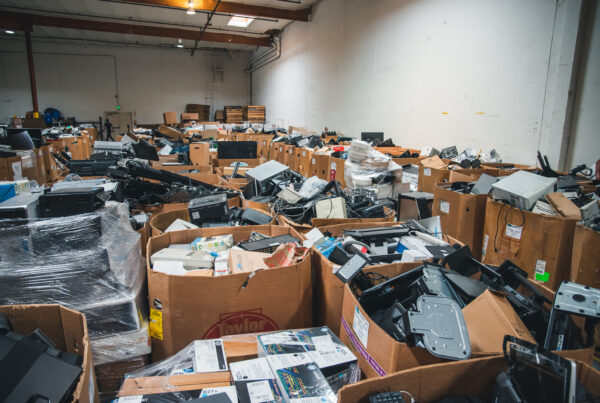
Data center recycling may not seem like the most sexy topic. But data center operators and managers know the stakes are high. In 2022, the world generated 62 million metric tonnes of e-waste — and that figure is climbing by 2.6 million tonnes every year, according to the Global E-Waste Monitor 2024. A significant share of that mountain comes from data centers cycling through servers, storage arrays, and networking equipment at breakneck speed.
The instinct is to recycle. And recycling isn’t bad — we’re not here to chastise anyone who does it. But traditional recycling has hard limits: it’s resource-intensive, insufficient at scale, and ultimately ends with the creation of new products that will themselves become e-waste. It’s a loop, not a solution.
There’s a better path. Refurbishment and reuse move data center equipment back into the lifecycle as a whole — not as raw materials stripped for parts, but as functioning technology that serves someone who needs it. That’s the circular economy in practice, not just in principle.
How Serious Is the E-Waste Problem in Data Centers?
Extremely serious — and getting worse. The latest large-scale research from the UN, reported in the Global E-Waste Monitor 2024, paints a stark picture: 62 million metric tonnes of e-waste was generated in 2022, and only a paltry 22.3% of that mass was documented as properly collected and recycled. Global e-waste generation is on track to reach 82 million tonnes by 2030.
Data centers are a major contributor. As of November 2025, there are 5,427 data centers in the United States alone, according to Cargoson, with the next largest markets in Germany, the United Kingdom, China, and France. Each of those facilities churns through servers, switches, storage systems, and cooling infrastructure — all of it destined to become e-waste.
Research on data centers and the environment conducted by Supermicro revealed that 12% of data centers do not engage in any type of e-waste recycling, and 43% do not have an environmental policy for dealing with their e-waste. These figures are from a 2018 report; more current data center e-waste policy surveys may be available.
As we’ll see, data center recycling methods sometimes contribute to the problem rather than solving it.
What Types of Equipment Do Data Centers Dispose of?
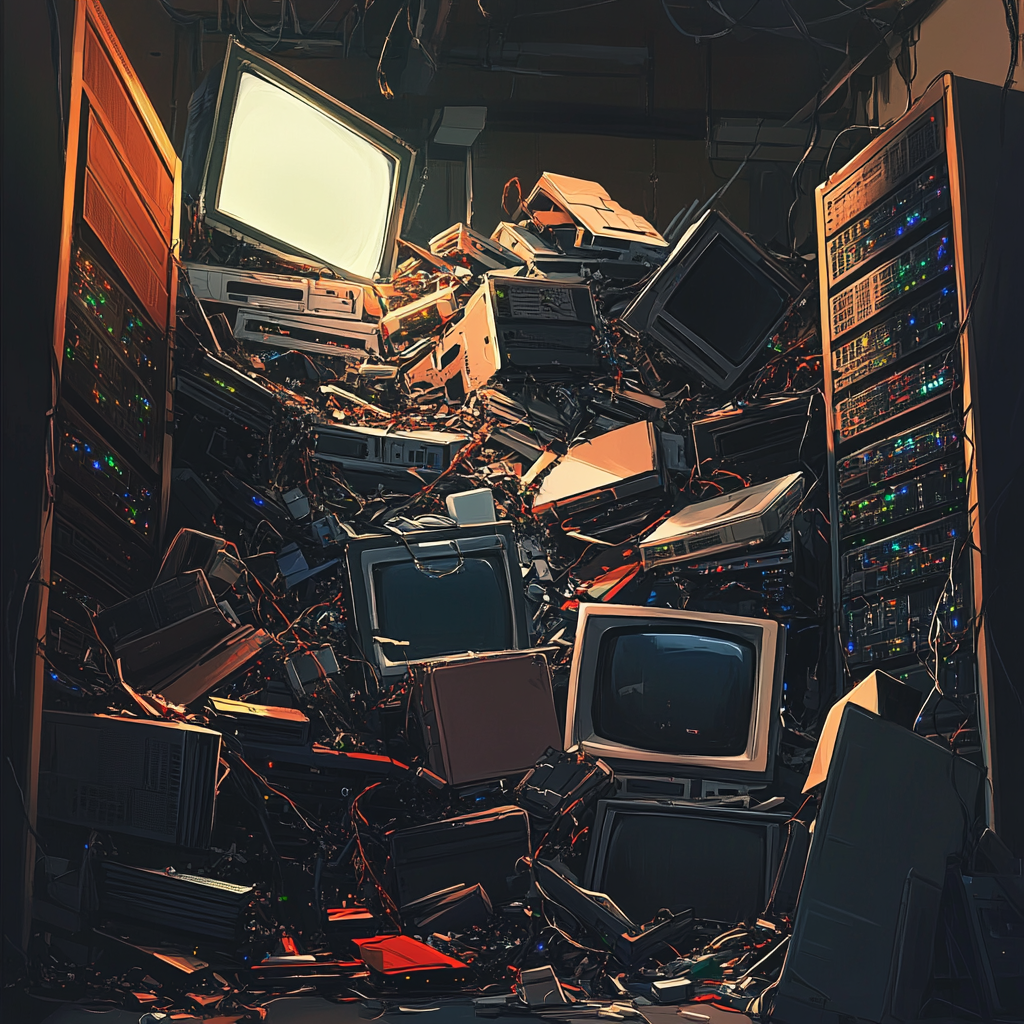
Data centers generate e-waste across three broad categories — networking equipment, server equipment, and supporting infrastructure.
Data center networking equipment facilitates communication and data transfer within networks. These devices manage and direct traffic between systems. Examples include routers, switches, firewalls, load balancers, and network cables.
Server equipment consists of powerful computers designed to process requests, store data, and run applications around the clock. They are the workhorses of a data center, handling computational tasks and managing enormous volumes of data. Examples include web servers, database servers, application servers, and file servers.
Other data center equipment covers everything else within the infrastructure — monitors, circuits, computing components, storage systems (like SANs and NAS), power distribution units (PDUs), uninterruptible power supplies (UPS), cooling systems, and the racks that house all of it.
Every one of these categories contains materials that are complex to recycle and hazardous when improperly disposed of.
What Is the Environmental Impact of Data Centers?
Data centers are remarkably energy-intensive — and the equipment they discard compounds the damage. According to Net Zero Insights, data centers and data transmission networks are responsible for roughly 1% of global energy-related greenhouse gas emissions. In the United States specifically, approximately 0.5% of total greenhouse gas emissions are attributed to data centers, and AI-driven demand is pushing that figure higher — an August 2025 analysis from Goldman Sachs Research forecasts that about 60% of increasing electricity demands from data centers will be met by fossil fuels, according to MIT.
But energy consumption is only half the story. Data center site managers exacerbate emissions by not practicing good e-waste management. Improper disposal of networking equipment and servers causes soil contamination, air pollution, and water pollution.
Data center equipment is often not designed with recycling or longevity as a concern. Planned obsolescence and short life cycles ramp up the environmental impact of disposal. We need to tackle the ecological footprint of data centers in the widest terms — the material waste they create, the manufacture of equipment, data center architecture and cooling methods, and the full lifecycle of every device inside.
Why Does Data Center Sustainability Remain So Difficult?
Two structural issues hold data center sustainability back.
First, data centers dispose of equipment that is out of date rather than out of action. Equipment gets deemed obsolete even when it’s still functional. This is a fundamental problem with how we define e-waste in the first place. If a server still works, calling it "waste" is a choice — not an inevitability.
Second, rapid innovation drives premature replacement. Data centers tend to cycle through equipment faster than its functional lifespan demands. Running hardware is disregarded long before it breaks. The result: mountains of perfectly functional technology sent to recycling — or worse, landfills.
How Does E-Waste Recycling for Data Centers Actually Work?
E-waste recycling involves breaking down electronic devices and equipment into raw materials, which are then used to manufacture new products. In theory, this conserves valuable components and reduces the need for virgin materials. The process generally includes four stages:
- Collection — E-waste is dropped off at specified centers for recycling programs to begin.
- Sorting — E-waste is classified and separated based on material type and condition.
- Processing — Different techniques extract raw materials that are useful or valuable.
- Manufacturing — Recovered materials are used to make new products.
This seems clean and logical. But the weaknesses are significant — and they’re why recycling alone can’t solve the data center e-waste crisis.
What Are the Biggest Problems With Recycling as the Go-To E-Waste Solution?
Recycling has five critical limitations that data center operators need to understand.
Volume. The recycling infrastructure is insufficient to handle our current e-waste output. The steep increase in technology production and data center construction outpaces the capacity of recycling programs — and it’s not close.
Materials. Electronic devices and data center equipment have complex compositions. Some components are unsuitable for recycling due to their outdated or damaged state. Others contain hazardous materials — heavy metals like cadmium, lead, and mercury, plus brominated flame retardants — that are difficult to separate safely. Environmental contamination is hard to prevent.
Process. Recycling is resource-heavy. The specialist knowledge and tools required to disassemble intricate devices and separate materials is significant. Energy-intensive processes like smelting, refining, and shredding add their own environmental cost.
Policies. There is no universally accepted standard for e-waste recycling. Countries and industries disagree on best methods for different e-waste types, creating gaps that waste slips through.
Ethics. Investigations — including the Basel Action Network’s 2016 report — have uncovered unethical practices among recycling companies: exporting e-waste to landfills in developing countries, illegal burning of unused materials as scrap, and releasing harmful chemicals with serious health implications like lead poisoning and respiratory disease. This is exactly why employing certified IT Asset Disposition (ITAD) providers matters.
Perhaps the greatest problem with recycling as a single solution: it ends with the creation of new products. That contributes further to the e-waste cycle, producing more items destined for processing or disposal. We need another approach.
What Should Data Center Operators Do Instead of Relying on Recycling Alone?
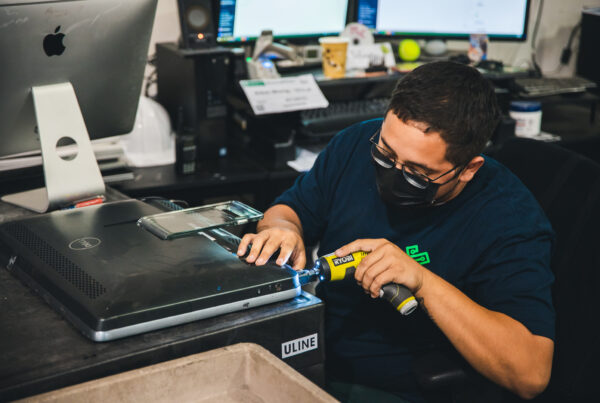
Refurbishment and reuse. Rather than salvaging high-value materials to make new products, refurbishment loops equipment back into the lifecycle as a whole — a genuine example of the circular economy at work.
Data centers can lessen and even recoup equipment costs by repairing instead of replacing. Items no longer useful in the data center itself can be refurbished and resold as secondhand data center equipment.
Here’s what you can do right now to elevate your e-waste disposal beyond traditional recycling:
- Prioritize refurbishment over recycling. Have your current data center equipment collected and, when appropriate, refurbished so it can be reused — not just broken down for parts.
- Reduce planned purchases. Consider whether new equipment buys could be deferred in favor of maintaining and extending the life of older hardware.
- Vet your ITAD providers. Investigate which providers manufacture or source products with more sustainable casings, components, and materials — and which ones hold real certifications, not just marketing claims.
Reducing the strain of short equipment lifecycles and excessive energy consumption makes business sense. Redesigning data center products and processes to be less consumptive is vital long-term, but refurbishment is what operators can act on today.
Human-I-T helps minimize data center emissions through secure data center equipment disposal. To ensure maximum data security, we provide a comprehensive data destruction process meeting the highest standards — including NAID AAA and ISO 9001, 14001, and 45001 certifications.
Contact us today to learn how our secure ITAD services can help you implement a successful e-waste management program for your data center.
FAQ
How much e-waste do data centers generate globally?
Data centers are a major contributor to the 62 million metric tonnes of e-waste generated worldwide in 2022, according to the Global E-Waste Monitor 2024. With over 5,400 data centers in the US alone and rapid equipment turnover driven by innovation cycles, the volume is climbing every year — and global generation is projected to reach 82 million tonnes by 2030.
Why isn’t recycling enough for data center e-waste?
Recycling infrastructure can’t keep up with the volume. Beyond scale, the process is energy-intensive, struggles with hazardous materials in complex electronics, and ultimately creates new products that re-enter the waste cycle. Only 22.3% of global e-waste is properly collected and recycled. Refurbishment and reuse offer a more complete solution by keeping functional equipment in circulation.
What should I look for in a data center ITAD provider?
Look for providers with verified certifications — NAID AAA for data destruction and R2 or ISO standards for environmental and safety compliance. Critically, choose a provider that prioritizes refurbishment and reuse over shredding everything for raw materials. Unethical recyclers have been documented exporting e-waste to developing nations, so certification isn’t optional — it’s protection.
How can Human-I-T help with data center equipment disposal?
Human-I-T provides secure ITAD services that include comprehensive data destruction and responsible equipment disposition. Our approach prioritizes refurbishing and reusing equipment wherever possible — giving technology a second life while diverting e-waste from landfills. Contact us today to build an e-waste management program for your data center.
Is data center equipment too outdated to refurbish?
Not usually. Data centers often dispose of equipment that is out of date but still fully functional. "Obsolete" by data center standards doesn’t mean broken — it often means there’s a newer model available. That still-working server or switch can be refurbished and put to use by organizations and communities that need it, extending its lifespan and keeping it out of landfills.