
TL;DR
When climate disasters knock out digital infrastructure, communities already on the wrong side of the digital divide face compounding threats — from missed evacuation orders to disrupted healthcare. FEMA now officially lists "access to technology" as a key factor determining disaster severity in a given community. Bridging the digital divide before disasters strike — through affordable connectivity, devices, and digital literacy — is no longer optional. It’s a matter of survival.
Table of Contents
- Why Do Natural Disasters Deepen the Digital Divide?
- Who Gets Hurt Most When Digital Infrastructure Fails?
- How Does the Digital Divide Turn Into a Healthcare Crisis During Disasters?
- What Are "Cascading Risks" and Why Do They Matter?
- Why Is Flood Risk Awareness So Dangerously Low?
- How Are Digital Inclusion Organizations Building Disaster-Resilient Communities?
- What Is Human-I-T Doing to Close the Disaster-Readiness Gap?
- FAQ
As of early 2025, according to the International Telecommunication Union, nearly three billion people remain offline — many of them in low- and middle-income countries that are most vulnerable to climate disasters. In the United States alone, Hurricanes Helene and Milton laid bare a brutal truth in 2024: the intensity and frequency of natural catastrophes are escalating, and the damage extends far beyond what’s visible.
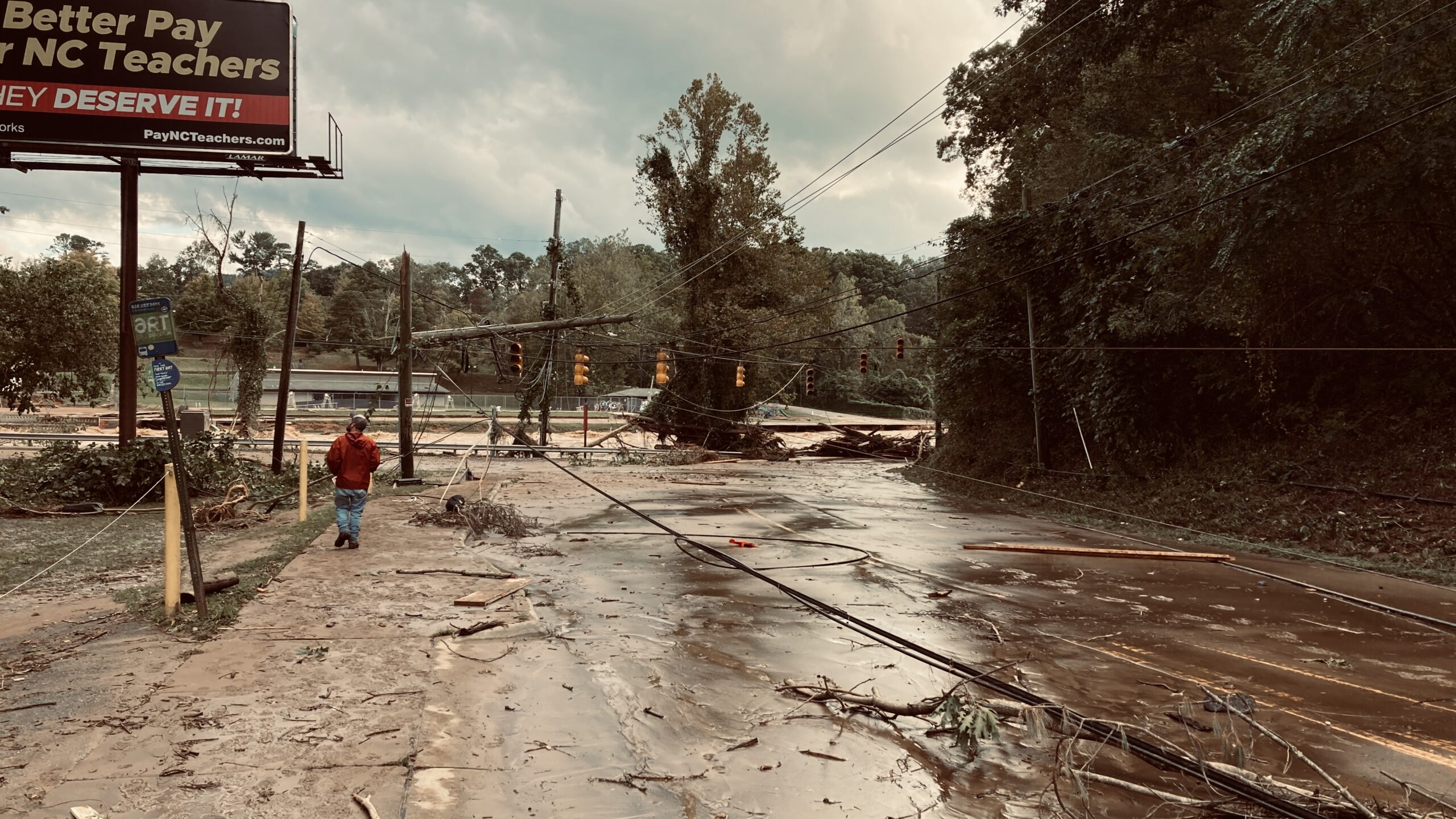
In the aftermath of these storms, a hidden crisis compounds the physical destruction. The digital divide — once dismissed as an inconvenience — now determines who receives evacuation orders, who accesses emergency healthcare, and who navigates relief efforts. As communities from the Carolinas to Florida struggle to rebuild, the ability to stay connected is increasingly the difference between recovery and prolonged suffering.
This widening gap between the connected and the disconnected is now a matter of life and death.
Why Do Natural Disasters Deepen the Digital Divide?
Because they destroy the very infrastructure that keeps people informed, connected, and safe — and that infrastructure was already fragile in underserved communities.
Hurricane Ida’s 2021 rampage through Louisiana left $55 billion in destruction. Across the globe, from the Australian bushfires of 2019-2020 to the 2015 Nepal earthquake and recent floods in Timor-Leste, the pattern is consistent: climate disasters don’t just level buildings. They obliterate digital lifelines.
Hurricane Sandy’s assault on the eastern U.S. seaboard knocked out a quarter of all mobile phone towers, leaving millions without vital communication channels. The Caribbean islands faced an even more dire situation when Hurricanes Maria and Irma destroyed 90% of mobile sites, effectively cutting off entire communities from the outside world.
The vulnerability extends beyond cell towers. Data centers, wireless networks, and fixed infrastructure all face grave risks from hurricanes, extreme heat, and wildfires. During Hurricane Sandy, the loss of electricity forced numerous phone service providers offline — creating an information vacuum when access to timely updates could mean the difference between life and death. Even outside acute disasters, heatwaves silently sap power grid efficiency, increase transmission losses, and sometimes force entire power plants offline.
Who Gets Hurt Most When Digital Infrastructure Fails?
The same communities that have always been underinvested in — low-income residents, people with disabilities, the elderly, immigrants, and historically marginalized populations.
These groups face the greatest challenges when disasters strike. Those lacking insurance or with limited coverage are hit particularly hard. The situation is even more precarious for undocumented residents, including families with mixed immigration status. Not only are they often ineligible for government aid or disaster relief, but many live in constant fear of seeking help — trapped between disaster and deportation.
Researchers at the Natural Hazards Center at the University of Colorado have introduced the concept of "digital vulnerability" to describe individuals who lack the digital capabilities to access online information about disaster risk, preparedness, and mitigation. Their study found that residents in subsidized housing tend to be more vulnerable to disasters, partly due to limited resources to address flooding risks. These same residents are also more likely to experience one or more dimensions of the digital divide — creating a vicious cycle of vulnerability that compounds with each storm.
How Does the Digital Divide Turn Into a Healthcare Crisis During Disasters?
When digital systems go down, healthcare access collapses with them — and displaced individuals lose continuity of care at the moment they need it most.
The Australian bushfires razed medical practices and pharmacies in affected regions. Facilities that survived often found themselves crippled by loss of power and internet connectivity. A shocking 44% of all My Health Records — Australia’s electronic health record system — held no information about individuals seeking help in rural services outside their residence during the bushfires. This gap in medical history severely impeded healthcare providers’ ability to ensure continuity of care for displaced people.
Telemedicine, often touted as a solution for healthcare access during disasters, has faced harsh realities. In Nepal, after the 2015 earthquake, digital health technologies were hampered by both limited access and the local population’s ability to use them effectively. Flood response efforts in Timor-Leste were hindered by poor internet connections and coverage. The lack of comprehensive Electronic Health Records for displaced individuals translates to disrupted treatments, potential medical errors, and added stress for patients already grappling with the trauma of disaster.
What Are "Cascading Risks" and Why Do They Matter?
Cascading risks describe what happens when the digital divide intersects with other systemic vulnerabilities — substandard housing, inadequate healthcare, limited economic opportunity — to create compounding disaster impacts that persist for years.
In neighborhoods shaped by historical racism and insufficient infrastructure investment, poor internet access doesn’t exist in isolation. It intertwines with every other disadvantage. The long-term recovery issues in Louisiana’s Saint John Parish and Saint James Parish following Hurricane Ida paint a stark picture: years after the hurricane, unrepaired roofs and massive levels of displacement still plague these communities.
The Federal Emergency Management Agency (FEMA) has officially listed "access to technology" as one of the key societal factors affecting the severity of a disaster in a given community. When disaster strikes, those on the wrong side of the digital divide find themselves cut off from warnings, evacuation orders, and emergency shelter information. This information blackout extends beyond the immediate crisis, limiting access to media reports and online resources vital for recovery.
At the root of many of these issues lies what experts call the "regulatory construction of vulnerability." Regulatory decisions — often made far from the communities they affect — can either exacerbate or mitigate vulnerability. High levels of digital exclusion create information gaps that amplify these risks. The decision to locate a dam’s flood channel through populated areas might seem abstract on paper, but for digitally excluded communities lacking access to flood risk information or early warning systems, it becomes a looming, unseen threat.
Why Is Flood Risk Awareness So Dangerously Low?
Because the information exists online — and the people who need it most can’t access it.
Only 44% of residents in flood-prone zones are aware of their exposure to flooding hazards. Even more concerning, 19% are uncertain about their flood exposure, while over one-third falsely believe they’re not living in flood zones at all. This lack of risk awareness, compounded by limited access to online resources and flood maps, leaves communities dangerously unprepared for water-related disasters that are becoming increasingly common.
The skills gap makes things worse. A recent study revealed that only 35.5% of respondents felt confident in their ability to find credible online information sources — a startling figure in an era where online information can be a lifeline during disasters. The divide deepens along demographic lines: older adults and non-white individuals report less confidence in searching for and sharing disaster information on social media. Older adults and unemployed individuals tend to have fewer social media accounts, potentially limiting their access to real-time information and community support networks during crises.
How Are Digital Inclusion Organizations Building Disaster-Resilient Communities?
By treating high-speed broadband as essential infrastructure — as crucial to modern life as clean water or affordable electricity — and tackling digital redlining head-on.
Organizations are working to ensure that no community is left behind in the digital age, especially when digital connectivity can mean the difference between safety and danger during a disaster. But true digital inclusion goes beyond infrastructure. Organizations like RowdyOrb.it are pioneering community-based models, training and hiring locals to install mesh networks in their own neighborhoods. This approach doesn’t just improve internet access — it creates jobs, builds local expertise, and fosters the sense of ownership that’s crucial for long-term resilience.
Digital literacy education forms another critical pillar. By uplifting digital skills in both the healthcare workforce and at-risk communities, these organizations enable engagement with digitally enabled models of care — crucial in disaster scenarios where telemedicine and electronic health records can maintain continuity of care for displaced or isolated individuals.
The results show up in the data. Social media has emerged as a powerful disaster information tool, with 73% of respondents in a recent study reporting that they follow official accounts for disaster-related information. 55% of individuals now utilize at least four different information channels during disasters, highlighting the importance of a multi-channel approach to emergency communication. Studies show a clear correlation between following official social media accounts and adopting risk mitigation behaviors.
Innovative technological solutions are also advancing disaster planning. The Flomosys system represents a significant leap forward in flood monitoring technology, providing more accurate and timely warnings. The AlertWildfire camera network has proven invaluable in providing critical, real-time information during fire seasons.
Central to all of this is the adoption of a Whole Community Approach — a framework that centers public participation at the core of both regulatory development and disaster response. Resilience isn’t something imposed from the top down. It must be built from the ground up, with active participation from all community members.
What Is Human-I-T Doing to Close the Disaster-Readiness Gap?
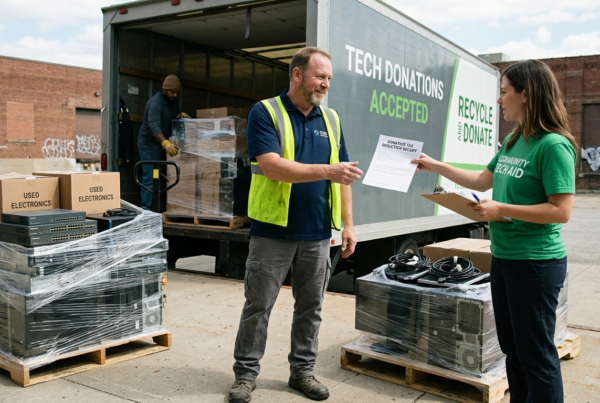
Human-I-T provides the full stack of digital inclusion — affordable connectivity, devices, digital literacy training, and ongoing tech support — so communities can prepare for, respond to, and recover from disasters.
Recognizing that access to the internet is a right, not a privilege, Human-I-T offers unlimited LTE connectivity for just $14.99 per month, making high-speed internet accessible to low-income families, veterans in need, people with disabilities, and seniors. Beyond connectivity, we provide low-cost refurbished devices, digital literacy training, and ongoing tech support. This comprehensive approach ensures that individuals don’t just have access to technology — they have the skills and support to leverage it effectively, especially during times of crisis.
In a world where climate-related disasters are becoming more frequent and severe — and where 305 million people worldwide need urgent humanitarian aid in 2025, according to the United Nations — digital inclusion ensures every person has the tools to stay safe, informed, and connected, no matter what challenges arise.
Your support can make a real difference. Every dollar donated to Human-I-T goes toward keeping working families connected when they need it most — during hurricane seasons, wildfire evacuations, and flood emergencies. You’ll be enabling a family to stay informed during a crisis, helping a job seeker access opportunities in the aftermath of a storm, and ensuring a student can continue their education even when their school is inaccessible.
Donate to Human-I-T today and help build disaster-resilient communities — or check your eligibility to get connected.
FAQ
Does the digital divide actually affect disaster survival rates?
Yes. FEMA officially lists "access to technology" as one of the key societal factors affecting the severity of a disaster in a given community. When digital infrastructure fails, people lose access to evacuation orders, emergency shelter locations, and relief coordination. Communities with higher rates of digital exclusion experience compounding vulnerabilities that persist long after the immediate crisis passes.
Who is most at risk when digital infrastructure goes down during a disaster?
Low-income residents, the elderly, people with disabilities, immigrant families, and historically marginalized communities bear the heaviest burden. Researchers at the University of Colorado’s Natural Hazards Center found that residents in subsidized housing are more vulnerable to disasters partly because they also experience higher rates of digital exclusion — creating a cycle of compounding risk.
How does digital literacy help with disaster preparedness?
Studies show that 55% of individuals now use at least four different information channels during disasters, and 73% follow official social media accounts for disaster-related information. But only 35.5% of people feel confident in their ability to find credible online sources. Digital literacy training bridges that gap — helping people identify reliable warnings, navigate relief applications, and access telemedicine when in-person healthcare is disrupted.
How can I help communities prepare for climate disasters through digital inclusion?
Donate funds to Human-I-T to help keep working families connected during emergencies. You can also donate technology — refurbished devices go directly to individuals and families who need them. If you or someone you know needs affordable internet access, check eligibility for Human-I-T’s $14.99/month unlimited connectivity plan.
What makes Human-I-T’s approach to disaster resilience different?
Human-I-T addresses every dimension of the digital divide — not just connectivity. We provide low-cost refurbished devices, unlimited LTE internet at $14.99/month, digital literacy training, and ongoing tech support. This holistic model means communities aren’t just connected — they have the skills and tools to stay informed, access healthcare, and navigate relief systems when disaster strikes.