
TL;DR
TD SYNNEX’s financial contribution enabled Human-I-T to provide 80 underserved K-12 students with laptops — each including a one-year warranty and a year of free, unlimited tech support. Students without home computers maintain GPAs roughly 0.4 points lower than connected peers, according to a 2025 SETDA report. Corporate technology partnerships like this one are a direct lever for closing that gap.
Table of Contents
- What Did TD SYNNEX’s Donation Make Possible?
- Why Do Millions of Students Still Lack Computer Access?
- How Does the Digital Divide Affect Student Achievement?
- What Makes This Partnership Model Different?
- FAQ
Introduction
Students who lack a personal computer at home fall behind by an estimated seven to 14 months academically — and carry GPAs roughly 0.4 points lower than their connected classmates, according to a 2025 report from SETDA. That gap isn’t an accident. It’s the predictable result of a system where millions of households still can’t afford the devices schools now require.
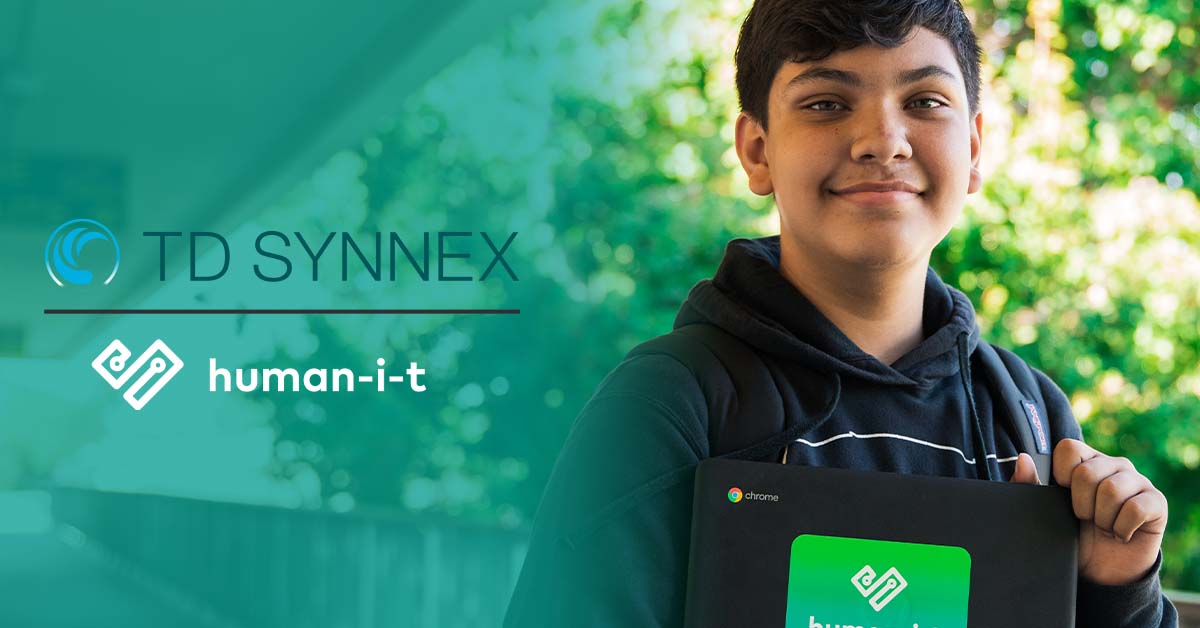
TD SYNNEX — one of the world’s largest technology distributors — decided to do something about it. Their financial donation to Human-I-T put laptops into the hands of 80 underserved K-12 students, each device loaded with a one-year warranty and a full year of free, unlimited tech support. The timing was deliberate: school was back in session, and the homework gap was widening again.
This wasn’t charity for charity’s sake. It was a targeted investment in digital equity from a company that understands — better than most — what access to technology actually means.
What Did TD SYNNEX’s Donation Make Possible?
TD SYNNEX’s financial contribution funded laptops for 80 underserved K-12 students through Human-I-T, each equipped with a one-year warranty and a year of free, unlimited tech support.
For a company already established as one of the world’s largest technology distributors, continuing to cultivate digital equity through Human-I-T was a natural extension of their mission. Their support didn’t stop at hardware. By funding devices bundled with ongoing support, TD SYNNEX ensured these students weren’t just handed a machine and left to figure it out — they received a complete digital lifeline.
These 80 students now have the tools to complete online homework, collaborate with teachers and classmates, and uncover new opportunities that were previously locked behind a screen they didn’t own.
Why Do Millions of Students Still Lack Computer Access? According to the US Census Bureau, 4.4 million households with students in the US still lack consistent access to a computer essential to completing online homework, studying efficiently, or effectively collaborating with teachers and classmates. Yet nearly 70% of teachers provide assignments requiring a computing device to complete.
There is only so much school work you can do off a phone’s five-inch screen before feeling frustrated and discouraged. These aren’t students who lack motivation — they lack equipment. And the problem isn’t limited to rural areas or specific regions. Working families across the country face the same impossible math: pay rent, buy groceries, or somehow afford a laptop the school system assumes every child already has.
The infrastructure of modern education runs on digital tools. According to TALIS 2025 data, 80% of teachers now use digital tools regularly in their classrooms. When the classroom goes digital but the home doesn’t, working families and their children absorb the cost.
How Does the Digital Divide Affect Student Achievement?
The academic toll is measurable and severe. Students without home computer access carry GPAs approximately 0.4 points lower than digitally connected peers — translating to roughly seven to 14 months of lost academic progress, according to a 2025 SETDA and UCI report. Students with home computers maintain an average GPA of 3.18, while those without drop to 2.75.
The consequences compound over time. Students with technology access are 60–80% more likely to graduate, according to recent analysis. That means the homework gap doesn’t just affect tonight’s assignment — it shapes whether a student finishes high school, pursues higher education, or enters the workforce prepared.
This is why donations like TD SYNNEX’s matter beyond the immediate moment. They don’t just help students regain equal footing with their digitally native classmates — they serve as an investment in community health and wellbeing that pays dividends for years.
What Makes This Partnership Model Different?
Human-I-T doesn’t just hand out hardware. Every laptop provided through TD SYNNEX’s support came bundled with a one-year warranty and a full year of free, unlimited tech support — because a device without ongoing support is a ticking clock.
With partners like TD SYNNEX, we create a model where corporate technology expertise directly fuels digital inclusion. TD SYNNEX understands the importance of access to technology from the inside — they distribute it globally. Channeling that knowledge and financial support into communities that need it most isn’t a side project. It’s stewardship.
This partnership approach — combining financial support, device distribution, and wraparound services — is how we build a more socially just, sustainable world where everyone has equal access to opportunity.
Want to change lives through technology the way TD SYNNEX did? Visit our website to learn how your organization can partner with Human-I-T, or fill out the technology donation form to get started today.
FAQ
How can my company support students the way TD SYNNEX did?
Corporate partners can fund device distribution, donate surplus technology, or sponsor digital inclusion programs through Human-I-T. Every contribution is matched with wraparound services — warranties, tech support, and digital training — so the impact goes beyond the hardware. Contact us to explore partnership options.
What do students receive when Human-I-T provides a device?
Each student receives a fully refurbished laptop equipped with a one-year warranty and a year of free, unlimited tech support. We don’t drop off a device and disappear — our model ensures students and their families have ongoing assistance to stay connected and productive.
How many students in the US still lack access to a personal computer? According to the US Census Bureau, 4.4 million households with students lack consistent access to a computer for schoolwork. With 80% of teachers now using digital tools regularly in the classroom, the homework gap continues to affect academic outcomes across working-class communities nationwide.
How does the digital divide impact student grades?
Students without home computer access carry GPAs approximately 0.4 points lower than connected peers — a gap equivalent to seven to 14 months of academic progress, per a 2025 SETDA report. They are also significantly less likely to graduate.
How can I donate technology to Human-I-T?
Fill out the technology donation form on our website. We accept laptops, desktops, tablets, and other devices. Our technicians securely wipe all data, refurbish viable equipment, and distribute it to income-qualified families and students who need it most.