
TL;DR
The circular economy — where electronics are restored, refurbished, and reused instead of discarded — offers a proven path to reduce e-waste, recover rare earth metals, and create jobs. With over 75 million PCs shipping in a single quarter of 2025 according to IDC, the volume of devices entering the waste stream grows every year. Donating your old electronics for refurbishment — rather than trashing or even recycling them — is the single most impactful step you can take.
Table of Contents
- What Is the Circular Economy — and Why Does E-Waste Need It?
- How Big Is the Computer Waste Problem?
- Why Doesn’t Recycling Alone Solve the E-Waste Crisis?
- What Economic Benefits Does the Circular Economy Create?
- What Needs to Change?
- FAQ
Introduction
In the third quarter of 2025 alone, global PC shipments reached 75.8 million units — a 9.4% jump from the prior year, according to IDC. Full-year 2025 shipments grew 9.1% over 2024, per Gartner. Every one of those new machines displaces an older one. The question we rarely ask: where do the old ones go?
The answer, overwhelmingly, is landfills. That’s a crisis — not just for the environment, but for the millions of working families, students, and single parents who can’t afford the devices being thrown away. The circular economy offers a fundamentally different model: instead of "take, make, dispose," we restore, refurbish, and redistribute. And when it comes to electronics, that model doesn’t just reduce waste — it closes the digital divide.
What Is the Circular Economy — and Why Does E-Waste Need It?
The circular economy replaces the disposable mindset with restoration by design. According to the World Economic Forum, a circular model "is restorative or regenerative by intention and design. It replaces the end-of-life concept with restoration, shifts towards the use of renewable energy, eliminates the use of toxic chemicals which impair reuse and return to the biosphere, and aims for the elimination of waste through the superior design of materials, products, systems, and business models."
For electronics, this means giving devices a second life — through refurbishment, component harvesting, and redistribution — rather than shredding them for scrap or burying them in the ground. The shift extends the lifespan of valuable materials like rare earth metals while simultaneously putting technology into the hands of communities that need it most.
It’s the opposite of planned obsolescence. It’s repair over replacement.
How Big Is the Computer Waste Problem?
It’s massive — and accelerating. Gartner reported that worldwide PC shipments grew 9.1% for the full year of 2025, with Q4 alone accounting for 71.5 million units. Omdia tracked Q2 2025 at 67.6 million units. We’re talking about hundreds of millions of new PCs entering the market every year — and a roughly equal number of older machines being pushed out.
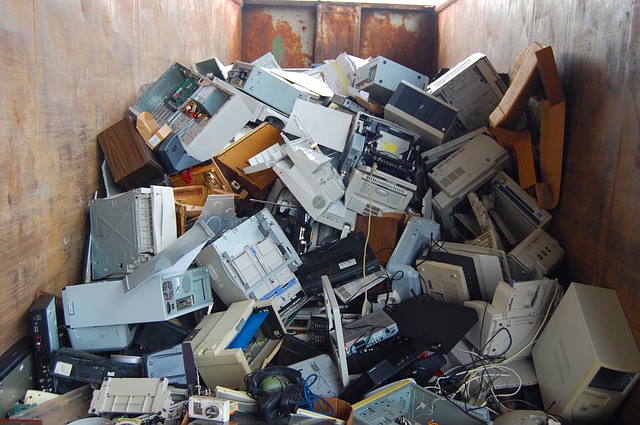
The majority of those displaced devices don’t get reused. They end up in landfills, leaching hazardous materials into soil and groundwater while their recoverable components — including rare earth metals critical to future manufacturing — go to waste. It’s about valuable resources being wasted. It’s about toxic materials poisoning our environment. And it’s about missed opportunities to connect underserved communities to the digital tools they need for work, education, and healthcare.
Why Doesn’t Recycling Alone Solve the E-Waste Crisis?
Recycling is necessary but nowhere near sufficient. The broader materials economy illustrates why: the OECD estimates that only 9% of plastic waste is currently recycled globally. The Ellen MacArthur Foundation and World Economic Forum set a goal to ensure 70% of plastic packaging would be reused and recycled — but the world remains far from that target.
The same pattern holds for electronics. E-waste recycling recovers some raw materials, but it destroys the functional value of devices that could still serve working families. A laptop shredded for copper and gold is worth pennies in recovered material. That same laptop, refurbished and redistributed, is worth a child’s access to remote learning or a parent’s ability to apply for jobs online.
Refurbishment before recycling. Donate, don’t recycle. That’s the circular economy in action.
What Economic Benefits Does the Circular Economy Create?
The economic case is enormous — and growing. According to the European Commission’s Joint Research Centre, circular economy strategies could improve the EU’s trade balance by approximately 4%, corresponding to 35 billion euros. The OECD projects the circular economy could create 2.5 million new jobs within the EU by 2030 in sectors such as recycling, repair, and reuse.
Europe’s current circularity rate sits at about 12%, with a target to double it to 24% by 2030 under the EU’s Clean Industrial Deal. Greater efficiency with resources — particularly the rare earth metals essential to modern electronics — means less dependence on extractive mining, less environmental destruction, and more economic resilience.
These aren’t theoretical projections. They’re policy targets backed by legislative action.
What Needs to Change?
Major tech and manufacturing companies must commit to designing for durability, repairability, and reuse — not planned obsolescence. Corporate greed drives the throwaway culture: companies design products to fail so consumers buy replacements. That linear model extracts maximum profit while externalizing the environmental and social costs onto communities and the planet.
The circular economy demands accountability. It demands that manufacturers take responsibility for the full lifecycle of their products. And it demands that organizations and individuals choose refurbishment and donation over disposal.
At Human-I-T, we put this model into practice every day. We take donated technology, refurbish it through our certified ITAD processes, and redistribute it — along with low-cost internet, digital training, and tech support — to income-qualified families and communities. Every device we give a second life is one more device diverted from a landfill and one more family connected.
Fill out the technology donation form today and take a step towards closing the digital divide while championing the cause of responsible e-waste management.
FAQ
What is the circular economy for electronics?
The circular economy for electronics replaces the "take, make, dispose" model with one built on restoration and reuse. Instead of discarding old devices, they are refurbished and redistributed, extending their lifespan and keeping hazardous materials out of landfills. This approach recovers value from existing technology while reducing demand for new raw materials.
How many computers are sold globally each year?
Global PC shipments are substantial and growing. In 2025, shipments grew 9.1% year-over-year, with Gartner reporting 71.5 million units in Q4 alone and IDC tracking 75.8 million units in Q3. Each new purchase displaces an older device that, without intervention, typically ends up as e-waste.
Why is donating electronics better than recycling them?
Recycling destroys functional value — a working laptop shredded for metals loses the educational and economic potential it could provide to a family in need. Donating to organizations like Human-I-T means devices are refurbished and given to income-qualified families, addressing both e-waste and the digital divide simultaneously.
How can my organization participate in the circular economy for e-waste?
Contact Human-I-T to learn about our secure ITAD services, including certified data destruction and responsible technology disposition. We handle the logistics — from pickup to data sanitization to refurbishment — so your organization can dispose of equipment responsibly while directly contributing to digital equity.
What are the economic benefits of a circular economy?
The OECD projects the circular economy could create 2.5 million new jobs in the EU by 2030, while EU Joint Research Centre analysis shows it could improve the bloc’s trade balance by roughly 35 billion euros. These gains come from reducing waste, recovering valuable materials, and building resilient supply chains less dependent on extractive mining.