
TL;DR
Bo Burnham’s "Welcome to the Internet" isn’t just comedy — it’s a satirical mirror reflecting how Gen-Z navigates a digital world that’s simultaneously empowering and overwhelming. With nearly 98% of Gen Z worldwide owning a smartphone and averaging around 9 hours of daily screen time, this generation lives the song’s central tension: boundless connectivity shadowed by information overload, mental health risks, and a digital divide that leaves millions behind. Digital literacy programs and equitable access initiatives are what turn that tension into opportunity.
Introduction
"Could I interest you in everything? All of the time?" Bo Burnham’s falsetto pitch sounds like a carnival barker — because that’s exactly what the internet has become. For Gen-Z, a generation where nearly 98% own a smartphone and the average attention span clocks in at roughly 8 seconds, the song isn’t satire. It’s a documentary.
"Welcome to the Internet," from Burnham’s 2021 Netflix special Inside, captures a paradox that organizations working in digital equity confront daily: the internet is the single most powerful tool for education, employment, and civic participation — and it’s also a firehose of misinformation, exploitation, and attention manipulation aimed squarely at the generation most immersed in it.
The question isn’t whether Gen-Z should be online. They already are — averaging around 9 hours of screen time per day, according to multiple 2025 studies. The real question is whether they have the tools, the literacy, and the equitable access to use that connectivity for empowerment rather than exploitation. That’s where the song’s deeper meaning intersects with the mission of digital equity.
Table of Contents
- What is "Welcome to the Internet" actually about?
- Full lyrics to "Welcome to the Internet"
- What are the key themes in the lyrics?
- Why does this song resonate so deeply with Gen-Z?
- How does Gen-Z’s relationship with technology shape their worldview?
- What does Gen-Z actually want from internet access?
- How do we balance digital opportunity with digital responsibility?
- FAQ
What is "Welcome to the Internet" actually about?
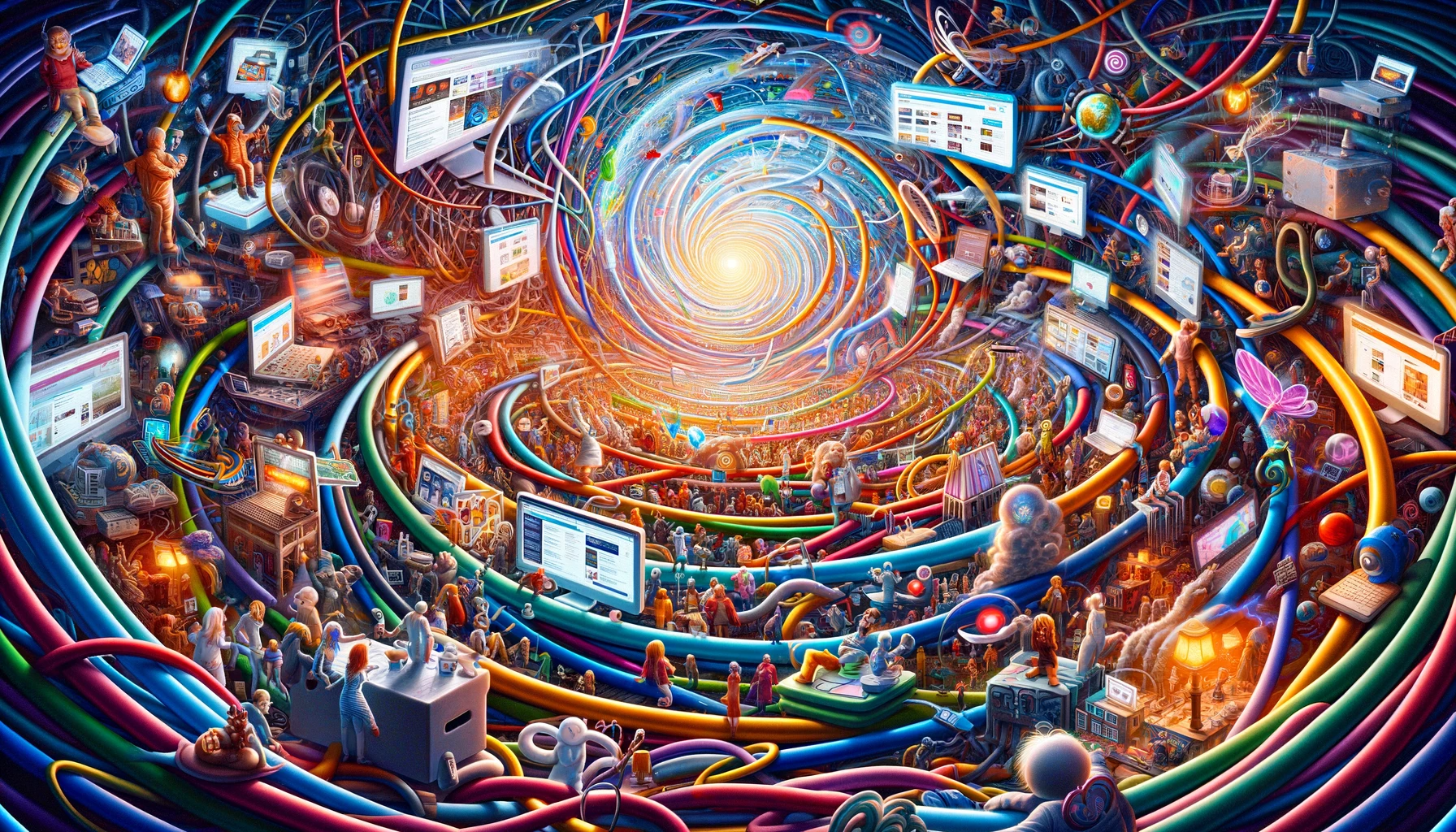
At its core, the song is a satirical indictment of how the internet commodifies human attention — packaging everything from pasta-straining tips to child death, from civil rights activism to racial slurs, into the same endless, algorithmically served feed. Bo Burnham voices the internet itself as a seductive, sinister host, inviting the listener to consume "a little bit of everything, all of the time."
The genius of Burnham’s approach is the whimsical melody layered over deeply unsettling content. The contrast mirrors the experience of scrolling: the interface is designed to feel pleasant while the content swings wildly between the trivial and the traumatic. For Gen-Z — a generation that has never known life without this experience — the song names something they feel but rarely hear articulated.
Burnham’s critique extends beyond entertainment. It interrogates how the internet shapes identity, warps social interaction, and engineers a relentless pursuit of engagement measured in clicks, views, and time-on-site. These aren’t bugs. They’re features — designed to extract maximum attention from the youngest, most connected generation in history.
Full lyrics to "Welcome to the Internet"
"Welcome to the internet
Have a look around
Anything that brain of yours can think of can be found
We’ve got mountains of content
Some better, some worse
If none of it’s of interest to you, you’d be the first
Welcome to the internet
Come and take a seat
Would you like to see the news or any famous women’s feet?
There’s no need to panic
This isn’t a test, haha
Just nod or shake your head and we’ll do the rest
Welcome to the internet
What would you prefer?
Would you like to fight for civil rights or tweet a racial slur?
Be happy
Be horny
Be bursting with rage
We got a million different ways to engage
Welcome to the internet
Put your cares aside
Here’s a tip for straining pasta
Here’s a nine-year-old who died
We got movies, and doctors, and fantasy sports
And a bunch of colored pencil drawings
Of all the different characters in Harry Potter fucking each other
Welcome to the internet
Hold on to your socks
‘Cause a random guy just kindly sent you photos of his cock
They are grainy and off-putting
He just sent you more
Don’t act surprised, you know you like it, you whore
See a man beheaded
Get offended, see a shrink
Show us pictures of your children
Tell us every thought you think
Start a rumor, buy a broom
Or send a death threat to a boomer
Or DM a girl and groom her
Do a Zoom or find a tumor in your
Here’s a healthy breakfast option
You should kill your mom
Here’s why women never fuck you
Here’s how you can build a bomb
Which Power Ranger are you?
Take this quirky quiz
Obama sent the immigrants to vaccinate your kids
Could I interest you in everything?
All of the time?
A little bit of everything
All of the time
Apathy’s a tragedy
And boredom is a crime
Anything and everything
All of the time
Could I interest you in everything?
All of the time?
A little bit of everything
All of the time
Apathy’s a tragedy
And boredom is a crime
Anything and everything
All of the time
You know, it wasn’t always like this
Not very long ago
Just before your time
Right before the towers fell, circa ’99
This was catalogs
Travel blogs
A chat room or two
We set our sights and spent our nights
Waiting
For you, you, insatiable you
Mommy let you use her iPad
You were barely two
And it did all the things
We designed it to do
Now look at you, oh
Look at you, you, you
Unstoppable, watchable
Your time is now
Your inside’s out
Honey, how you grew
And if we stick together
Who knows what we’ll do
It was always the plan
To put the world in your hand
Hahaha
Could I interest you in everything?
All of the time
A bit of everything
All of the time
Apathy’s a tragedy
And boredom is a crime
Anything and everything
All of the time
Could I interest you in everything?
All of the time
A little bit of everything
All of the time
Apathy’s a tragedy
And boredom is a crime
Anything and everything
And anything and everything
And anything and everything
And all of the time"
What are the key themes in the lyrics?
Three themes dominate. First, the overwhelming abundance of digital choices — "mountains of content, some better, some worse" — that leaves people not more informed but more paralyzed. Second, the weaponized competition for attention, where platforms don’t care whether you’re engaging with activism or conspiracy theories as long as you’re engaging. Third, the double-edged sword of connectivity itself — the internet fosters access and interaction while simultaneously exposing people, especially young people, to its darkest corners.
The bridge section — "You know, it wasn’t always like this" — is particularly revealing. Burnham traces the internet’s evolution from a relatively benign space of "catalogs, travel blogs, a chat room or two" into an engineered attention machine. The line "Mommy let you use her iPad, you were barely two, and it did all the things we designed it to do" is the song’s thesis statement: this wasn’t an accident. The internet was built to capture Gen-Z from infancy, and it worked.
The repeated refrain — "Apathy’s a tragedy and boredom is a crime" — captures the exhausting imperative of digital life. You must always be consuming, creating, reacting. Disengagement isn’t just discouraged; it’s treated as a moral failure. That framing keeps people scrolling, clicking, and staying online — which is exactly what the platforms want.
Why does this song resonate so deeply with Gen-Z?
Because Gen-Z lives inside the song. Born between 1997 and 2012, this generation has never experienced a world without the internet, social media, and instant digital communication. According to 2025 data compiled by electroIQ, nearly 98% of Gen Z worldwide own at least one smartphone. Their formative years weren’t shaped alongside technology — they were shaped by it.
This isn’t a generation that adopted digital tools. Digital tools adopted them. Their cognitive development, their social habits, their identity formation — all of it has been mediated through screens. Research continues to confirm that Gen-Z’s average attention span hovers around 8 seconds, a figure consistent with earlier Microsoft findings and reinforced by 2025 studies on shrinking attention spans in the digital age. That’s not a character flaw — it’s an adaptation to an environment designed to fragment focus.
When Burnham sings "It was always the plan to put the world in your hand," Gen-Z hears something older generations might miss: an acknowledgment that the digital overwhelm they feel isn’t their fault. The system was engineered this way. And that recognition — that the problem is structural, not personal — is precisely what makes the song resonate.
How does Gen-Z’s relationship with technology shape their worldview?
Gen-Z’s daily life is embedded in technology to a degree no previous generation has experienced. According to multiple 2025 analyses, the average Gen-Z individual spends around 9 hours per day on screens, with 55% using their smartphones for 5 or more hours daily and 26% reporting 10 or more hours of daily phone use. This extensive digital interaction shapes their expectations, behaviors, and values in ways that are often misunderstood.
They are not passive consumers. Gen-Z creates, critiques, and actively shapes the digital landscape. But their relationship with technology is also marked by a growing tension. As Pew Research has documented, while Gen-Z appreciates the vast opportunities the internet provides, there is increasing concern about its negative aspects — the impact on mental health, the spread of misinformation, the erosion of privacy.
This duality is the lived experience behind Burnham’s lyrics. The same platform that connects a teenager to educational resources also serves them content designed to maximize outrage. The same device that enables creative expression also tracks their behavior and sells their attention to advertisers. Gen-Z knows this. And increasingly, they’re demanding something better.
What does Gen-Z actually want from internet access?
Instant, unlimited, and equitable access — not as a luxury, but as a right. Over 79% of the Gen Z population recognizes the internet’s role in enhancing global connectivity, a sentiment less shared by older generations. Their reliance on constant connectivity is stark: 58% feel uneasy without internet access for more than four hours, compared to only 27% of Boomers.
These aren’t symptoms of addiction — they’re reflections of a reality where education, employment, healthcare, and social connection all run through the internet. For Gen-Z, losing connectivity doesn’t mean missing a few funny videos. It means losing access to homework, job applications, telehealth appointments, and the communities where they find belonging.
That’s what makes the digital divide so devastating for young people on its wrong side. When working families can’t afford broadband, when single parents face hidden fees and credit checks just to get online, the people most harmed are often Gen-Z students and young adults who need connectivity not for entertainment but for survival. The internet is a lifeline. Treating it like a premium product is a choice — and a harmful one.
Recognizing this, organizations like Human-I-T are not just bridging the digital divide but affirming internet access as a fundamental right, ensuring that Gen-Z and future generations remain integral players in an increasingly digital world.
How do we balance digital opportunity with digital responsibility?
Through digital literacy — not just access. Navigating the digital world’s vast opportunities while mitigating its inherent risks is a balancing act that Gen-Z is performing daily, often without adequate support. They are acutely aware of the digital realm’s pitfalls: data privacy concerns, misinformation, the psychological toll of social media. Their response isn’t apathy — it’s advocacy, from pushing for data privacy reforms to building communities that prioritize mental well-being.
But awareness alone isn’t enough. Gen-Z needs structured digital literacy education that equips them to navigate the digital realm safely, identify credible information, understand data privacy, and use digital tools productively. Digital literacy programs, like those offered by Human-I-T, go beyond basic skills training. They prepare young people to harness technology for innovation and problem-solving rather than being harnessed by it.
With a significant portion of Americans still lacking basic digital access, the role of comprehensive digital education is undeniable. It’s not enough to hand someone a device and an internet connection. Without the skills to use those tools critically and safely, connectivity becomes a vulnerability rather than an asset.
Gen-Z’s collective attitudes are shaping a new paradigm — one that values connectivity, creativity, and community while demanding privacy, authenticity, and well-being. That’s a vision worth building toward. But it requires investment in the kind of holistic digital inclusion that addresses every barrier: access, affordability, devices, and the skills to use them responsibly.
Take the Next Step Toward Digital Equity
As digital natives, Gen-Z navigates this landscape with innate savvy — but they also need responsible stewardship from the organizations and systems around them. Human-I-T’s role transcends providing digital access. We’re building a sustainable, inclusive digital ecosystem where technology empowers and unites rather than extracts and divides.
Whether you’re a parent, educator, community leader, or someone who just realized their old laptop could change a student’s life — there’s a role for you.
Donate your old technology to give devices a second life and help close the digital divide. Explore our digital training programs to bring digital literacy to your community. Or check your eligibility for low-cost internet and devices — no hidden fees, no credit checks, no gimmicks.
FAQ
What is "Welcome to the Internet" by Bo Burnham about?
"Welcome to the Internet" is a satirical song from Bo Burnham’s 2021 Netflix special Inside that personifies the internet as a sinister carnival barker offering "everything, all of the time." It critiques how platforms engineer attention, overwhelm users with content, and particularly target Gen-Z, who were raised on digital devices from infancy. The song exposes the gap between the internet’s promise of empowerment and its reality of exploitation.
Why is "Welcome to the Internet" relevant to digital equity?
The song highlights a core tension in digital equity work: access to the internet is essential, but access without literacy and protections can be harmful. For the millions of working families still on the wrong side of the digital divide, the challenge is twofold — getting connected, and then navigating a digital environment designed to extract rather than empower. Organizations like Human-I-T address both sides through affordable access, refurbished devices, and digital literacy training.
How much time does Gen-Z spend online?
According to multiple 2025 studies, the average Gen-Z individual spends around 9 hours per day on screens. Fifty-five percent use their smartphones for 5 or more hours daily, and 26% report 10 or more hours of daily phone use. This extensive screen time underscores why digital literacy — not just connectivity — is critical for this generation.
How can I help close the digital divide for Gen-Z?
Donate your old devices instead of letting them collect dust or end up in a landfill. Human-I-T refurbishes donated technology and distributes it to income-qualified families, students, and communities that need it most. Fill out the technology donation form today and take a step toward closing the digital divide while championing responsible e-waste management.
Does Human-I-T offer digital literacy programs?
Yes. Human-I-T provides digital training programs designed to help people of all ages — including Gen-Z — navigate the internet safely, identify credible information, protect their data privacy, and use digital tools for education and employment. These programs are part of our holistic approach to digital inclusion that goes beyond just providing a device or a connection.